
Hummingbirds are known for their dazzling courtship displays, but what happens when two closely related species hybridize? A recent study examining a hybrid between the Rufous Hummingbird (Selasphorus rufus) and the Allen’s Hummingbird (Selasphorus sasin) offers a rare glimpse into how genetics and behavior interact in hummingbird evolution.
Both Rufous and Allen’s hummingbirds perform complex aerial displays during courtship. These displays include rapid dives, bursts of sound, and precise flight maneuvers meant to attract females. Because the two species are closely related and sometimes overlap in range, hybridization occasionally occurs.
Researchers studying one such hybrid discovered that its courtship behavior did not simply resemble one parent species or the other. Instead, the hybrid displayed a unique combination of behaviors drawn from both species, revealing how courtship displays may evolve and diversify over time.
Two Species with Similar but Distinct Displays
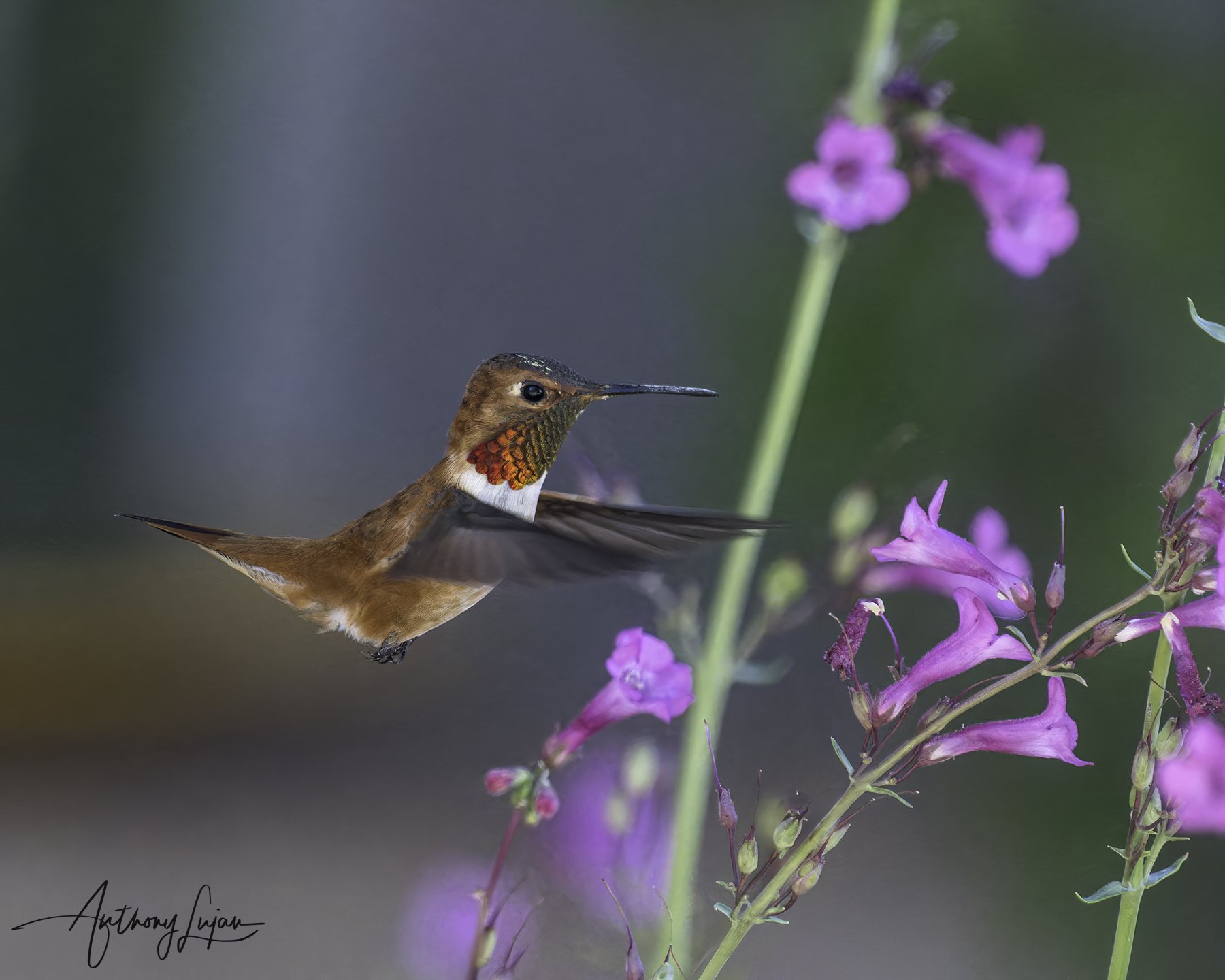
Rufous and Allen’s hummingbirds are notoriously difficult to distinguish in the field. Both species belong to the genus Selasphorus and share many physical similarities, especially among females and immature birds.
Despite these similarities, males of the two species perform courtship displays that differ in subtle but important ways. These displays involve rapid aerial maneuvers and distinct sequences of flight patterns designed to capture the attention of females.
Understanding how these displays evolved can help scientists better understand the role of behavior in hummingbird speciation.
Studying a Rare Hybrid
In this study, researchers analyzed the courtship display behavior of a hummingbird confirmed to be a hybrid between Rufous and Allen’s hummingbirds.
To understand the hybrid’s behavior, the scientists compared its display sequences with those typically performed by both parent species. They used detailed video recordings and computational analysis techniques, including k-mer sequence analysis, to study patterns within the courtship displays.
This approach allowed the researchers to examine the structure and variability of the display behaviors in a quantitative way.
Transgressive Courtship Displays
One of the most interesting findings was that the hybrid did not simply perform a mixture of Rufous and Allen’s display behaviors. Instead, it produced transgressive courtship sequences.
In evolutionary biology, transgressive traits are characteristics that extend beyond the range observed in either parent species.
In this case, the hybrid hummingbird displayed courtship behaviors that were more variable and complex than those typically seen in either Rufous or Allen’s hummingbirds.
This suggests that hybridization can sometimes produce novel behavioral combinations rather than simply blending existing traits.
What Hybrid Behavior Reveals About Evolution
Hybrid individuals can offer valuable insights into how behaviors evolve. When species hybridize, their offspring may combine genetic traits in unexpected ways.
Studying these hybrids can help scientists understand:
how courtship behaviors are inherited
how display sequences are structured
how behavioral traits evolve across species
The hybrid studied in this research demonstrates that hummingbird courtship displays may have more flexibility than previously assumed.
A Window Into Hummingbird Behavioral Evolution
Courtship displays play a critical role in mate selection among hummingbirds. Because these displays are often species-specific, they help maintain reproductive separation between closely related species.
However, hybrid individuals occasionally reveal how these behaviors might evolve over time. By studying hybrids, researchers gain new insight into how complex display behaviors develop and diversify.
This research highlights the value of rare hybrid individuals in understanding the evolutionary processes shaping hummingbird behavior.
Research Credit
This article summarizes findings from the following scientific study:
Brian M. Myers, David T. Rankin, Kevin J. Burns, Alan Brelsford, Christopher J. Clark. (2022).
k-mer analysis shows hybrid hummingbirds perform variable, transgressive courtship sequences.
ScienceDirect
Readers interested in the full methodology, video analysis, and behavioral data can consult the original research paper.
Frequently Asked Questions
Research on hummingbird hybrids often raises interesting questions about how closely related species interact and how their behaviors evolve. Here are a few common questions related to Rufous and Allen’s hummingbirds and the study of hybrid individuals.
-
Yes. Because these two species are closely related and sometimes overlap in range, hybridization can occasionally occur.
-
A transgressive trait is a characteristic that goes beyond the range observed in either parent species.
-
Hybrid individuals can reveal how traits are inherited and how behaviors evolve across closely related species.
-
Researchers often use high-speed video recordings and behavioral analysis to study the structure and sequence of courtship displays.
-
These species share many physical similarities, especially among females and immature birds, which can make field identification challenging.





Please note: The content provided in this article is for educational purposes only and summarizes findings from published scientific research. Interpretations of scientific studies may evolve as new research becomes available.