
Introduction
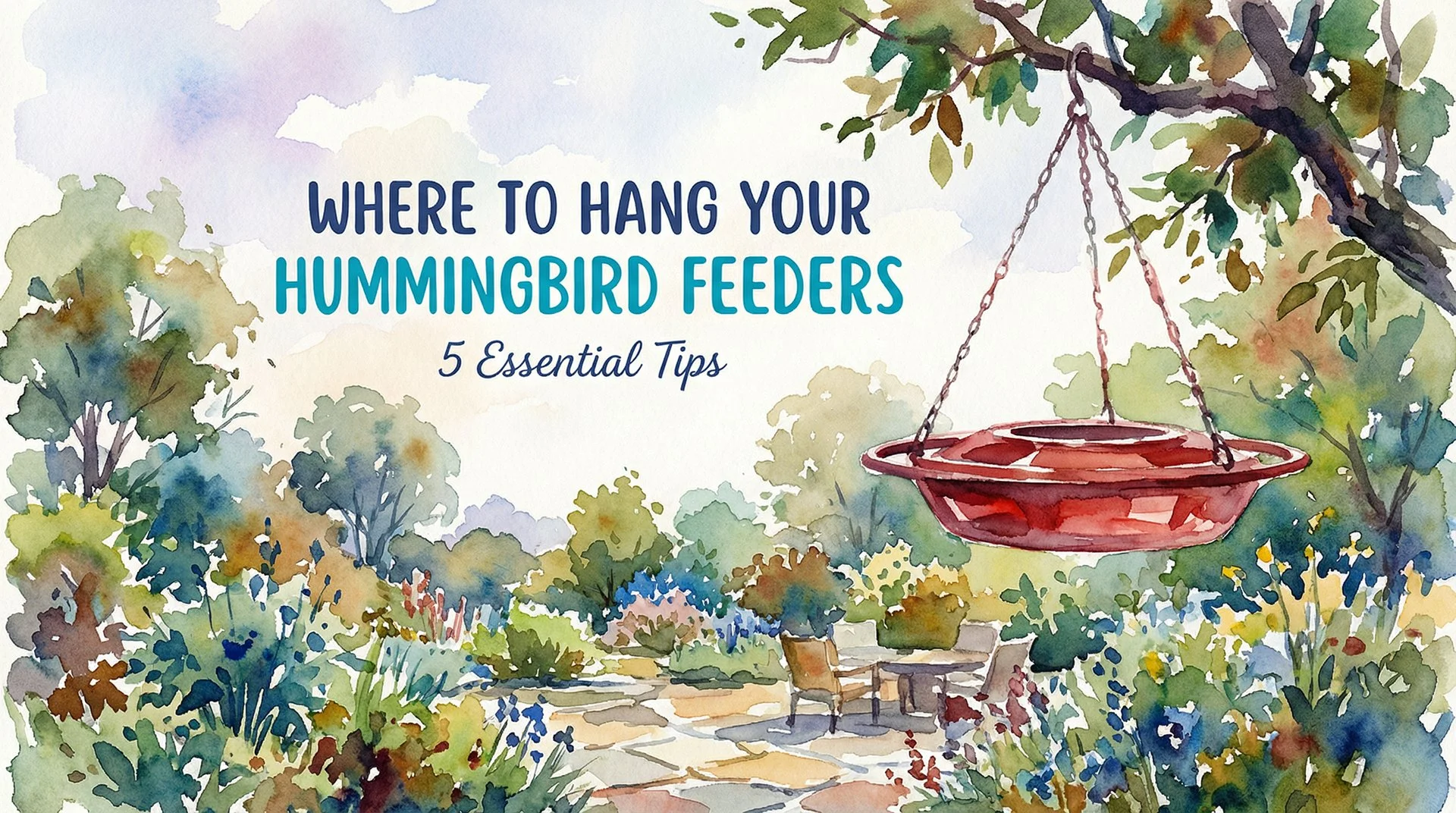
Strategically placing hummingbird feeders is key to attracting these beautiful birds. Here are five tips for optimal feeder placement to ensure frequent visits from hummingbirds.
1. Near Flowering Plants
Tip: Position feeders close to nectar-rich flowers.
Reason: Hummingbirds are naturally drawn to flowers, increasing the likelihood they'll find your feeder.
2. In Shaded Areas
Tip: Hang feeders in partial shade.
Reason: Shade keeps nectar cool and fresh, providing a comfortable feeding spot for hummingbirds.
3. Protected from Wind
Tip: Choose sheltered locations.
Reason: Minimizing wind reduces feeder swaying and nectar spillage, making feeding easier for hummingbirds.
4. Near Windows
Tip: Place feeders near windows for easy viewing.
Reason: Watching hummingbirds up close enhances the experience, and window decals can prevent bird collisions.
5. Close to Perching Spots
Tip: Position feeders near trees or shrubs.
Reason: Hummingbirds need places to perch and rest between feedings, and nearby branches provide ideal resting spots.
Conclusion
By following these tips, you can create a hummingbird-friendly environment that encourages frequent visits. Thoughtful placement of your feeders ensures they are easily accessible and enjoyable for these delightful birds.
Frequently Asked Questions
Proper feeder placement can make a big difference in attracting hummingbirds and keeping them returning regularly. Here are some common questions about where to hang hummingbird feeders.
-
Feeders are often best placed near flowers, shrubs, or small trees where hummingbirds feel safe.
-
Partial shade is often ideal because it helps keep nectar cooler.
-
Most feeders are placed about five to six feet above the ground for easy viewing and maintenance.
-
Yes, but it is best to place them either very close to the window or farther away to help reduce window collisions.
-
Yes. Many hummingbirds will visit feeders placed on balconies, decks, or patios.
Please note: The content provided in this article is for educational purposes only and is intended as general information. Results can vary depending on climate, hummingbird species, feeder types, and local conditions.