
Hummingbirds are best known for feeding on nectar and small insects, but recent research suggests their diet may be more varied than many people realize. A scientific study published in 2024 examined evidence of frugivorous behavior, or fruit consumption, among hummingbirds across the Americas.
Although hummingbirds are specialized nectar feeders, researchers found documented cases where hummingbirds consume fruit pulp or juices. These observations suggest that hummingbirds may occasionally take advantage of additional food sources beyond nectar and insects.
This discovery adds a new dimension to our understanding of hummingbird feeding ecology and highlights the flexibility of their diet.
The Typical Hummingbird Diet
Most hummingbirds rely heavily on flower nectar as their primary source of energy. Nectar provides the carbohydrates needed to sustain their extremely high metabolic rate.
However, nectar alone does not provide all the nutrients hummingbirds require. To supplement their diet, hummingbirds also consume:
small insects
spiders
other tiny arthropods
These prey items provide essential proteins, fats, and minerals that nectar lacks.
Until recently, fruit consumption had rarely been considered part of the hummingbird diet.
Evidence of Frugivorous Behavior
Researchers compiled records from across the Americas documenting hummingbirds feeding on fruit or fruit pulp. These observations included multiple species and a variety of fruit types.
In many cases, hummingbirds were observed feeding on:
exposed fruit pulp
damaged or split fruit
juices from soft fruits
Because hummingbirds possess specialized bills and tongues designed for nectar feeding, they are not typically adapted to consume whole fruits. However, accessing fruit pulp or juices may provide an additional energy source when available.
Why Fruit May Be Useful
Fruit pulp can contain sugars similar to those found in nectar. For hummingbirds, this makes fruit a potential supplementary source of carbohydrates.
In environments where nectar availability fluctuates, fruit may offer an additional energy source.
Researchers suggest that hummingbirds may opportunistically exploit fruit resources when nectar supplies are limited or when fruits are easily accessible.
Implications for Ecology
One interesting implication of this research is the potential ecological role hummingbirds could play in fruit consumption.
Although hummingbirds are best known as pollinators, occasional fruit feeding raises the possibility that they could also contribute to seed dispersal in certain situations.
Even if fruit consumption occurs infrequently, these interactions could influence plant–bird relationships in ways that have not been widely recognized.
Expanding Our Understanding of Hummingbird Feeding
This research highlights how even well-known animals can still surprise scientists. While nectar feeding remains the primary dietary strategy for hummingbirds, occasional fruit consumption shows that their feeding behavior may be more flexible than previously thought.
As researchers continue to study hummingbird ecology, additional observations may reveal further examples of dietary diversity within this remarkable group of birds.
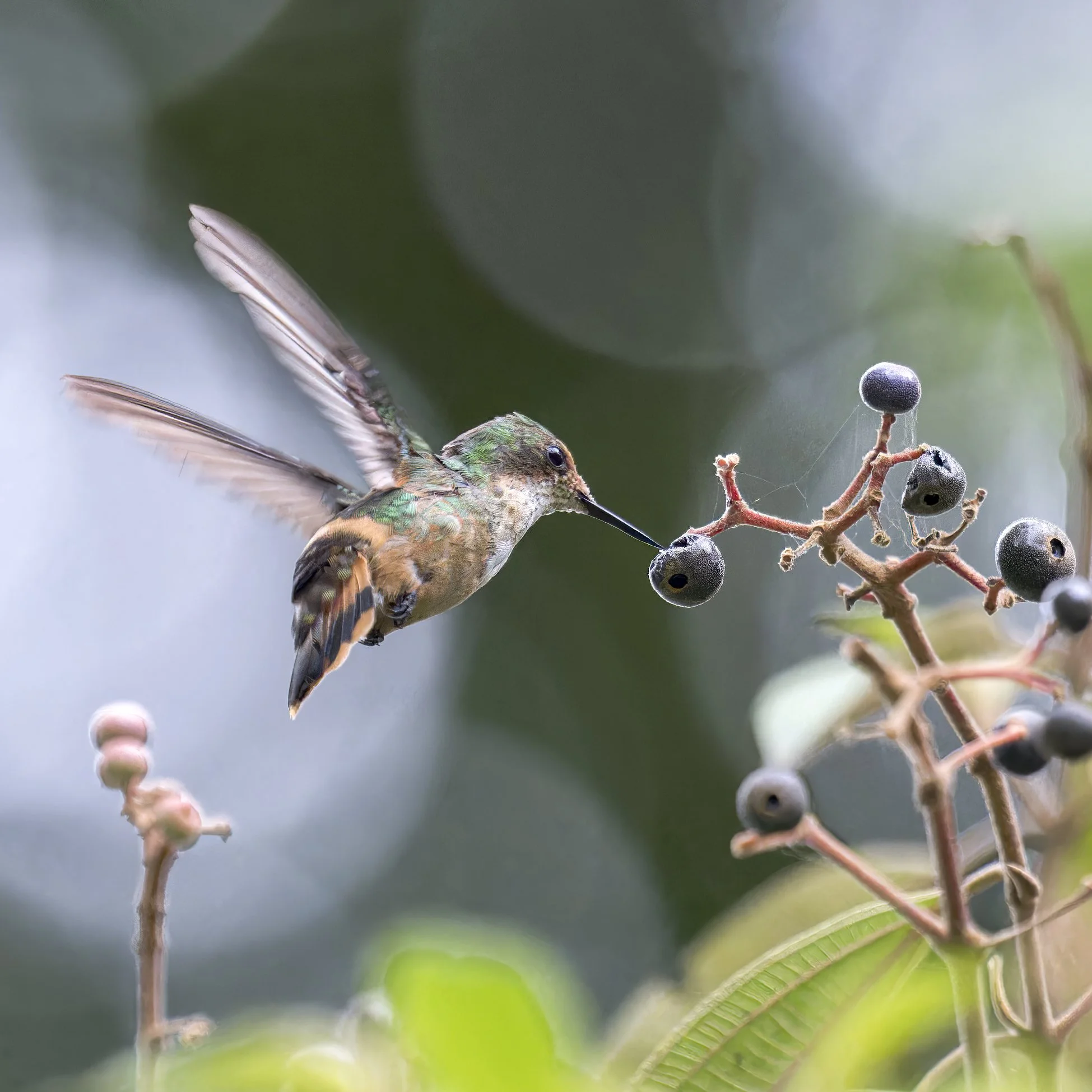
It is especially exciting to see this study include Anthony’s photograph of a female Short-crested Coquette among its photographic references, connecting scientific research and field photography in a meaningful way.
Research Credit
This article summarizes findings from the following scientific study:
Lara, C., Ornelas, J. F., Schondube, J. E., Rodríguez-Gómez, F., and Serrano-Meneses, M. A. (2024).
On the occurrence of frugivorous behavior by hummingbirds across the Americas.
Communications Biology. Volume 33, article number 13
Readers interested in the full data compilation and ecological analysis can consult the original research publication.
Frequently Asked Questions
Research on hummingbird feeding behavior often raises questions about what these birds actually eat and how flexible their diets may be. Here are a few common questions related to hummingbird feeding habits.
-
No. Most hummingbirds primarily feed on nectar and small insects, although research suggests they may occasionally consume fruit pulp or juices.
-
Fruit can contain sugars that provide energy similar to nectar, making it a potential supplemental food source.
-
Yes. Hummingbirds are among the most important pollinators for many flowering plants across the Americas.
-
The research suggests hummingbirds mainly consume fruit pulp or juices rather than whole seeds.
-
Fruit consumption appears to be occasional rather than a primary feeding strategy.

Please note: The content provided in this article is for educational purposes only and summarizes findings from published scientific research. Interpretations of scientific studies may evolve as new research becomes available.