
Scientific name: Eulampis holosericeus
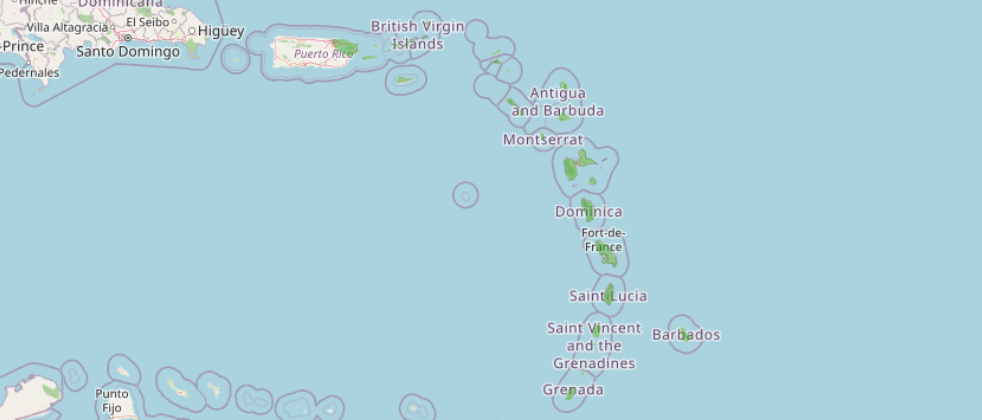
The Green-throated Carib is a large, powerful hummingbird of Puerto Rico, the Virgin Islands, and much of the Lesser Antilles. The number of mature individuals is unknown, the population trend is unknown, it is not a migrant, and it is currently assessed as Least Concern.
At a Glance
Family: Trochilidae (hummingbirds)
Tribe: Polytminae – Mangoes
Genus: Eulampis — 2 species in total
Range: Eastern Puerto Rico, the Virgin Islands, and the Lesser Antilles south to Grenada
Habitat: Wet forest, semi-deciduous woodland, dry forest, scrub, second growth, cultivated areas, gardens, parks, and forest edges
Elevation: Sea level to about 1,000 m; most common near sea level on many islands, but more frequent in foothills on some larger islands
Length: About 11–12 cm (4.3–4.7 in)
Weight: About 5–7 g
Number of mature individuals: Unknown
Population trend: Unknown
Movement: Not a migrant
IUCN Red List category: Least Concern
Name Origin
The genus name Eulampis comes from Greek roots meaning “bright” or “splendid,” a fitting name for these iridescent Caribbean hummingbirds. The species name holosericeus is derived from Greek and Latin roots meaning “entirely silky,” referring to the bird’s smooth, glossy green plumage. The English name “Green-throated Carib” describes the male’s shimmering green throat and its distribution in the Caribbean.
Taxonomy
Eulampis holosericeus is a hummingbird in the mango group, traditionally placed in the subfamily Polytminae. The genus Eulampis contains two species: the Green-throated Carib and the Purple-throated Carib (Eulampis jugularis). Both are medium-to-large Caribbean hummingbirds with long bills, strongly territorial behavior, and marked differences in bill structure between males and females.
Subspecies and Distribution
Two subspecies:
Eulampis holosericeus holosericeus
Distribution: Eastern Puerto Rico, the Virgin Islands, and the Lesser Antilles south to Saint Vincent, excluding Grenada.Eulampis holosericeus chlorolaemus
Distribution: Grenada.
Ledged
Green Resident
Species Overview
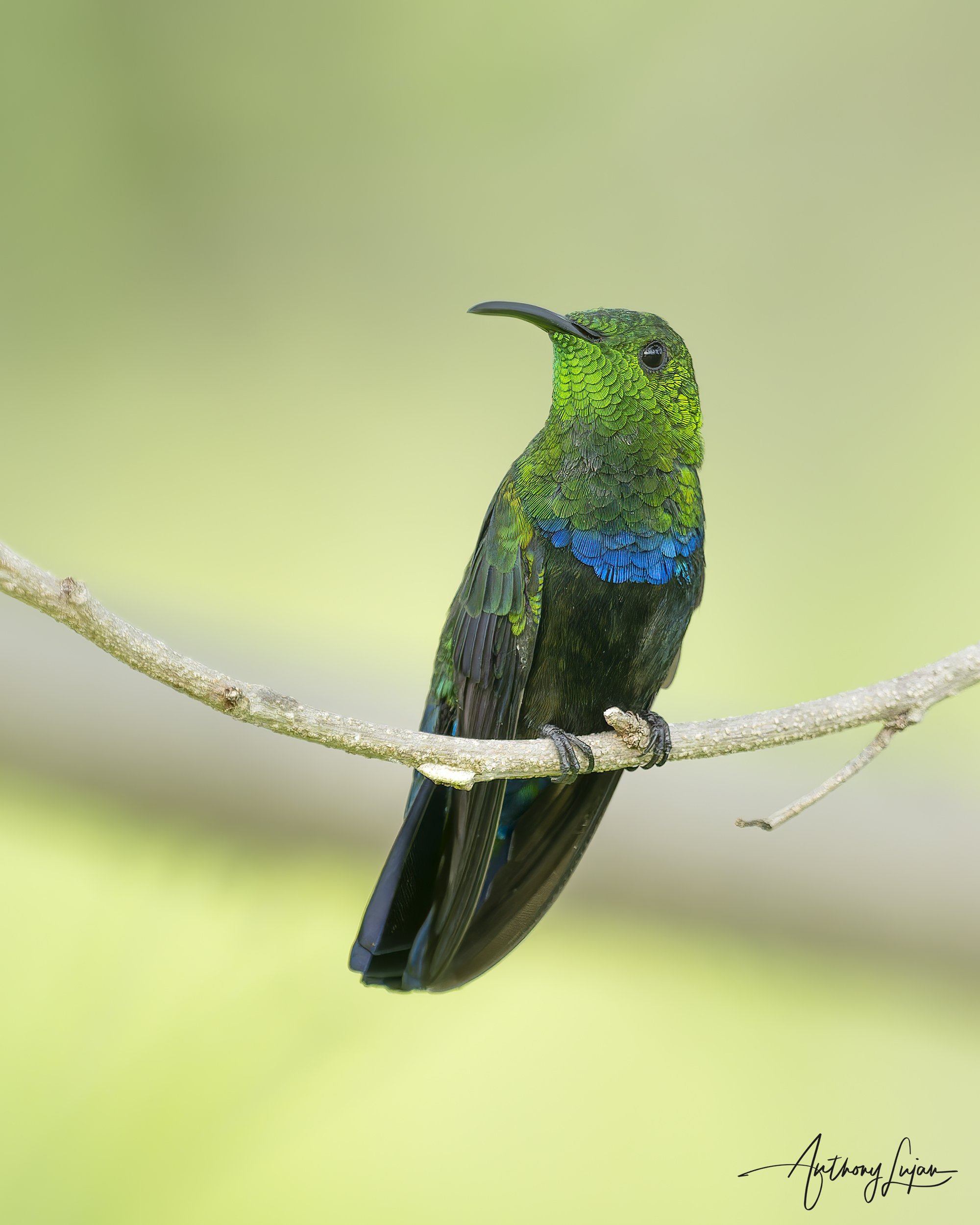
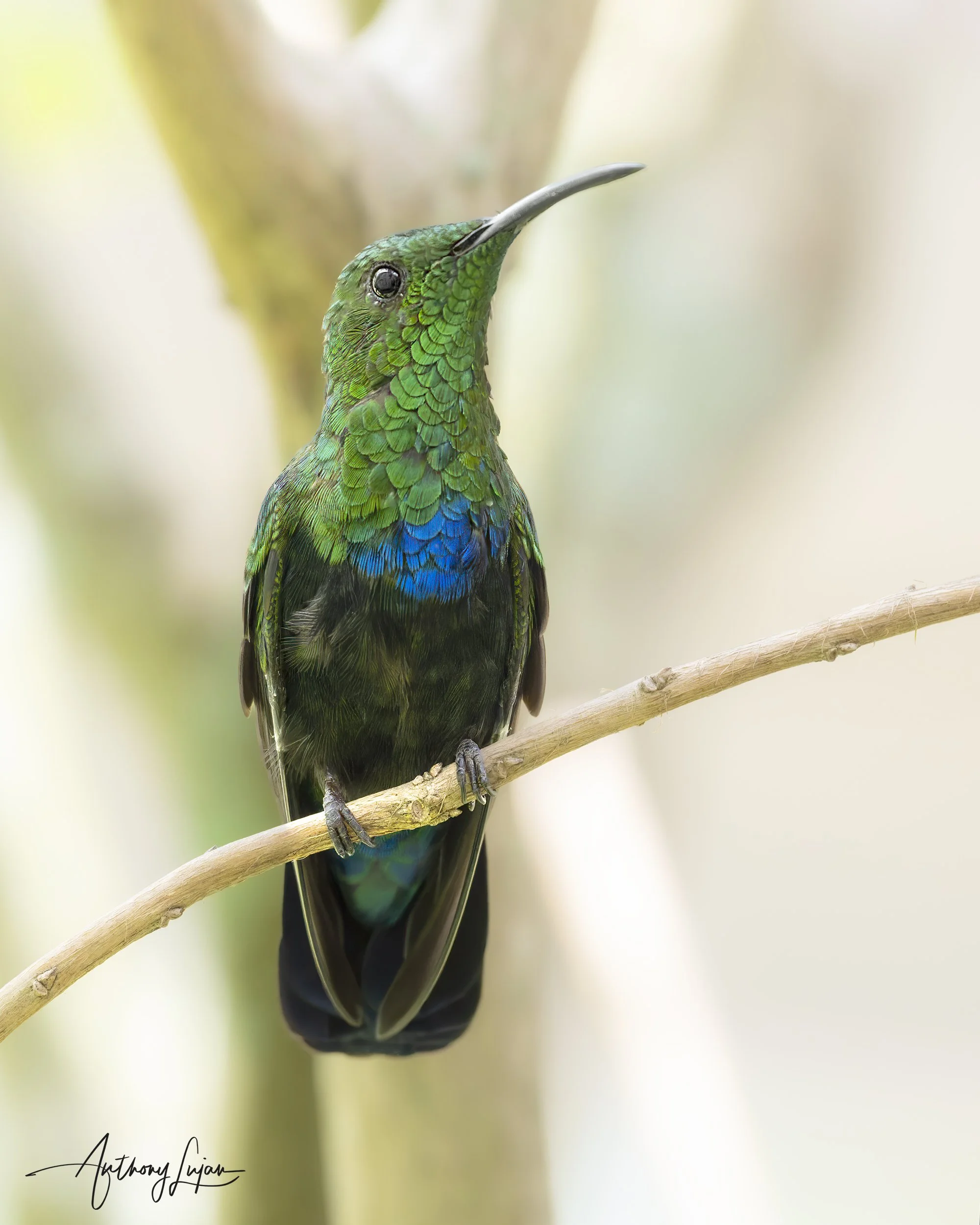
The Green-throated Carib is a handsome, heavy-bodied hummingbird with bronze-green upperparts, a vivid metallic green throat, dark underparts, and a deep blue to blue-black tail. It is usually identified by its relatively straight, fairly long bill, duller wings, and green throat, which distinguish it from the Purple-throated Carib. Males are generally larger and more boldly colored, while females have longer, more strongly decurved bills, an adaptation that allows the sexes to use somewhat different flowers.
Male Description
Males measure about 11–12 cm long and weigh approximately 5–7 g. The upperparts are metallic bronze-green, sometimes appearing dark olive in poor light. The throat is a rich, glittering emerald-green, contrasting with a blackish breast and belly. The lower belly and vent can show green iridescence, and the tail is dark blue or blue-black, often looking nearly black in shade. The bill is long, black, and only slightly decurved. Males are typically larger than females and frequently perch prominently near flowering trees or shrubs to defend feeding territories.
Female Description
Females are smaller-bodied but have distinctly longer and more strongly curved bills than males. Their upperparts are metallic green, and the throat is green, though usually less intensely brilliant than in males. The breast and belly are dark, with a greenish wash on the flanks and lower underparts. The tail is dark blue-black and slightly rounded. The greater bill curvature enables females to access flowers that are less efficiently used by males, reducing direct competition between the sexes. Juveniles resemble females but are duller, with softer plumage and less strongly developed bill curvature.
Habitat & Behavior
Green-throated Caribs inhabit a wide range of habitats, including wet forest, semi-deciduous woodland, dry forest, forest edges, second growth, cultivated areas, parks, and gardens. They occur in both lowlands and highlands, often near sea level on smaller islands, while on larger, wetter islands they may be more common in foothills and along forested slopes. The species adapts well to gardens and developed landscapes where flowering trees, shrubs, and hedges remain available.
They feed mainly on nectar from a broad range of flowering trees, shrubs, herbs, and epiphytes. Males often establish and vigorously defend feeding territories around productive flowering plants throughout the year, perching near a flower source and chasing away intruding hummingbirds. Females may defend food sources mainly outside the breeding season. Small arthropods, including flies, wasps, beetles, insects, and spiders, are also important; these are gathered from foliage, taken from spiderwebs, or caught in short aerial sallies.
Breeding
Breeding typically occurs from March through July, though timing may vary among islands and is influenced by rainfall and flowering cycles. The female builds a compact cup nest of fine plant fibers and spiderweb, lining it with soft material and camouflaging the outside with bark chips and lichens. Nests are generally placed in the fork or on the outer branch of a shrub or small tree, commonly 2–9 m above ground.
The usual clutch consists of two white eggs. The female alone incubates the eggs for approximately 17–19 days and raises the young after hatching. Nestlings usually fledge around 20–22 days after hatching and may remain near or follow the female for several additional weeks. In favorable conditions, a female may raise more than one brood in a year.
Movement
The Green-throated Carib is not considered a migrant. It remains resident on its Caribbean islands year-round, though some birds make local post-breeding movements toward wetter habitats or higher elevations, especially from June through September. These seasonal shifts follow local rainfall and flowering resources and are not regular long-distance migrations.
Population
The total number of mature individuals and the overall population trend are unknown. The Green-throated Carib is generally common across much of its range, particularly where diverse flowering vegetation is available in forests, gardens, and cultivated landscapes. It occurs on many islands and can adapt to secondary growth and managed habitats, which likely provides some resilience despite its limited Caribbean distribution.

Conservation
The Green-throated Carib is assessed as Least Concern because it has a broad island distribution, remains common in many locations, and uses a range of natural and human-modified habitats. Potential local threats include loss of native woodland, conversion of coastal and lowland habitat for development, severe hurricanes, and prolonged droughts that reduce flowering resources. Maintaining forest edges, native flowering trees, gardens, and connected patches of woodland is important for sustaining healthy populations across its range.
Below is the Green-throated Carib (Eulampis holosericeus holosericeus)
Photographed in Salinas and Cataño, Puerto Rico
This individual belongs to the subspecies Eulampis holosericeus holosericeus. This subspecies occurs across eastern Puerto Rico, the Virgin Islands, and the Lesser Antilles south to Saint Vincent, excluding Grenada.
Checkout Anthony’s playlist of this species! Click the top right dropdown to see all the videos.
Related species in the Eulampis genus (2 species total):
Please note: The content provided in this article reflects Anthony’s personal experience and photographic approach. Results can vary depending on light, weather, location, equipment, subject behavior, and field conditions.