
Scientific name: Patagona gigas
The Southern Giant-Hummingbird is one of the world's largest hummingbirds and inhabits the Andes and adjacent mountain regions of western and southern South America. Long treated as part of a single Giant Hummingbird species, it is now recognized separately from the Northern Giant-Hummingbird (Patagona peruviana). The Southern Giant-Hummingbird is notable for its exceptionally large size, long wings, relatively slow wingbeats, and seasonal movements between breeding and nonbreeding areas.
At a Glance
Family: Trochilidae (hummingbirds)
Clade: Patagonini – Giant hummingbirds
Genus group: Patagona — 2 species, no widely accepted living subspecies
Range: Primarily the Andes and adjacent regions of Bolivia, Chile, and Argentina, with seasonal movements that can extend into neighboring areas.
Habitat: Arid and semi-arid mountain slopes, scrubland, cactus-rich valleys, open woodland, agricultural edges, and gardens with flowering plants.
Elevation: From lower foothills to high Andean valleys, often around 1,000–4,000 m, depending on season and locality.
Length: Approximately 20–23 cm (7.9–9.1 in).
Weight: Commonly around 18–25 g, varying with sex, season, and condition.
Number of mature individuals: No reliable species-specific global estimate available.
Population trend: Not yet clearly established for the newly separated species.
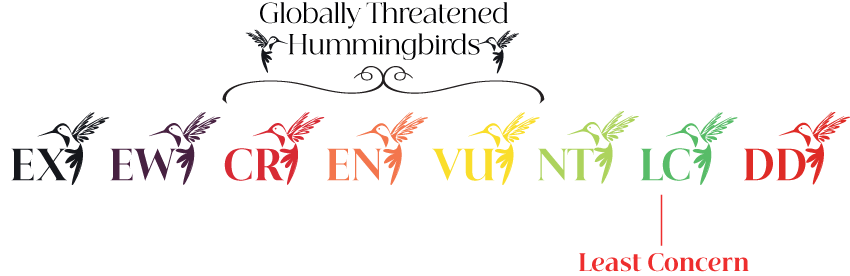
Status: A species-specific IUCN assessment should be confirmed; historical Least Concern assessments applied to the broader Giant Hummingbird complex.
Name Origin
The genus name Patagona refers to Patagonia, the southern South American region associated with the bird's historical distribution. The species name gigas comes from Greek and Latin usage meaning “giant,” reflecting the bird's extraordinary size compared with most other hummingbirds. The English name “Southern Giant-Hummingbird” distinguishes it from the Northern Giant-Hummingbird following recognition of the two as separate species.
Subspecies & Distribution
The Southern Giant-Hummingbird is treated as a monotypic species, with no currently recognized subspecies.
Historically, Patagona gigas gigas was considered the southern subspecies of the Giant Hummingbird, while P. g. peruviana represented the northern form. Genetic research, migration tracking, and subsequent taxonomic work established that these forms are separate species rather than subspecies.
The Southern Giant-Hummingbird has a broad but strongly seasonal distribution:
Chile: Breeds primarily in central Chile, from coastal areas near sea level to Andean foothills and mountain valleys. Many individuals leave their breeding grounds after the austral summer.
Argentina: Breeds in central and northwestern Argentina, particularly in dry Andean valleys and high-elevation habitats. At least some populations migrate north after breeding.
Bolivia: Occurs in Andean valleys and highlands, including breeding populations at approximately 2,100–4,150 m.
Peru: Primarily a nonbreeding visitor, reaching north to approximately central Ancash. Migrants from Chile and Argentina occupy high Andean valleys during the austral winter, often alongside Northern Giant-Hummingbirds.
The two giant-hummingbird species can overlap in Peru during approximately May through September. Their similar appearance and seasonal movements contributed to decades of confusion about their distributions.
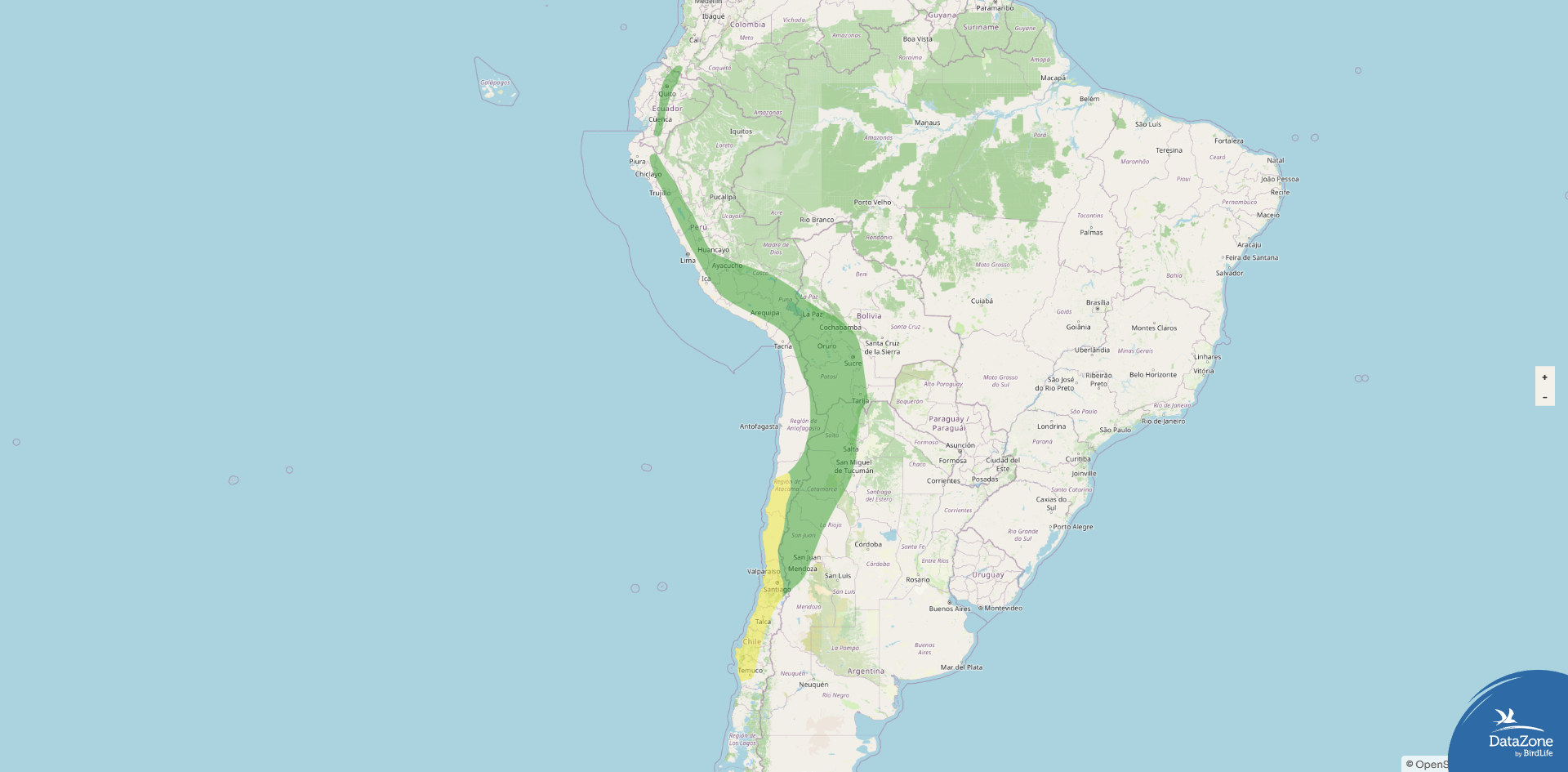
Legend
Green Resident
Yellow Breeding
Species Overview
The Southern Giant-Hummingbird is remarkable not only for its size but also for its extraordinary migration. Unlike the Northern Giant-Hummingbird, which remains in the high Andes throughout the year, many Southern Giant-Hummingbirds breed at southern latitudes and migrate north to spend the nonbreeding season in the Peruvian Andes.
Tracking studies have revealed round-trip journeys of approximately 5,500–8,300 km in birds breeding in Chile. Some begin their northward migration in February or March and reach high-elevation areas of Peru several months later. During this journey, birds that bred near sea level may ascend more than 4,000 m, undergoing substantial physiological adjustments to life in thinner, oxygen-poor air.
In appearance, the Southern Giant-Hummingbird is a large, long-winged, predominantly brownish hummingbird with muted green tones on the upperparts. Its flight is distinctive: the wingbeats appear unusually slow for a hummingbird, and the bird often resembles a small swift when moving across open valleys. Despite its size, it remains an agile nectar feeder capable of hovering at flowers and defending productive feeding areas.
Male Description
Adult males are exceptionally large hummingbirds with a long, slightly decurved dark bill, elongated wings, and a relatively long tail. The upperparts are generally bronzy green to olive-brown, while the underparts are warm brown or cinnamon, sometimes with extensive rufous tones across the throat and breast.
The throat typically shows subtle grayish-green streaking rather than the more strongly contrasting dark streaks often seen in Northern Giant-Hummingbirds. The pale eye-ring and spot behind the eye are usually weak or absent, producing a relatively plain-faced appearance. These features are variable, however, and are not always sufficient for identification.
The wings are dark and narrow, extending prominently along the body when perched. In flight, the bird combines a powerful silhouette with measured wingbeats, making its exceptional size immediately apparent.
Female Description
Females closely resemble males, with bronzy or olive-green upperparts, warm brownish underparts, a long dark bill, and elongated wings. The throat and breast may be cinnamon-brown with faint grayish or greenish streaking, while the belly can appear slightly paler.
Sexual differences in plumage are modest compared with those of many other hummingbirds. Individual variation, age, feather wear, and lighting can produce more noticeable differences than sex alone. Females may average slightly smaller, but measurements overlap considerably.
As in males, the generally subdued facial markings can help suggest Southern Giant-Hummingbird, although plumage alone cannot reliably distinguish every individual from the Northern Giant-Hummingbird.
Habitat & Behavior
Southern Giant-Hummingbirds inhabit open, relatively dry landscapes, including semi-arid scrub, cactus-covered slopes, intermontane valleys, agricultural margins, hedgerows, open woodland, and gardens. They are particularly associated with flowering plants such as Puya, Agave, and columnar cacti, as well as other native and cultivated nectar sources. They may also occur near fast-flowing mountain streams where flowering vegetation is concentrated.
Their diet consists primarily of nectar, supplemented by small insects and other arthropods. Their large size allows them to travel efficiently between widely spaced flower patches, and they can be assertive around productive feeding sites.
The species' seasonal movements are especially unusual. Birds breeding in central Chile may spend the austral winter in central or southern Peru, where they occupy elevations approaching 4,300 m. Their migration can involve a broad loop through the Andes, with different northbound and southbound routes. Some individuals may remain closer to their breeding areas year-round, and the migratory behavior of several populations remains incompletely understood.
Population
A reliable global population estimate for the Southern Giant-Hummingbird is not currently available. Much of the historical information on Giant Hummingbird abundance combined the Southern and Northern species, making it difficult to calculate population size or long-term trends for either species independently.
The Southern Giant-Hummingbird occupies a substantial geographic range, but its seasonal distribution complicates population monitoring. Individuals recorded in Peru during the austral winter may have originated from breeding populations hundreds or thousands of kilometers farther south.
Research indicates that Southern Giant-Hummingbirds can account for a substantial proportion of giant hummingbirds present at some Peruvian nonbreeding sites during May through September. However, the full extent of their nonbreeding distribution, the relative sizes of different breeding populations, and the proportion of birds that migrate remain uncertain.
The overall population trend is therefore best described as not yet reliably determined for the Southern Giant-Hummingbird as a separate species.
Conservation
The Southern Giant-Hummingbird has a relatively broad distribution, but its conservation needs must be considered across both breeding and nonbreeding habitats. The species depends on flowering vegetation in dry valleys, scrublands, and mountain landscapes, environments that may be affected by agricultural expansion, urban development, grazing pressure, and changes in land use.
Climate change presents additional potential challenges. Changes in precipitation, flowering seasons, and the availability of nectar-producing plants could affect birds during breeding, migration, and the nonbreeding season. Because some individuals travel thousands of kilometers and undergo extreme elevational shifts, they depend on suitable habitats across a large portion of the Andes.
The recent separation of Southern and Northern Giant-Hummingbirds also highlights the need for species-specific monitoring. Historical records may contain identification errors, particularly in areas where the species overlap, and older population assessments cannot automatically be assigned to either newly recognized species.
Continued research into migration routes, breeding populations, vocalizations, and population trends will be important for assessing the Southern Giant-Hummingbird's conservation status and identifying habitats most critical to its long-term survival.


Checkout Anthony’s playlist of this species! Click the top right dropdown to see all the videos.
Related species in the Patagona genus (2 species in total):

Please note: The content provided in this article reflects Anthony’s personal experience and photographic approach. Results can vary depending on light, weather, location, equipment, subject behavior, and field conditions.