
White-tailed Hummingbird
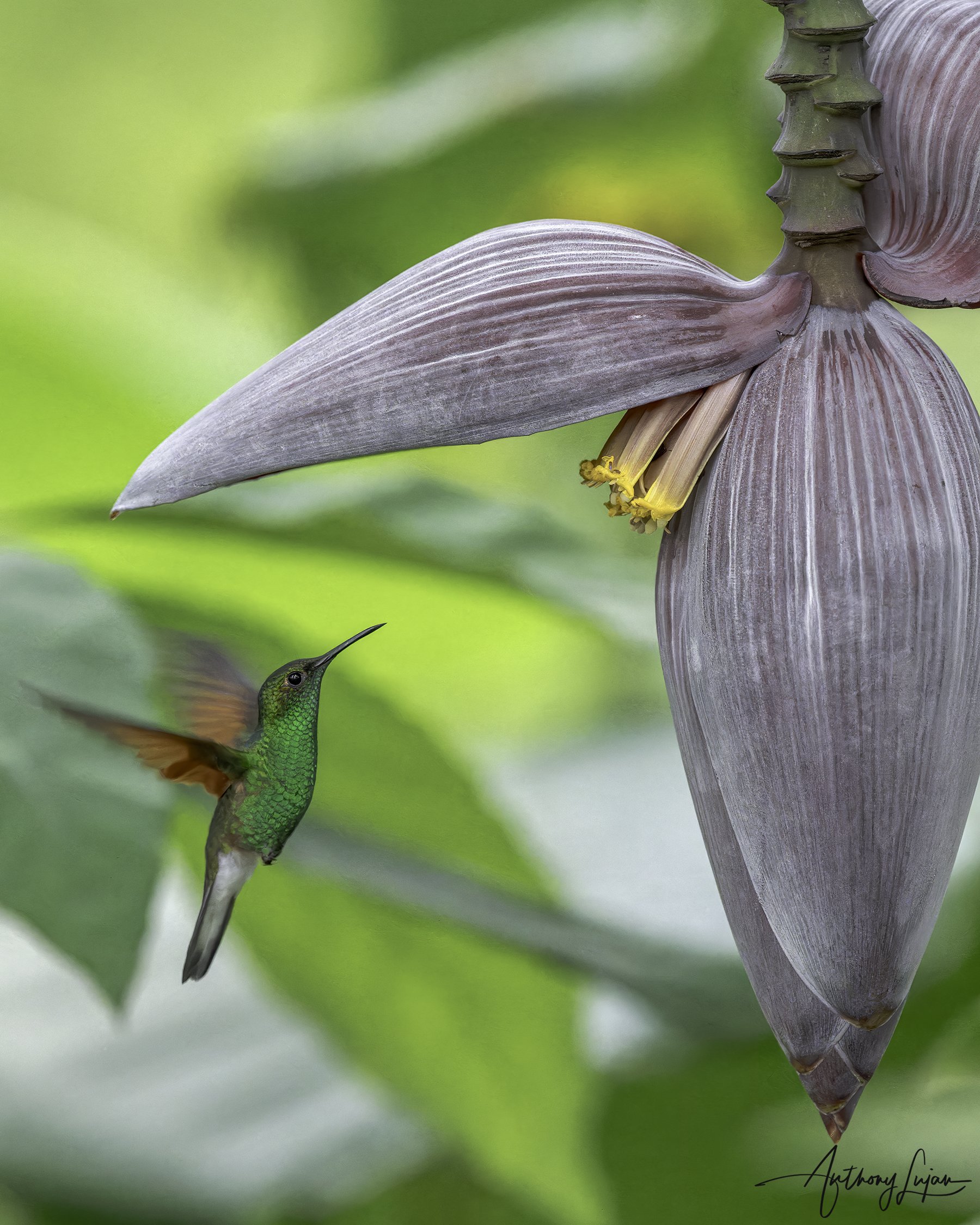
Scientific name: Eupherusa poliocerca
The White-tailed Hummingbird is a localized mid‑elevation hummingbird endemic to subtropical moist forests in the westernmost Sierra Madre del Sur of Guerrero and extreme western Oaxaca, Mexico. Its global number of mature individuals is estimated at 6,000–15,000, the population trend is Decreasing, and it is assessed as Near Threatened (NT).
At a Glance
Family: Trochilidae (hummingbirds)
Clade: Trochilini – Emeralds
Genus: Eupherusa — small forest hummingbirds with broad tails and contrasting wing or tail patterns
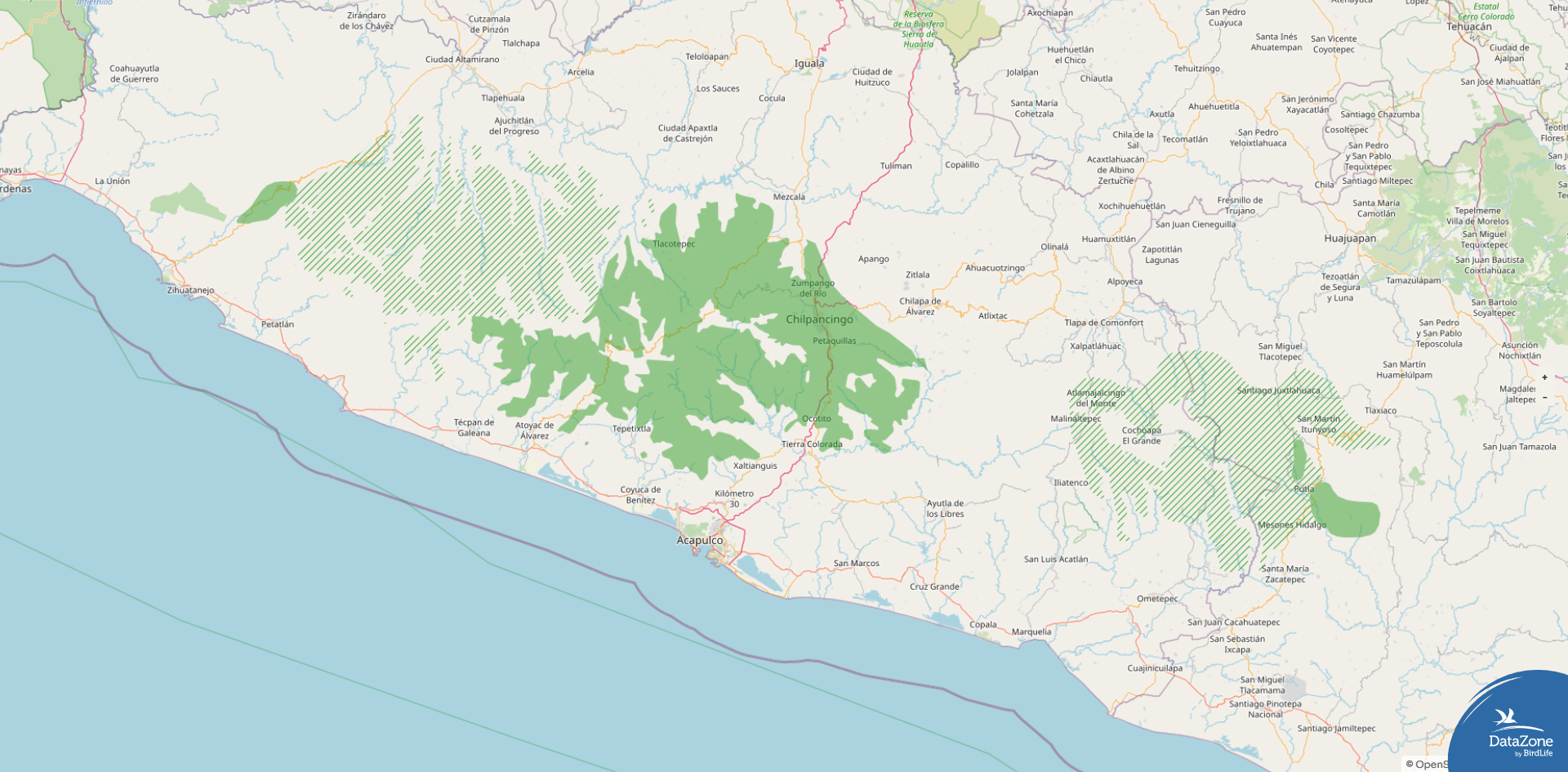
Range: Pacific slope of southwestern Mexico, in the westernmost Sierra Madre del Sur of Guerrero and extreme western Oaxaca
Habitat: Edges and interior of humid montane, semi‑deciduous, and pine–oak forest, and some plantations; requires relatively intact forest
Elevation: About 800–2,440 m (2,600–8,000 ft)
Length: Around 9–10 cm (about 3.5–3.9 in)
Weight: Roughly 3–4 g (about 0.11–0.14 oz)
Number of mature individuals: 6,000–15,000
Population trend: Decreasing
Status: Near Threatened (IUCN)
Name Origin
The genus name Eupherusa likely derives from Greek roots meaning “good” or “true” (eu), used for a small group of elegant, forest‑dwelling hummingbirds. The species name poliocerca comes from Greek polios (“grey”) and kerkos (“tail”), referring to the bird’s pale or white tail. Together, Eupherusa poliocerca describes a “white‑tailed Eupherusa,” matching the species’ striking tail pattern.
Subspecies & Distribution
White-tailed Hummingbird is monotypic, with no recognized subspecies.
It is restricted to:
The Pacific slope of the southwestern Mexican state of Guerrero and slightly into extreme western Oaxaca, in the westernmost portion of the Sierra Madre del Sur.
It inhabits the edges and interior of humid montane, semi‑deciduous, and pine–oak forests and some plantations, but appears to require relatively intact forest and is not known to occur in typical shade coffee plantations. In elevation it ranges between about 800 and 2,440 m.
Species Overview
The White-tailed Hummingbird is a Mexican endemic with a tiny, patchy range in the western Sierra Madre del Sur, where it is tied to humid mid‑elevation forests. Within this small range it can be fairly common locally, but it is absent from many apparently suitable areas, likely because of forest loss and fragmentation. Its small total population (6,000–15,000 mature individuals), restricted distribution, and ongoing habitat decline underpin its Near Threatened status.
Male Description
Adult males are small, bright green hummingbirds with a distinctive mostly white tail. The upperparts are metallic green, while the underparts are whitish to grayish with some green on the sides. The tail shows dark central feathers and largely white outer feathers, producing the characteristic “white tail” that is obvious in flight and at rest. The bill is straight, medium‑length, and dark, and the wings are dusky with the Eupherusa‑typical rufous in the flight feathers.
Female Description
Females are similar in size but slightly duller, with green upperparts and pale underparts that may show some spotting or wash on the flanks. The tail pattern is similar to the male’s, with prominent white in the outer feathers, and is a key field mark for both sexes. Females share the same overall structure and proportions, including the straight dark bill and relatively broad tail.
Habitat & Behavior
White-tailed Hummingbirds inhabit the edges and interior of humid montane, semi‑deciduous, and pine–oak forest and some mixed plantations in the western Sierra Madre del Sur. They are found between about 800 and 2,440 m, mostly in relatively intact forest, and appear to avoid heavily altered habitats such as typical shade coffee. They forage at various heights in the forest, from understory flowers to canopy blossoms along edges and clearings.
They feed on nectar from a variety of flowering trees, shrubs, and epiphytes, and like other Eupherusa species they likely favor certain canopy and edge plants when in bloom. Small arthropods are also probably taken as a protein supplement, though specific details are not well documented. Birds are typically seen singly or in small numbers at flowering trees and may show local movements following flowering patterns along the elevational gradient.
Population
The White-tailed Hummingbird’s global population is estimated at only 6,000–15,000 mature individuals. The population is thought to be Decreasing, and the species occurs patchily within its small range, with some forest blocks showing few or no records. Ongoing deforestation, logging, and conversion of forest to agriculture continue to reduce and fragment its habitat.

Conservation
White-tailed Hummingbird is assessed as Near Threatened due to its small, declining population and very restricted range in southwestern Mexico. Much of the forest in its range has been destroyed or degraded, and remaining stands face continued pressure from logging and agricultural expansion. Conservation actions should focus on protecting and managing remaining humid montane, semi‑deciduous, and pine–oak forests in the western Sierra Madre del Sur, especially in Guerrero and western Oaxaca, and on preventing further fragmentation of key forest tracts.
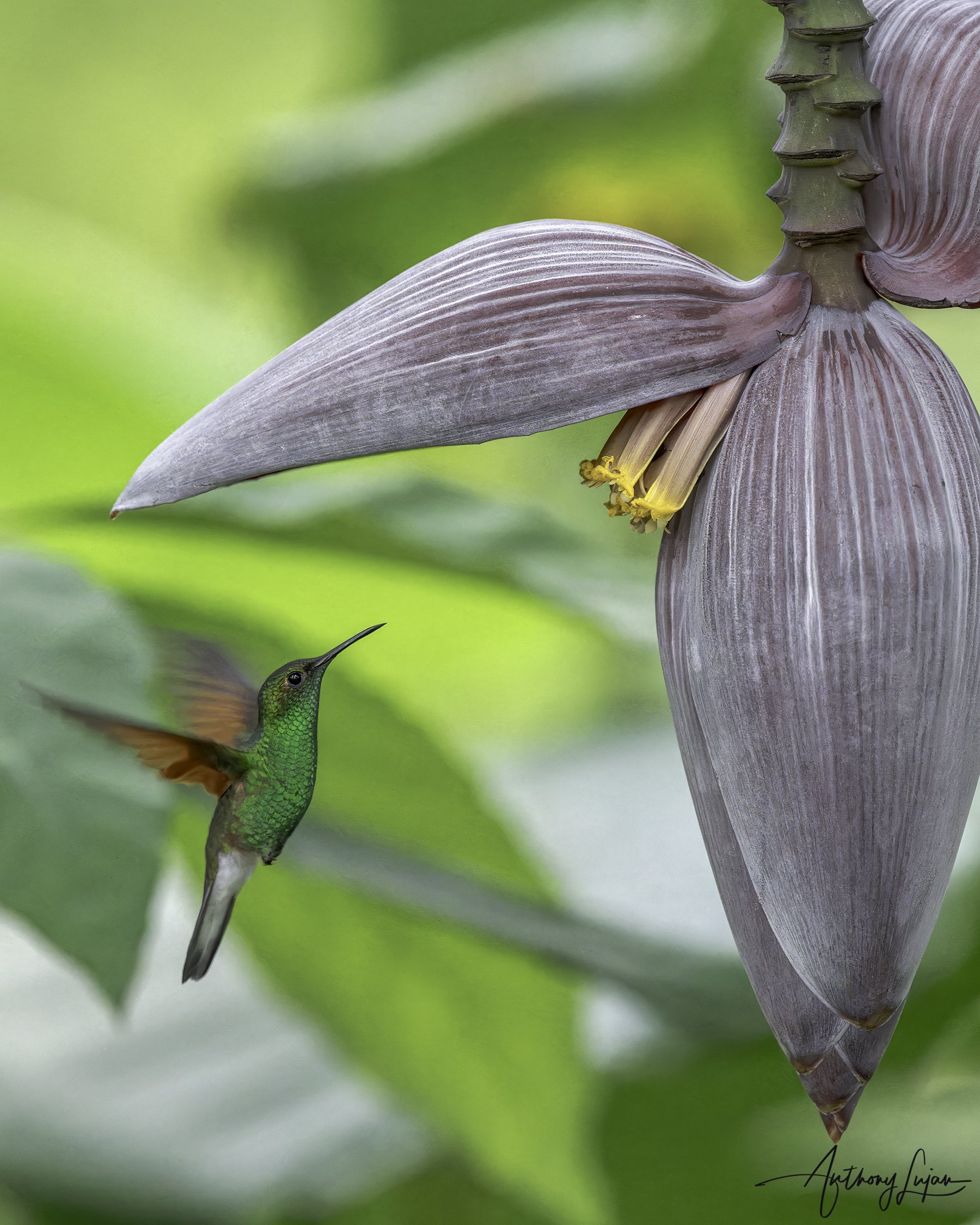
Related species in the Eupherusa genus (4 species total):


Please note: The content provided in this article reflects Anthony’s personal experience and photographic approach. Results can vary depending on light, weather, location, equipment, subject behavior, and field conditions.