
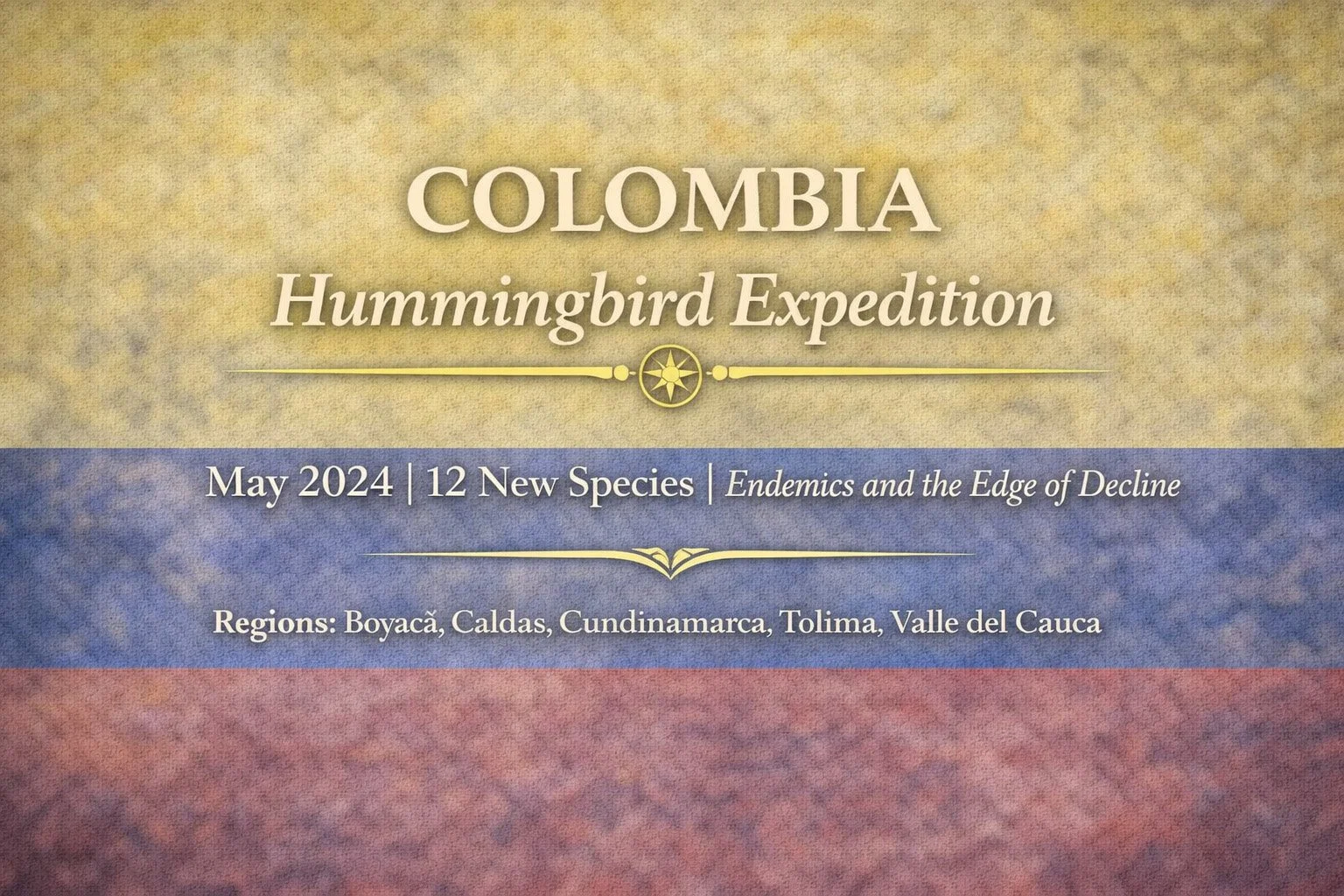
Colombia Hummingbird Expedition | October 2025
37 Species, 8 New Discoveries
Trip overview
Dates: October 8–23, 2025
Regions: Antioquia, Cesar, La Guajira, Magdalena
Total hummingbird species observed: 37
New species photographed: 8
Focus: Endemic and endangered hummingbirds
You don’t go to Colombia just to photograph hummingbirds. You go with a purpose. This trip took me across four regions of Colombia in search of endemic and endangered species, and over two weeks I documented 37 hummingbirds, including 8 new to my list. It wasn’t about numbers; it was about meaningful species.
Eight new species
Over the course of this expedition, I photographed eight hummingbird species that were new to my list:
238 LC Pale-bellied Hermit, Phaethornis anthophilus
239 LC Buffy Hummingbird, Leucippus fallax
240 LC Shining-green Hummingbird, Chrysuronia goudoti
241 EN Sapphire-bellied Hummingbird, Chrysuronia lilliae
242 CR Santa Marta Sabrewing, Campylopterus phainopeplus
243 NT Perija Metaltail, Metallura iracunda
244 LC Rufous-shafted Woodstar, Chaetocercus jourdanii
245 EN Dusky or Glittering Starthroat, Coeligena orina
Why Colombia matters for hummingbirds
Colombia is one of the most important countries on Earth for hummingbirds. The range of habitats—from lowland forests and mangroves to high Andean slopes and páramo, creates exceptional diversity. With that diversity comes pressure.
Habitat loss, fragmentation, and very limited ranges mean many species here are endemic, micro‑endemic, and threatened or endangered. This trip was built around finding those birds, the ones that require planning, patience, and the right people on the ground.
The focus: Endemic and endangered species
Of the eight new species I photographed on this trip, four stood out immediately because of their conservation status. These are not just beautiful birds; they are species that need attention.
Santa Marta Sabrewing
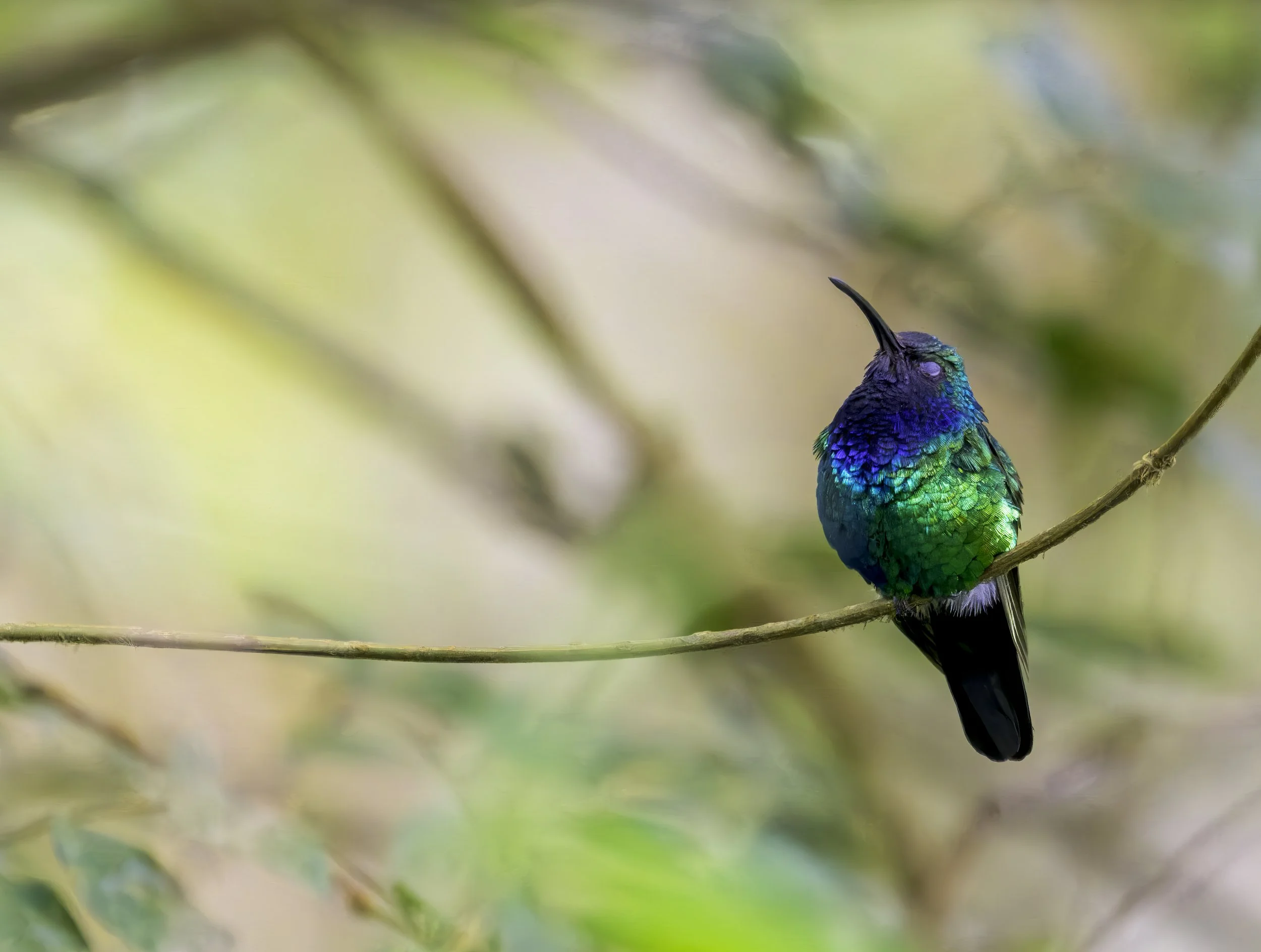
Critically Endangered · Endemic · Sierra Nevada de Santa Marta
Photographing the Santa Marta Sabrewing meant working on a steep mountainside in the high‑elevation humid forests of the Sierra Nevada de Santa Marta in Cesar, Colombia. At times it felt like I was one misstep away from sliding down the slope, and the terrain was exhausting before the bird ever entered the frame. This species lives in a narrow band of temperate forest, forest edge, and shrubby high‑elevation habitat, which made the search feel just as fragile as the bird itself.
The Santa Marta Sabrewing is one of the rarest hummingbirds in the world, with an extremely small, localized population restricted to this single mountain system. Seeing it is one thing; photographing it is something else entirely. Standing there with a camera in hand, you feel the weight of the moment—you’re not just photographing a bird, you’re documenting a species that is fighting to survive.
Visit the Santa Marta Sabrewing species page here.
Dusky Starfrontlet
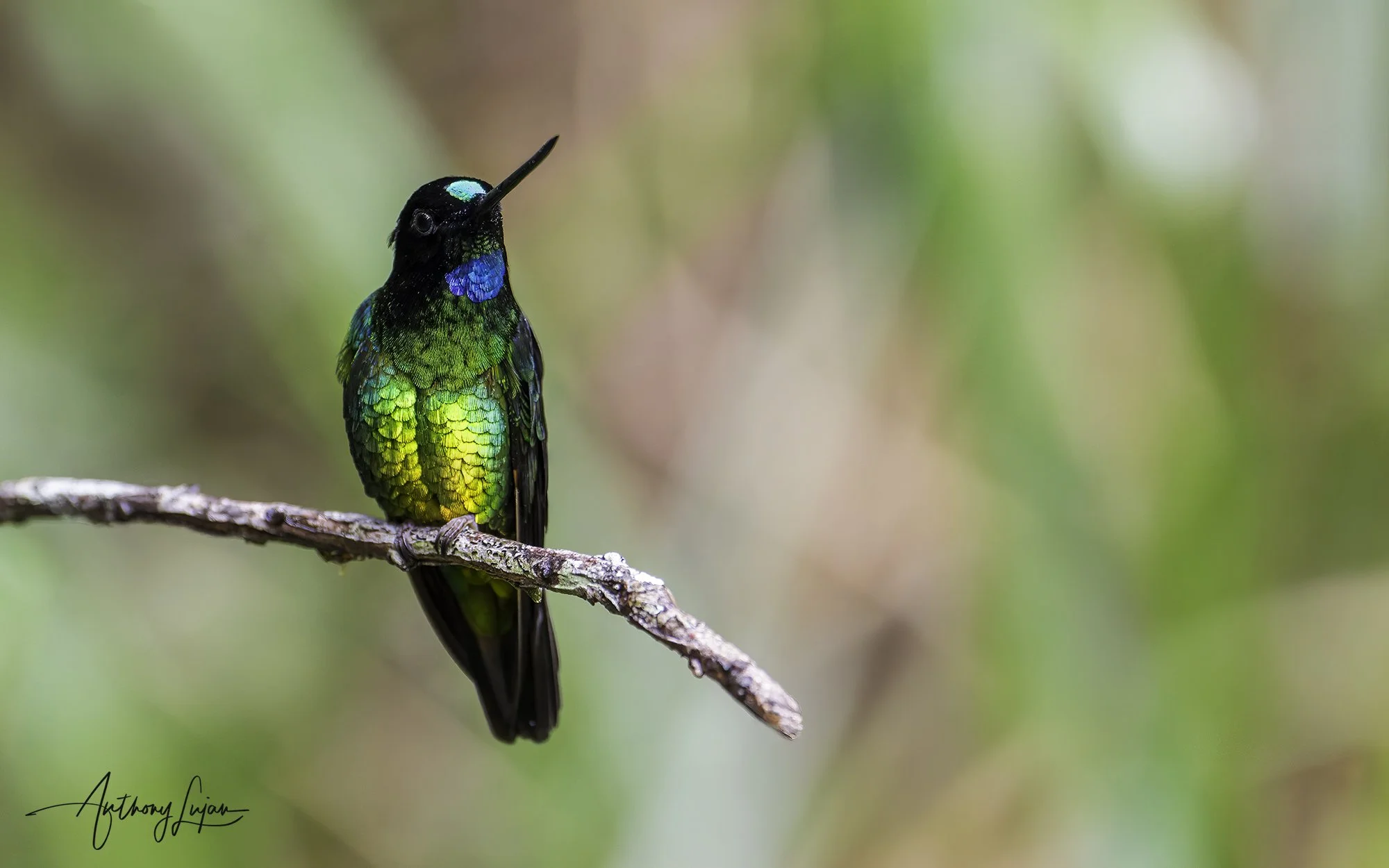
Endangered · Micro‑endemic · Reserva Natural Colibrí del Sol, Antioquia
Reserva Natural Colibrí del Sol sits high in the western Andes above Urrao, where cloud forest gives way to páramo and almost everything is wet, cold, and steep. Trails cut through moss‑covered trees, elfin forest, and open páramo with frailejones and low shrubs, and the weather can swing from clear to fully socked‑in in minutes. It’s the kind of place where you feel the altitude in every step.
For the Dusky Starfrontlet, this narrow mix of high Andean forest edges and páramo is the whole world. It moves through stunted forest, brushy edges, and open páramo patches that look rugged and untouchable at first glance but are actually a small, isolated island of suitable habitat. Watching it move through that landscape, with clouds dragging across the ridges, makes its micro‑endemic status feel very real.
Visit the Dusky Starfrontlet species page here.
Sapphire-bellied Hummingbird
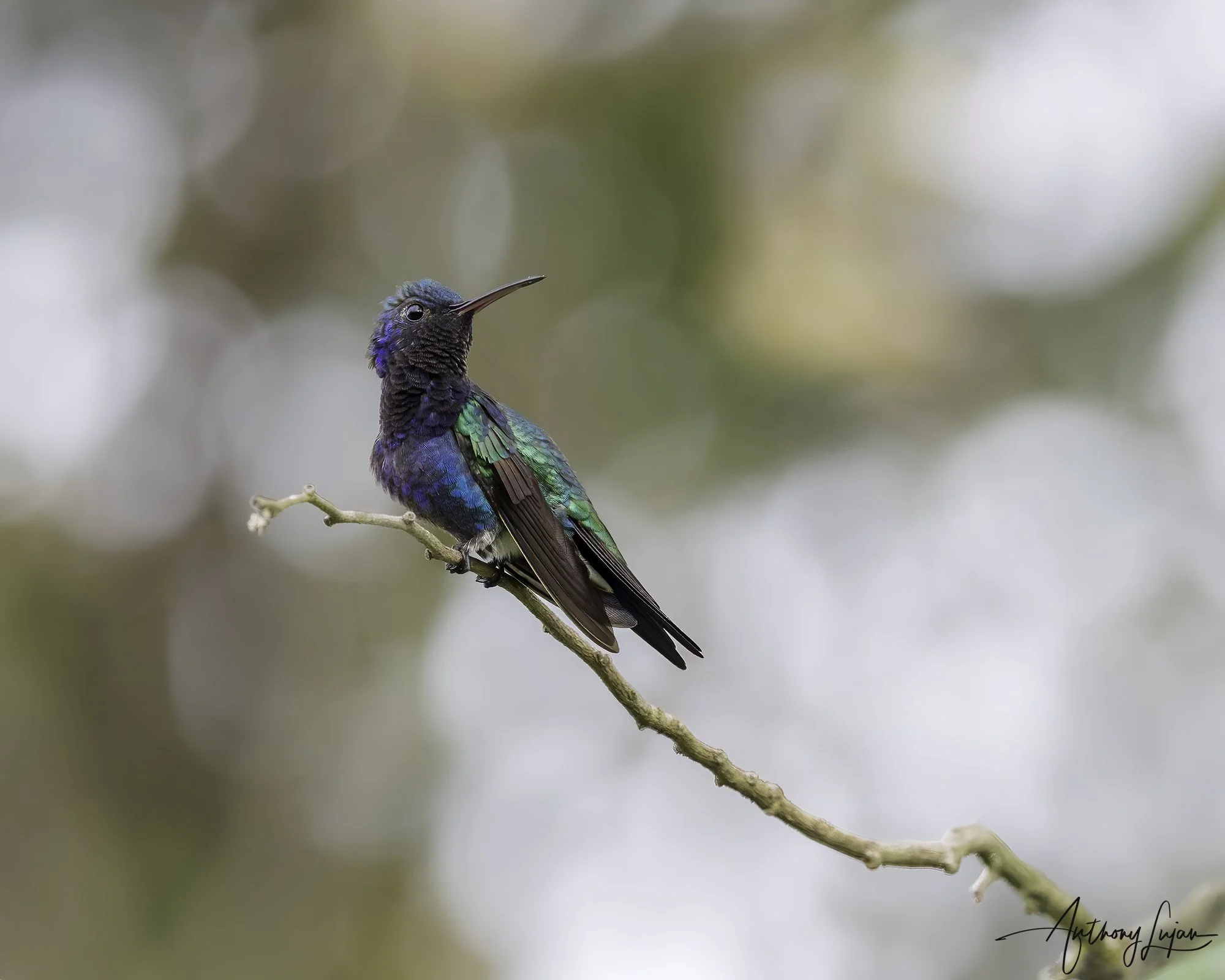
Endangered · Micro‑endemic · Sitionuevo, Magdalena (Ciénaga Grande)
Seeing the Sapphire-bellied Hummingbird in Sitionuevo, Magdalena meant stepping into a hot, humid landscape where mangroves and dry scrub meet near the Ciénaga Grande de Santa Marta. The mosquitoes were nonstop. Even getting there was memorable—we crossed the river on a floating wooden raft pulled across by rope and effort. The whole setting felt isolated and delicate, which matched the reality of the bird itself.
The Sapphire-bellied Hummingbird is known for its vivid coloration, but what stands out more is how restricted its world is. It survives in a fragmented strip of mangroves and scrub along Colombia’s Caribbean coast, pressed between water, development, and agriculture. Photographing it wasn’t just about the image; it was about capturing proof of presence in a habitat that feels like it’s shrinking.
Visit the Sapphire-bellied Hummingbird species page here.
Perijá Metaltail
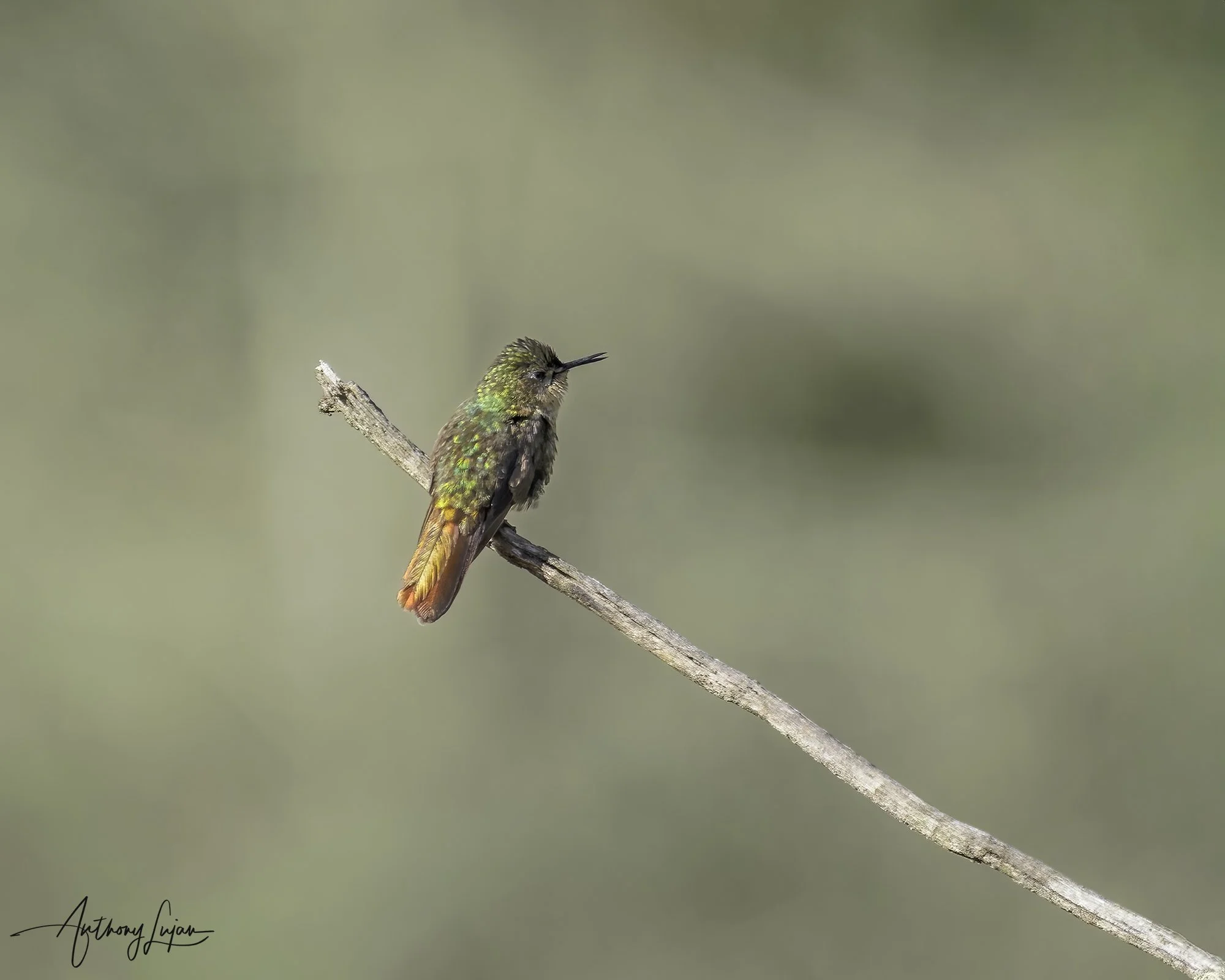
Near Threatened · Endemic · La Casa de Vidrio, Cesar (Serranía del Perijá)
La Casa de Vidrio is tucked into the Colombian side of the Serranía del Perijá, a remote border range where cloud forest, scrub, and small farms all collide on steep slopes. The road in feels like you’re leaving the main routes behind—passing scattered houses, patches of pasture, and pockets of intact forest clinging to the hillsides. It’s a landscape made of edges.
For the Perijá Metaltail, those edges are home. It works the brushy margins of forest fragments, ravines with remaining native vegetation, and shrubby clearings that still hold flowers. Standing there, you can see how much the species depends on what’s left of these montane forests, and how quickly things could change if those fragments keep getting smaller.
Visit the Perijá Metaltail species page here.
The reality of finding these birds
There’s nothing easy about this kind of trip. You’re dealing with remote locations, unpredictable weather, limited access, specific elevation ranges, and tight time windows. This is where having the right guide matters.
Knowing where a species has been seen recently, understanding movement patterns, and being able to read the environment makes all the difference. Even then, nothing is guaranteed. Some of the most important encounters of the trip lasted only seconds.
The moments you can’t plan for
Every trip has a moment where everything lines up—the light, the position, the behavior. And there are moments where nothing lines up and you still walk away with something meaningful. Some of these species didn’t offer long opportunities; a few appeared, hovered, and vanished.
That’s the reality of photographing hummingbirds in the wild. You prepare as much as you can, and then you stay ready for the brief windows you’re given.
Photography in the field
Nothing about this was controlled. There were no perfect setups, no studio‑style perches, and no guaranteed distances. You adapt to dense vegetation, uneven light, limited angles, and very fast movement.
Gear matters, but awareness matters more. Understanding behavior, anticipating how a hummingbird will move through its territory, and being ready before it happens is everything in this kind of work.
Why trips like this matter
It’s easy to chase numbers—how many species you’ve photographed, how many lifers you’ve added. Trips like this change that mindset. This expedition was about documenting endangered species, raising awareness, understanding habitat pressure, and seeing firsthand what’s at risk.
When you photograph a species with a tiny, localized population, it changes how you think about your images. They become part of a larger story about conservation, habitat loss, and time.
Final thoughts
Colombia delivered, but not in the way most people expect. Yes, I added new species, but more importantly, this trip reinforced something that stands out more with every expedition: not all hummingbirds are thriving.
Some are holding on in very small pockets of the world. If we’re going to seek them out, photograph them, and share them, we also carry the responsibility to talk about what’s happening to them and why those pockets matter.
If you want to see the full list of species photographed during this trip, you can view the complete travel overview here: 2025 08 Colombia
Colombia hosts 167 hummingbird species; see the ones I’ve photographed.
Join me on future trips like this. You can find more details here: Visit Travel with Me!
Frequently Asked Questions
Trips like this to Colombia often spark broader questions about diversity, endemism, and how difficult it really is to photograph rare hummingbirds. These answers provide a bit more context about the fieldwork.
-
Colombia has one of the highest levels of hummingbird diversity in the world, driven by its complex geography and climate gradients from lowland rainforest and mangroves to high Andean páramo.
-
An endemic species is found only in a specific geographic area and nowhere else in the world.
-
Micro‑endemic species have an extremely small range, often restricted to a single mountain range, valley, or habitat type.
-
Habitat loss, fragmentation, climate change, and naturally limited ranges are the main drivers of hummingbird population declines.
-
It is very difficult and usually requires detailed planning, local knowledge, patience, and often multiple attempts in challenging field conditions.

Please note: The content provided in this article reflects Anthony’s personal experience and photographic approach. Results can vary depending on light, weather, location, equipment, subject behavior, and field conditions.