
Brazil Hummingbird Expedition | June 2025

10 New Species | Amazon Rivers and Rocky Highlands
Trip overview
Dates: June 14 – July 1, 2025
Regions:
Amazonas: Borba, Iranduba, Manacapuru, Novo Airão, Presidente Figueiredo
Minas Gerais: Rio Acima, Santa Bárbara, Santana do Riacho
São Paulo: Eldorado
Total hummingbird species observed: 24
New hummingbird species photographed: 10
Focus: Four long-awaited hummingbirds from Amazon floodplains to southeastern rocky ranges
For this return to Brazil, I had a short target list and a long line on the map. Four hummingbirds I could not ignore any longer, spread from deep Amazonian river systems in the north to the rocky highlands of Minas Gerais and forests of São Paulo in the southeast. Fiery Topaz, Diamantina Sabrewing, Hyacinth Visorbearer, and Olive-spotted Hummingbird defined the route. Everything else was built around getting into the right rivers, forests, and rocky outcrops to finally meet them.
Why the Amazon and Minas Gerais
Brazil is too big to cover in one or two trips, so each expedition needs a clear shape. This one split in two. The first half followed Amazonian rivers and flooded forests near places like Borba, Manacapuru, Novo Airão, and Presidente Figueiredo. The second half dropped back into southeastern Brazil, into the Espinhaço range and the surrounding highlands of Minas Gerais, with a link through Eldorado in São Paulo.
During this expedition, I photographed ten hummingbird species, all of them new to my list:
#228 LC Crimson Topaz, Topaza pella
#229 LC Long-tailed Hermit, Phaethornis superciliosus
#230 LC Green-tailed Goldenthroat, Polytmus theresiae
#231 LC Black-eared Fairy, Heliothryx auritus
#232 LC Olive-spotted Hummingbird, Talaphorus chlorocercus
#233 LC Needle-billed Hermit, Phaethornis philippii
#234 LC Fiery Topaz, Topaza pyra
#235 LC Streak-throated Hermit, Phaethornis rupurumii
#236LC Hyacinth Visorbearer, Augastes scutatus
#237 NT Diamantina Sabrewing, Campylopterus diamantinensi
Four of these hummingbirds drove the entire plan: Fiery Topaz, Diamantina Sabrewing, Hyacinth Visorbearer, and Olive-spotted Hummingbird.
Fiery Topaz
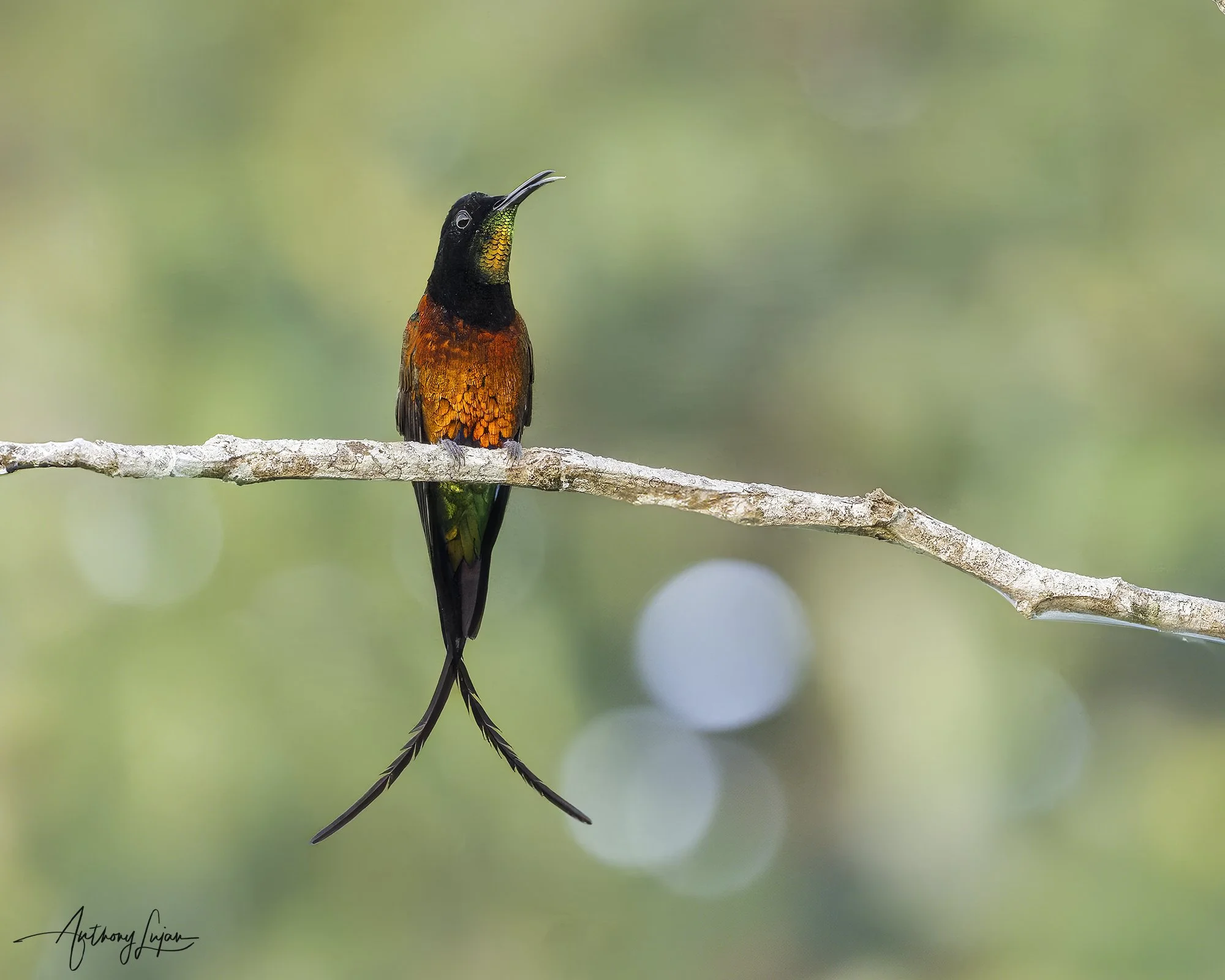
Shy river jewel that avoids heat and glare
Fiery Topaz is one of those Amazon hummingbirds that feels almost mythical until you see it. Long tail, saturated color, and a posture that looks like it belongs in a painting. It lives along lowland rivers and forest edges, especially near water and in places where flowering trees and vines meet the canopy. It also tends to be shy and sensitive to bright, direct light and high heat.
On the ground, that meant working early and late, and looking for shaded edges rather than open, sun-blasted gaps. The bird’s colors are at their best when the light is soft or filtered, and its behavior matches that preference. It stayed in the shadows, moved through the mid and upper levels of the forest edge, and often retreated quickly if conditions became too exposed. Photographing Fiery Topaz required patience with low light and a willingness to let the bird dictate when and how it would be seen. When everything lined up, it felt like the forest briefly revealed one of its most guarded secrets.
Diamantina Sabrewing
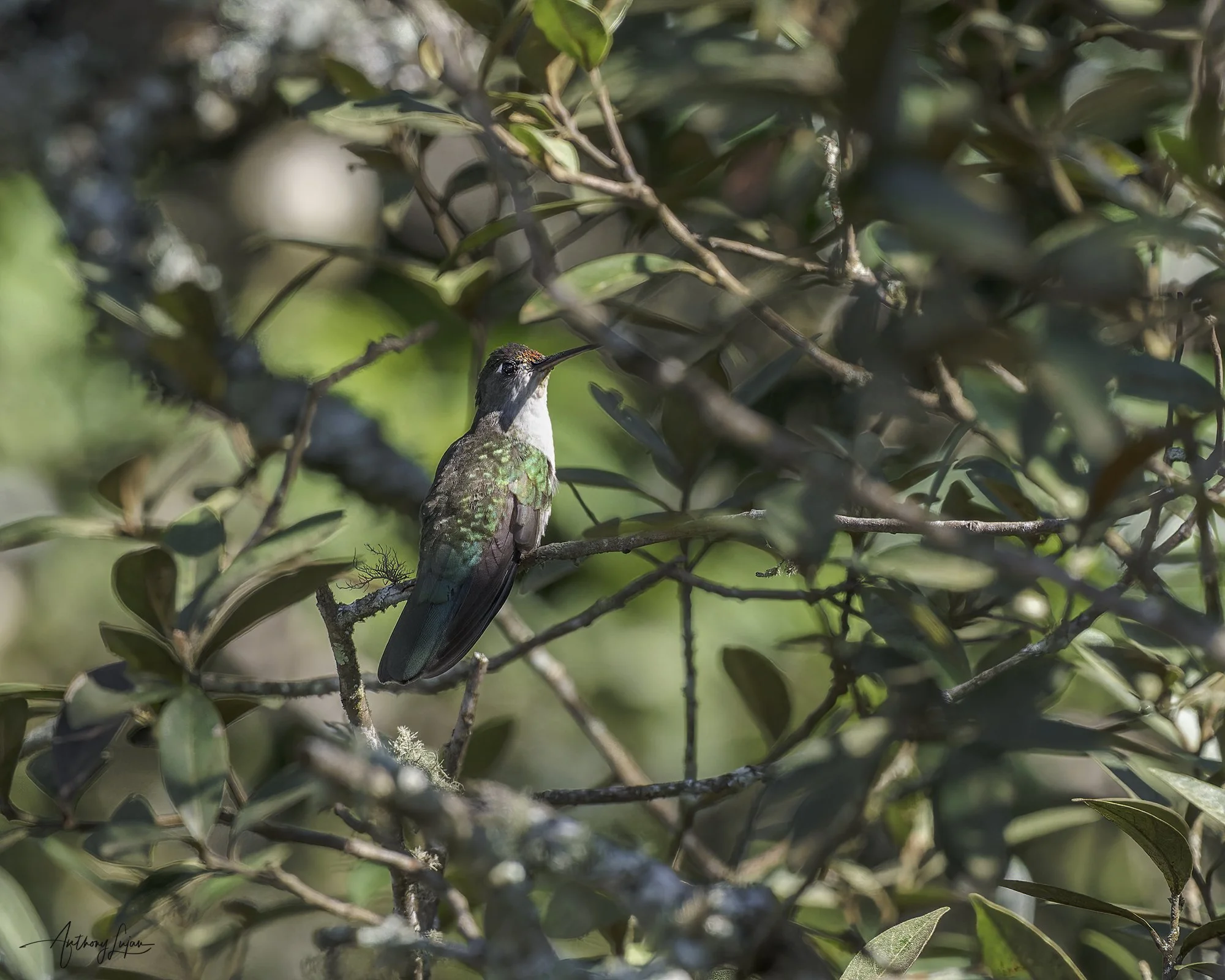
Endemic, Near Threatened, and confined to Espinhaço rock and stream
Diamantina Sabrewing is a hummingbird with a name that tells you exactly where it lives. It is endemic to the Espinhaço Range in Minas Gerais and tied to forested streams and ravines within high, dry, rocky campos rupestres. Its range is small and its preferred habitat is narrow, which makes every intact ravine and stream corridor feel important.
Out on the ground, the Espinhaço feels like a mosaic of rock, grass, and scrub broken by cool, damp corridors where water still flows. Those are the places where the sabrewing appears. It moves along shaded stream edges, perches above small cascades, and feeds at flowering plants that lean into the cool air of ravines. Finding it meant hiking through open, sunlit rocky grasslands, then dropping into these narrow green channels and staying there long enough for the bird to reveal itself. Photographing Diamantina Sabrewing felt like working in a series of natural hallways: tight spaces, mixed light, and a hummingbird that only exists in this particular mountain system.
Hyacinth Visorbearer
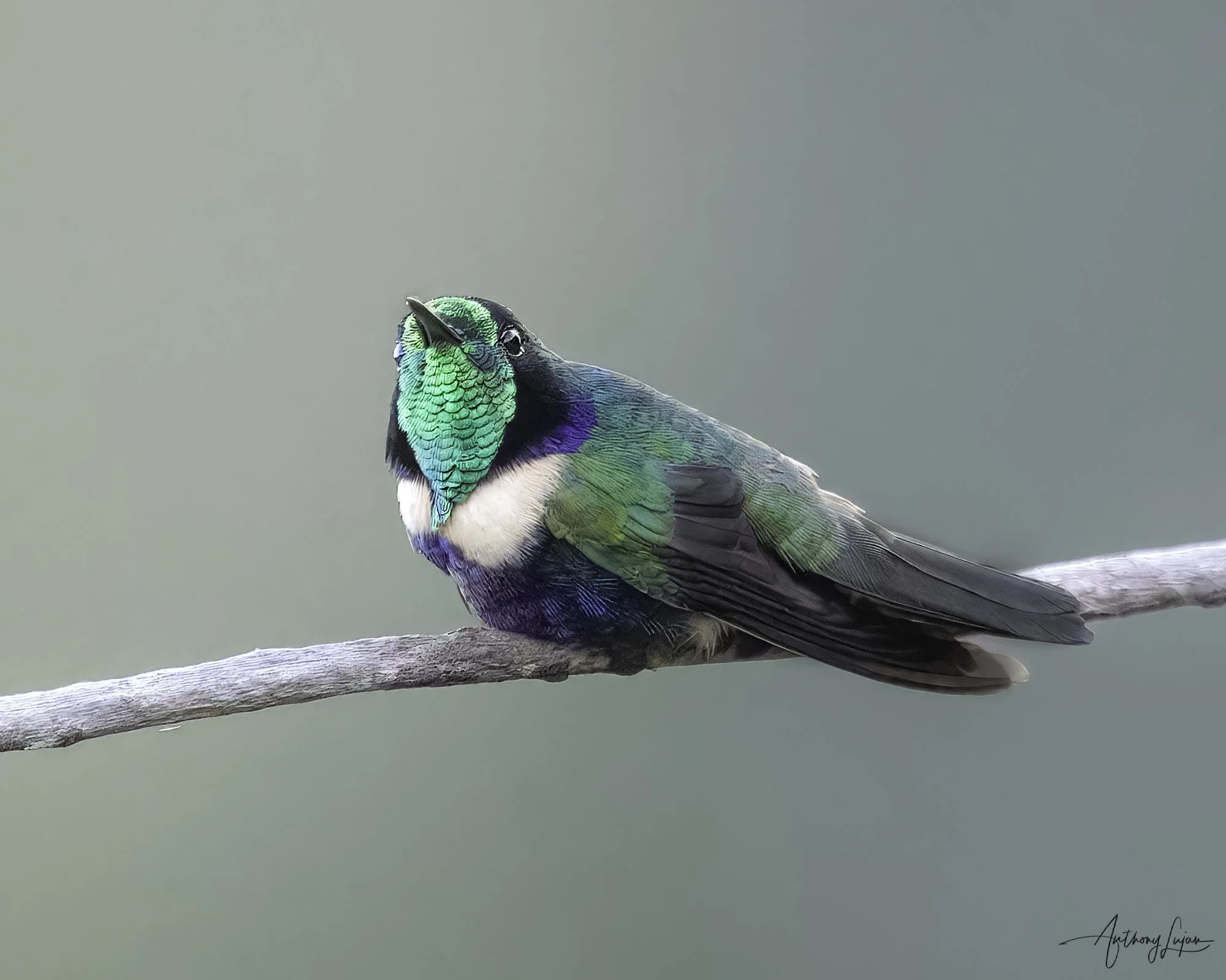
Campos rupestres specialist with an electric face
Hyacinth Visorbearer had been on my list since the first time I saw a photograph of a male with the “visor” lit up. It is another Espinhaço hummingbird, a high-elevation specialist of rocky slopes and campos rupestres in central and eastern Minas Gerais. Open, sunlit slopes with low shrubs, bromeliads, and exposed rock define its habitat, and it spends much of its time flying close to the ground between flowering plants.
In the field, this species felt like the visual opposite of the Amazon hermits. Bright sun, big sky, and a bird that can look almost understated until it turns just right and the colors in the face and underparts ignite. Males used small shrubs and low branches as perches, often against wide-open backgrounds. Photographing Hyacinth Visorbearers meant embracing that openness. Instead of fighting the sun, I had to work with it, positioning myself for angles where the visor flashed without blowing out. It was one of those hummingbirds where the right half-second changed everything.
Olive-spotted Hummingbird

A river island specialist who required a boat
Olive-spotted Hummingbird has one of the most specific habitat requirements of any hummingbird I have worked with. It is tied to Amazon river islands and floodplain edges, and it occurs almost entirely in early successional vegetation along major rivers. During this trip, that meant there was only one way to see it. Take a boat out onto the Negro and Amazon rivers, reach the right islands and banks, and then search through the floodplain vegetation.
Those boat rides were their own part of the story. Long stretches on wide water, watching for the slight rise of young islands and the line of shrubs and trees that signal habitat for this species. Once ashore, the work shifted to walking sand and silt, weaving through low, dense vegetation that spends part of each year underwater. The hummingbirds moved through these patches with purpose, staying close to the plants that only grow in this shifting zone between land and water. Photographing Olive-spotted Hummingbirds meant juggling boat logistics, river conditions, and fast-moving birds in tight, bright spaces. It was a reminder that some hummingbirds cannot be approached along roads or trails. You have to go to them on the river that shapes their world.
The rest of the Amazon–Espinhaço cast
The other six new species gave this trip depth and context:
Crimson Topaz added a second, equally striking topaz to the Amazon portion of the expedition, complementing Fiery Topaz with its own color palette and behavior.
Long-tailed Hermit, Needle-billed Hermit, and Streak-throated Hermit represented different layers of the Amazon hermit community, each tied to particular flower types and forest structures.
Green-tailed Goldenthroat and Black-eared Fairy brought open-edge and canopy energy to riverine and forest-edge habitats, bridging the gap between deep forest and more exposed areas.
Together with familiar species from earlier Brazil expeditions, they made this 2025 route feel like a continuous path from flooded islands and lowland forest up to rocky highland scrub.
What this expedition changed
This Brazil expedition tied together two sides of the project that had been developing separately. On one end, the Amazon, with its boat access species, shy canopy jewels, and hermits that know every flower along the river. On the other hand, the Espinhaço range, with campos rupestres, rocky slopes, and a suite of specialized hummingbirds living in a biome that looks almost nothing like the classic idea of “tropical rainforest.”
Fiery Topaz, Diamantina Sabrewing, Hyacinth Visorbearer, and Olive-spotted Hummingbird each demanded their own kind of effort. Different transport, different walking, different light. Together, they reinforced the idea that “Brazil hummingbirds” is not a single story. It is a network of river channels, mountains, and highland outcrops that will keep pulling me back as long as there are species and habitats that still need to be documented.
If you want to explore the full list of species photographed during this trip, you can view the complete travel overview here: 2025 06 Brazil
Brazil hosts 87 hummingbird species; see the ones I’ve photographed.
Join me on future trips like this. You can find more details here: Visit Travel with Me!
Frequently asked questions
Every trip raises its own set of questions. This quick FAQ adds context before you move on to the next Hummingbird Travel Story.
-
Because the four target hummingbirds were split between river islands and lowland forest in the north and rocky highlands in the southeast. A single route let me connect both ends of that gradient.
-
It required boat access to young river islands and floodplain edges. There was no way to see it by road. Reaching the species meant planning around river levels, boats, and landing spots.
-
The contrast was intense. Hot, humid lowland forest and river conditions gave way to dry, windy highlands with strong sun and cooler air. Each section required different pacing and shooting strategies.
-
Yes. The Amazon still holds species I have only seen briefly or not at all, and the Espinhaço range has other specialized hummingbirds and habitats that deserve the same focused attention.








Please note: The content provided in this article reflects Anthony’s personal experience and photographic approach. Results can vary depending on light, weather, location, equipment, subject behavior, and field conditions.