
How Hillstar Hummingbirds Turn Colonial Instead of Combative
Hummingbirds are famous for their feisty tempers. Backyard observers and field biologists alike are used to seeing them chase, dive bomb, and defend flowers or feeders with surprising intensity. For most hummingbird species, sharing space, especially around nests, is not part of the plan.
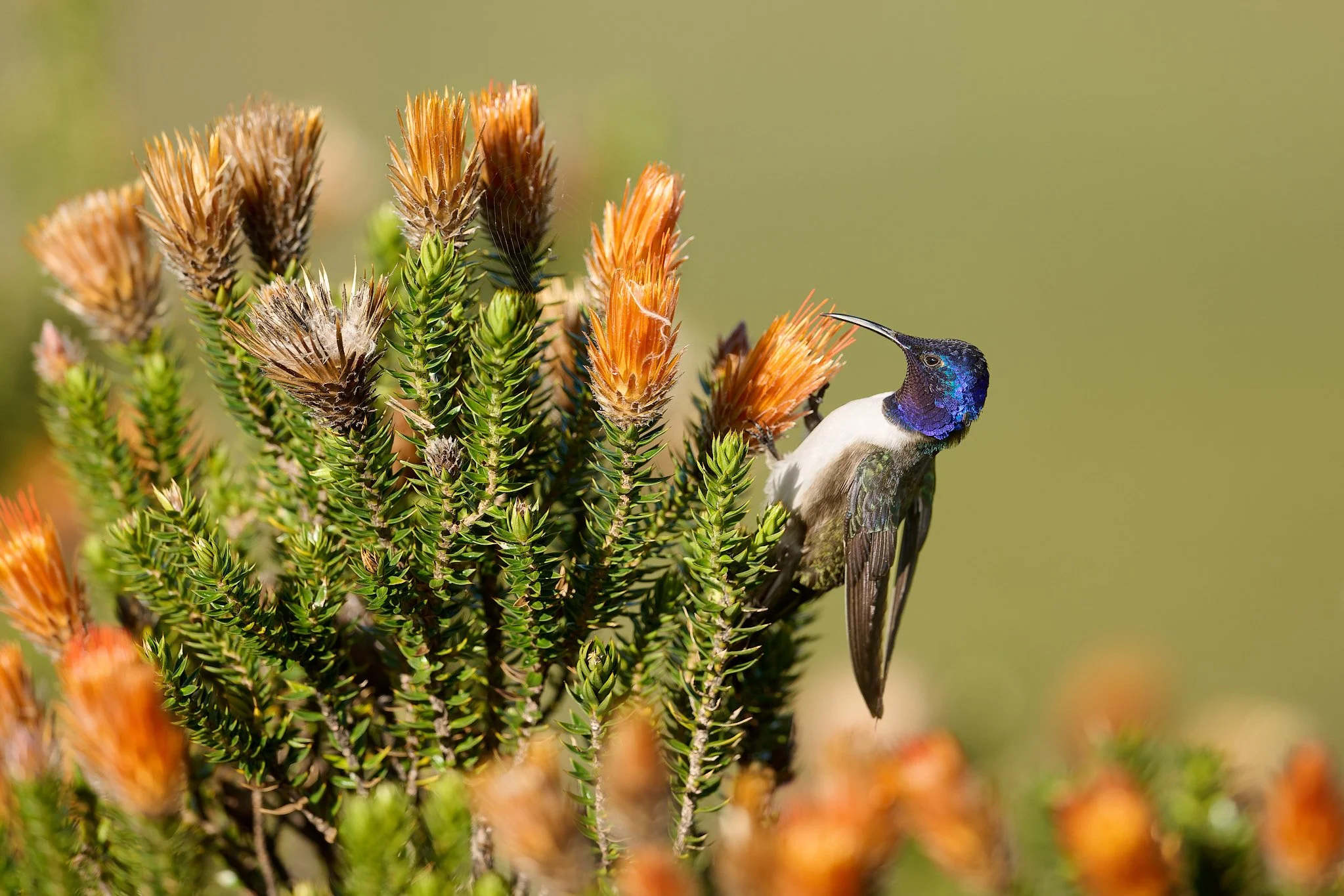
A recent study published in the journal Ornithology revealed a surprising exception high in the Andes of Ecuador. Researchers found that Chimborazo Hillstar hummingbirds do not just tolerate each other, they nest and roost together in colonies, likely the first documented case of true colonial nesting and roosting in a hummingbird species. The study explores why a bird from a typically aggressive family might evolve to live in groups instead of going it alone.
What Scientists Studied
The research focused on the Chimborazo Hillstar (Oreotrochilus chimborazo chimborazo), a hummingbird that lives in the High Andes of Ecuador at elevations above 10,000 to 12,000 feet. This is a harsh environment with cold temperatures, strong winds, and limited patches of vegetation that offer few safe places to find nectar, water, or shelter.
Traditionally, hummingbirds are considered solitary nesters, with females building and defending their own nests while males focus on displaying and defending feeding territories. The goal of this study was to test whether the Chimborazo Hillstar follows the usual hummingbird pattern or has evolved a different social strategy in response to the extreme conditions of its habitat.
How the Research Was Conducted
Researchers surveyed steep slopes and ravines on and around the Chimborazo volcano, searching for nests in crevices, small caves, and man made structures such as culverts. At each site, they recorded the number of active nests, the presence of roosting birds, and whether nests were clustered together or isolated.
They then compared sites where nests were found with other locations that appeared suitable but were not used. This allowed them to ask an important question: are hillstars nesting in groups only because safe sites are extremely rare, or are they actively choosing to cluster in colonies even when solitary nesting sites are available? The team also documented how many nests occurred in groups versus alone, and noted how birds moved to and from these nesting areas.
What the Study Found
The results were striking. Of all the active nests recorded, the large majority were found in clusters, true colonies, rather than as solitary nests. In these colonies, multiple nesting females and additional roosting birds shared the same general shelter area, sometimes in caves or culverts protected from wind and weather. Only a small fraction of nests were found alone, even though the researchers identified other suitable sites that could have supported solitary nesting.
This pattern suggests the birds are not simply forced together by a lack of nesting spaces. Instead, Chimborazo Hillstars appear to be actively choosing to nest and roost in groups, a behavior very different from the typical everyone for themselves hummingbird strategy. Observations of birds leaving colonies in the same direction also hint that individuals may be paying attention to each other’s movements, potentially sharing information about where to find food or mates.
Why the Discovery Matters
This study likely represents the first documented example of colonial nesting and roosting in a hummingbird species. It challenges the long held view that hummingbirds are uniformly solitary and aggressive, showing that at least one species has taken a very different path. In the extreme environment of the High Andes, group living may offer advantages such as safer roosting away from harsh winds, easier access to mates, or better information about scattered nectar sources.
From an evolutionary perspective, coloniality usually evolves when individuals gain higher reproductive success by living in groups than they would on their own. The Chimborazo Hillstar suggests that even in a family known for territorial behavior, social strategies can emerge under the right ecological pressures. For anyone fascinated by hummingbirds, this finding opens up new questions about how environment, social behavior, and survival are linked in these remarkable birds.
Research Credit
This article summarizes findings from the following scientific study:
Cañas-Valle, Gustavo; Bouzat, Juan L. (2025)
Ecological drivers of coloniality in Oreotrochilus chimborazo chimborazo (Chimborazo Hillstar), a hummingbird endemic to the High Andes of Ecuador.
Ornithology, Volume 142, Issue 2, Article ukaf063
Readers interested in the full methodology, experiments, and analysis can consult the original publication.
Frequently Asked Questions
Scientific studies often raise additional questions about how hummingbirds behave and survive in the wild. Here are a few common questions related to this research.
-
No. Most hummingbirds are strongly territorial and solitary nesters. Females usually build and defend individual nests, and males often defend feeding territories. The Chimborazo Hillstar appears to be an exception, making its colonial behavior especially noteworthy.
-
A colonial bird species is one in which many individuals nest or roost in close proximity, often returning to the same sites year after year. Examples include seabirds like puffins or terns. In colonial species, group living can provide benefits such as shared information about food, increased vigilance against predators, or safer microclimates.
-
In the High Andes, conditions can be extremely cold and windy, and safe nesting sites with some shelter are limited. By sharing protected spaces, hillstars may gain a more stable microclimate, easier access to mates, and possibly better information about where to find nectar and water. These benefits may outweigh the potential costs of living near other hummingbirds.
-
Not necessarily. Even colonial birds can show aggression, especially when resources are limited. However, the key finding in this study is that Chimborazo Hillstars tolerate nesting and roosting very close to one another, which is highly unusual for hummingbirds and suggests a shift toward more cooperative or at least more tolerant social behavior.
-
It is possible. Many high elevation or remote habitats are still understudied, and unusual behaviors can go unnoticed for years. The Chimborazo Hillstar discovery suggests that more surprises may be waiting in challenging environments where birds face strong pressures to adapt in creative ways.










Please note: The content provided in this article is for educational purposes only and summarizes published scientific research. Interpretations of research may evolve as new studies become available.