Veraguan Mango
Scientific name: Anthracothorax veraguensis
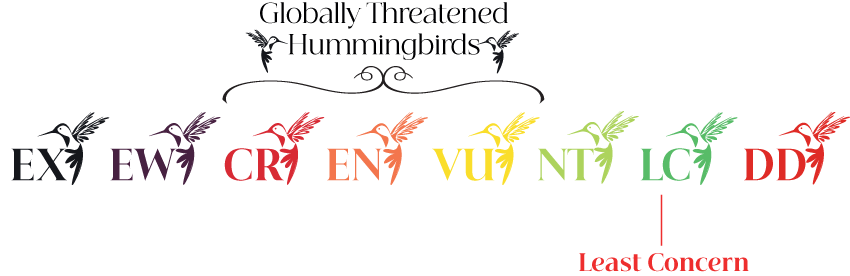
The Veraguan Mango is a medium-sized hummingbird with a small, localized range in the Pacific lowlands of Panama and adjacent southern Costa Rica. Its global population is estimated at 20,000–49,999 mature individuals, the trend is considered stable, and it is listed as Least Concern and treated as non-migratory.
At a Glance
Family: Trochilidae (hummingbirds)
Clade: Polytminae – Mangoes
Genus: Anthracothorax
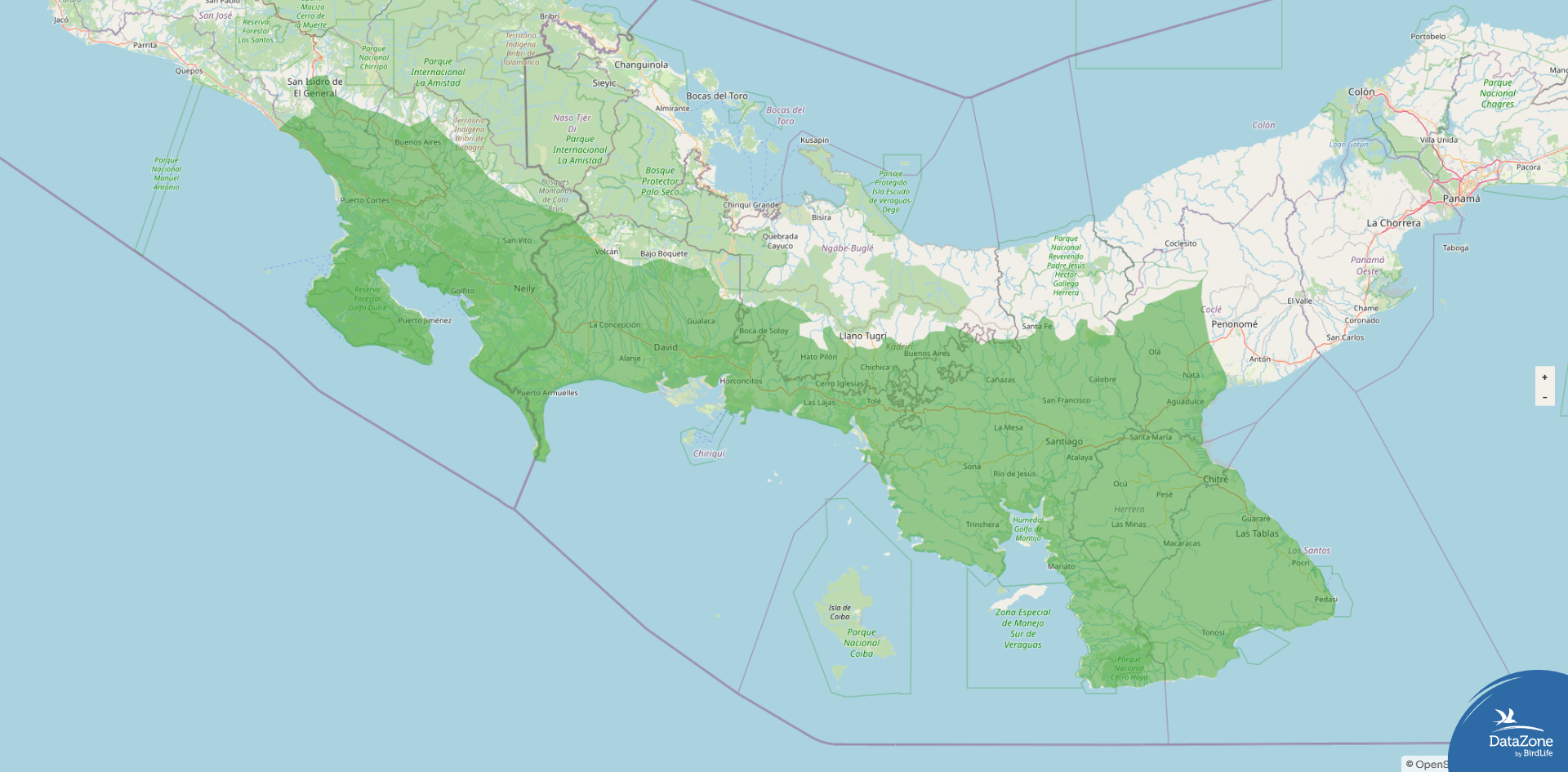
Range: Pacific lowlands of western and central Panama (especially Chiriquí to Coclé) and adjacent southern Costa Rica
Habitat: Open and semi-open lowland areas including pastures with scattered trees, hedgerows, stream edges, gardens, and other open country with flowering trees and shrubs
Elevation: Primarily lowlands, mostly near sea level in Pacific lowland zones
Length: About 11–12 cm (roughly 4.3–4.7 in)
Weight: Around 6–7 g (medium-sized for a hummingbird)
Number of mature individuals: 20,000–49,999
Population trend: Stable
Status: Least Concern (IUCN)
Name Origin
The species name veraguensis refers to Veraguas Province in Panama, where the species was first described and where it is still regularly found. The English name “Veraguan Mango” (also spelled “Veraguas Mango”) reflects this geographic origin and its inclusion in the mango hummingbird group, genus Anthracothorax. It was formerly considered part of the Green-breasted Mango complex but is now recognized as a distinct species.
Subspecies & Distribution
The Veraguan Mango is monotypic, with no recognized subspecies.
Across its range, it is restricted mainly to:
Pacific lowlands of western and central Panama (especially Chiriquí, Veraguas, and Coclé)
Adjacent southern Costa Rica in the Pacific lowlands, where it appears to have expanded recently or is still spreading northward
It is largely absent from the Caribbean slope and from most of central and eastern Panama, where other mango species replace it. Its overall distribution is narrow but continuous along suitable Pacific lowland habitats.
Ledged
Green Resident
Species Overview
The Veraguan Mango is a characteristic hummingbird of open and semi-open Pacific lowland habitats, such as cattle pastures with scattered trees, hedgerows, gardens, and riparian strips. It is tied more to open country than to dense forest and is often seen around flowering trees in rural and semi-urban landscapes. Its small global range but seemingly healthy numbers and adaptability to human-modified environments support its current Least Concern status and stable population assessment.
Male Description
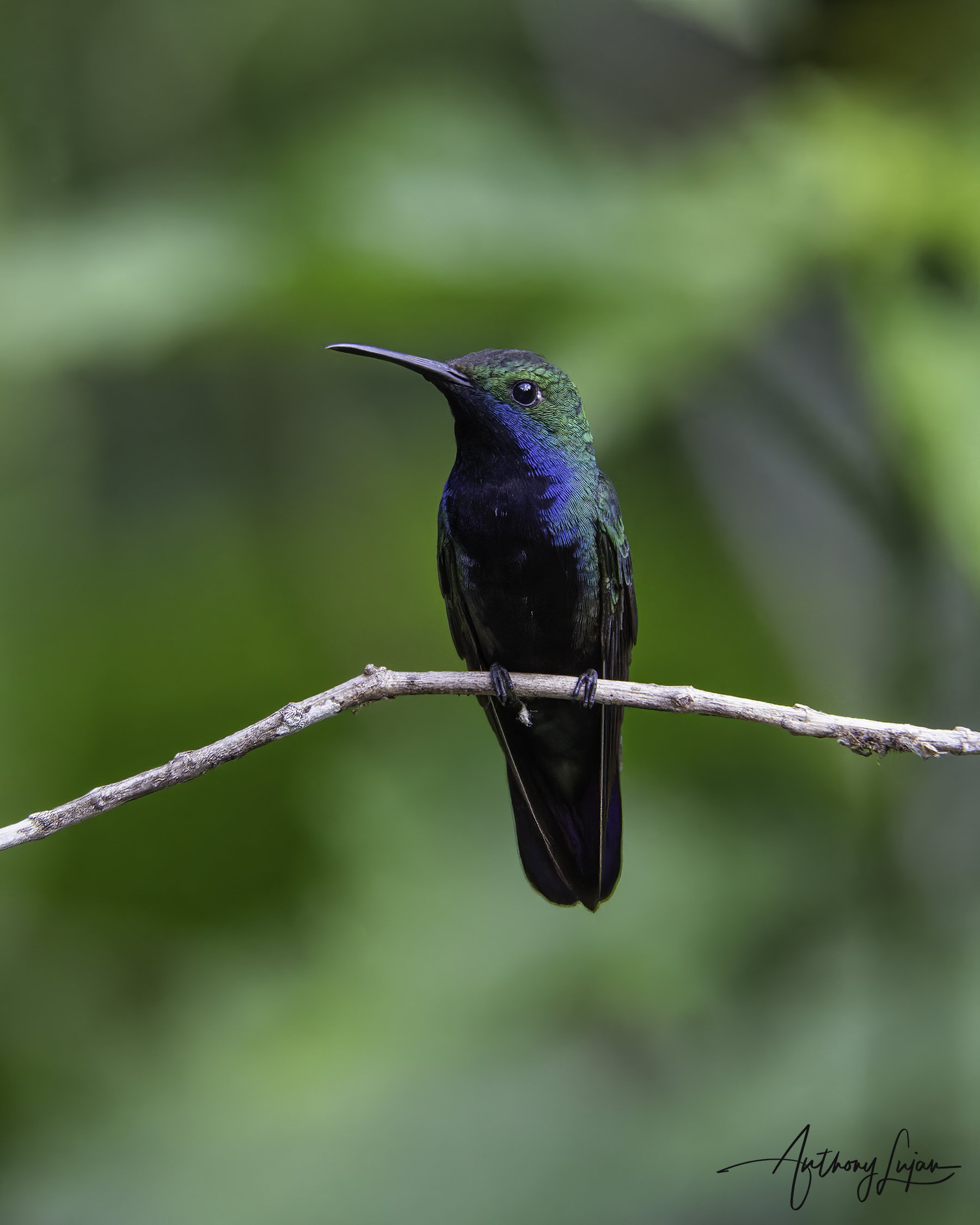
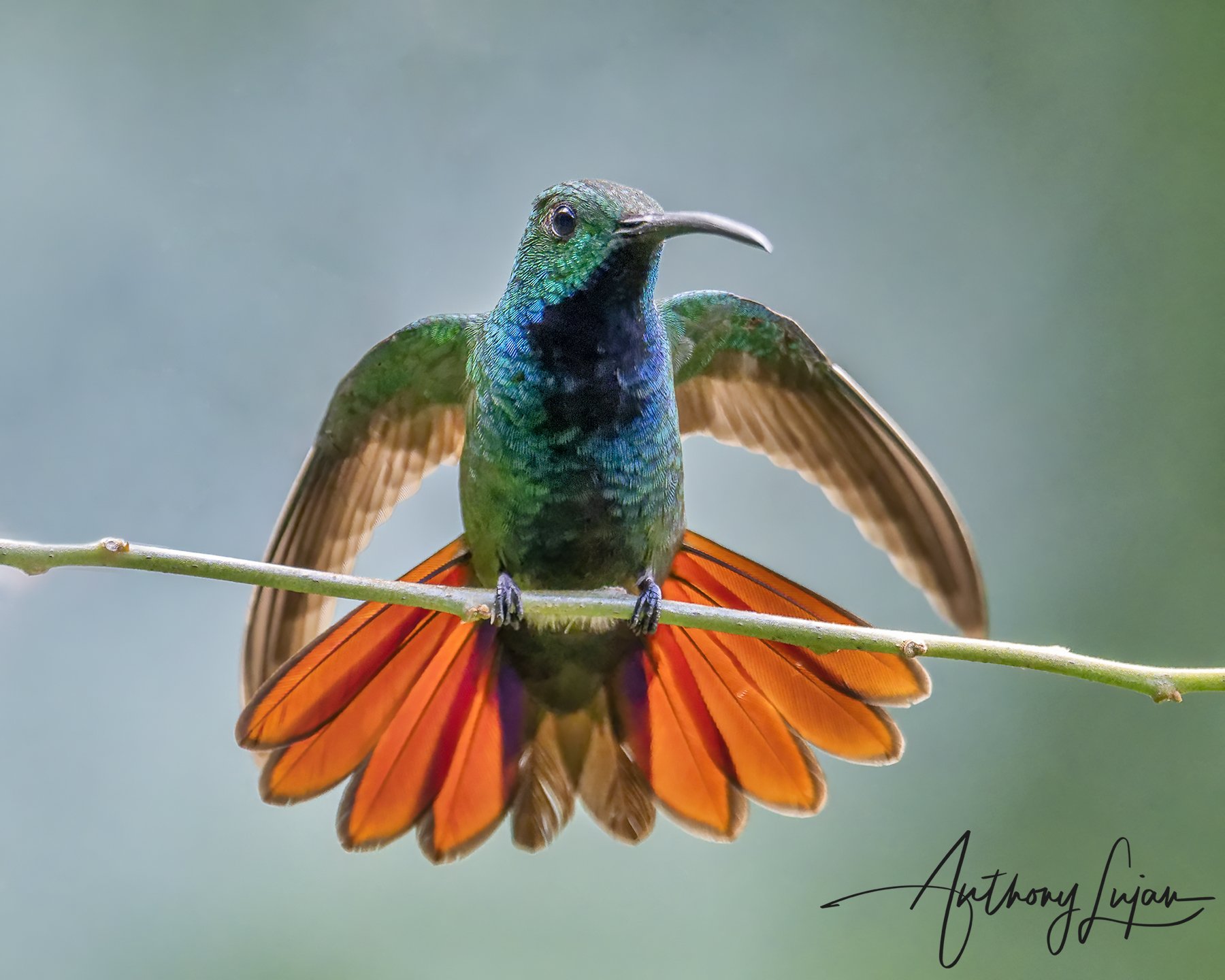
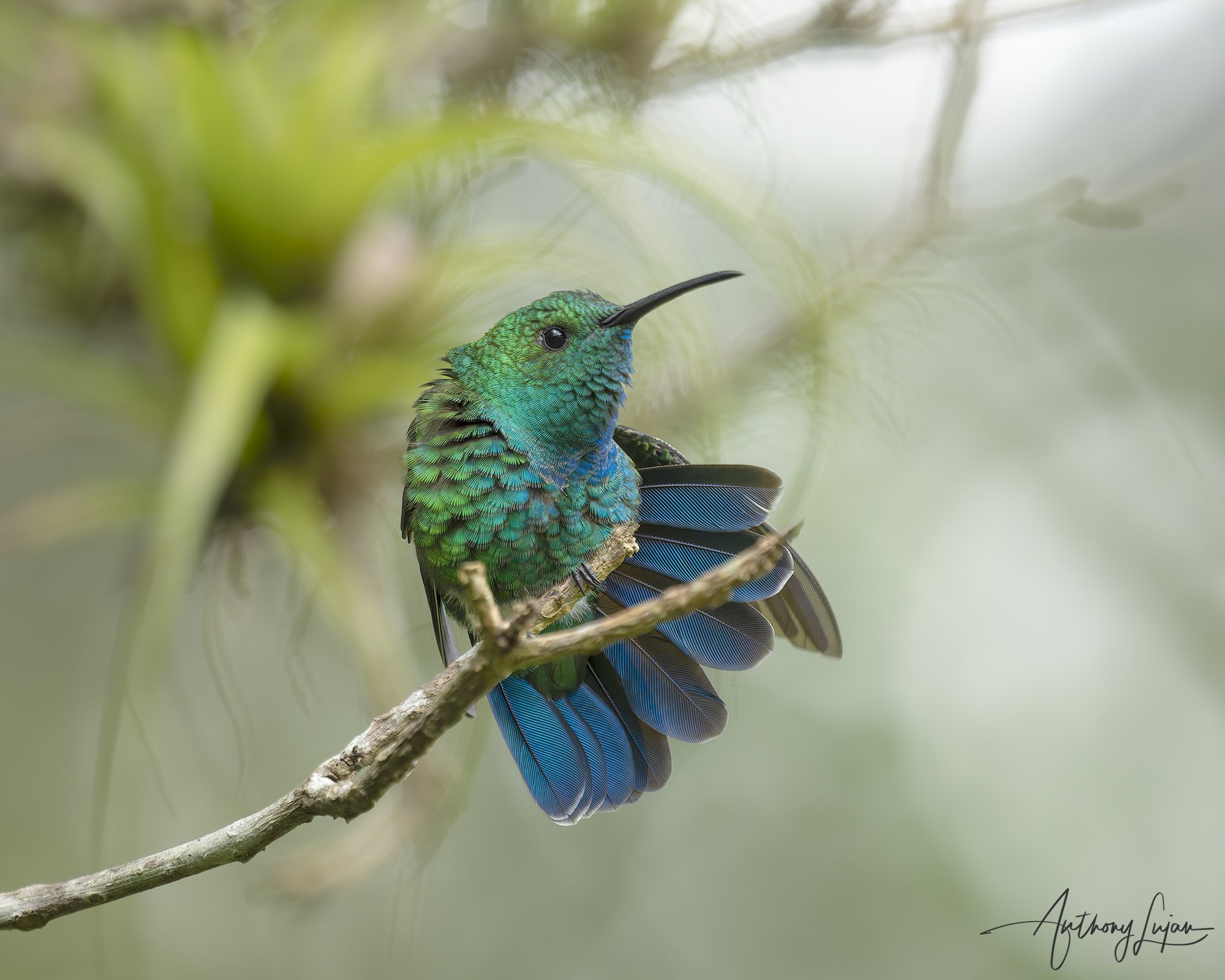
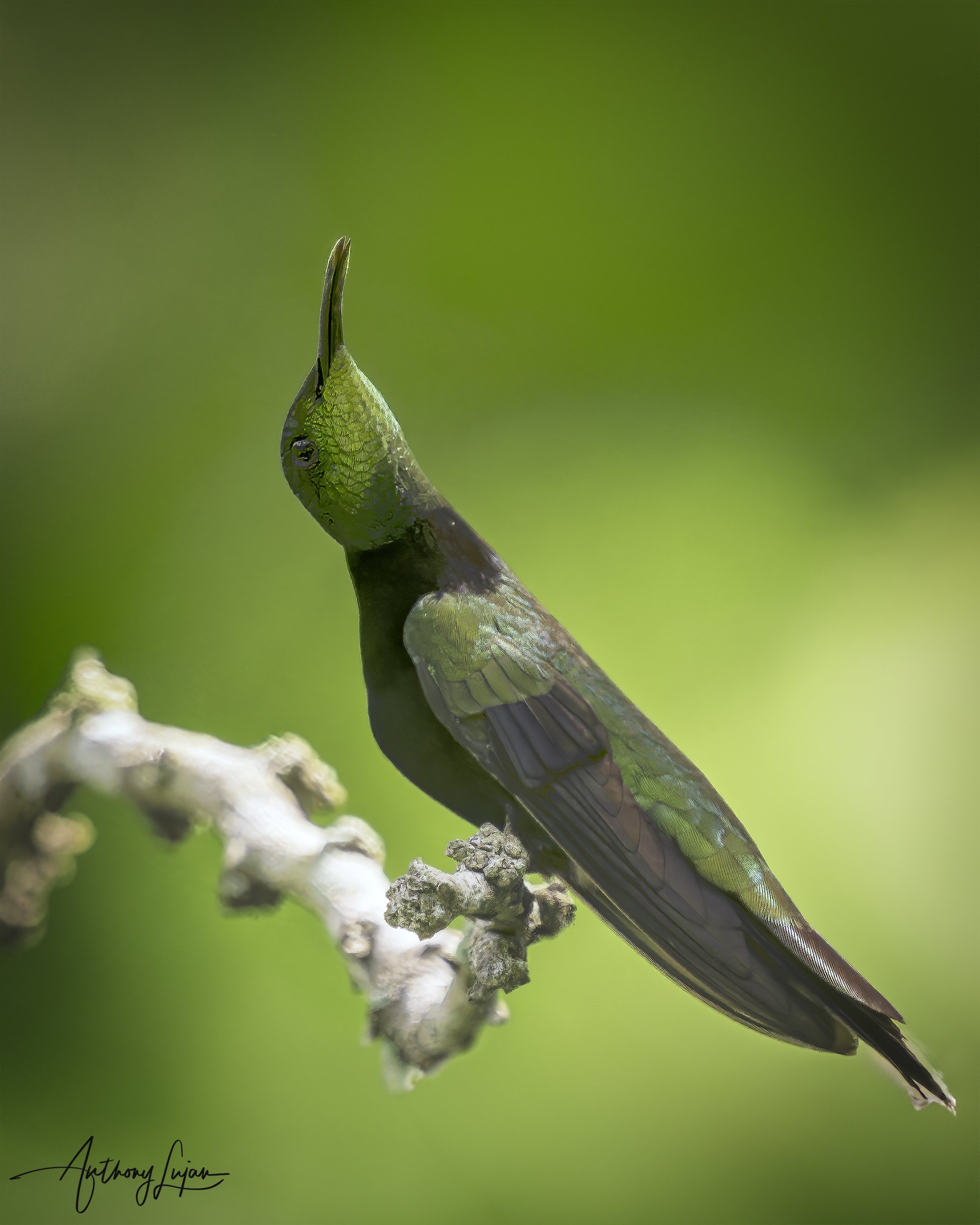
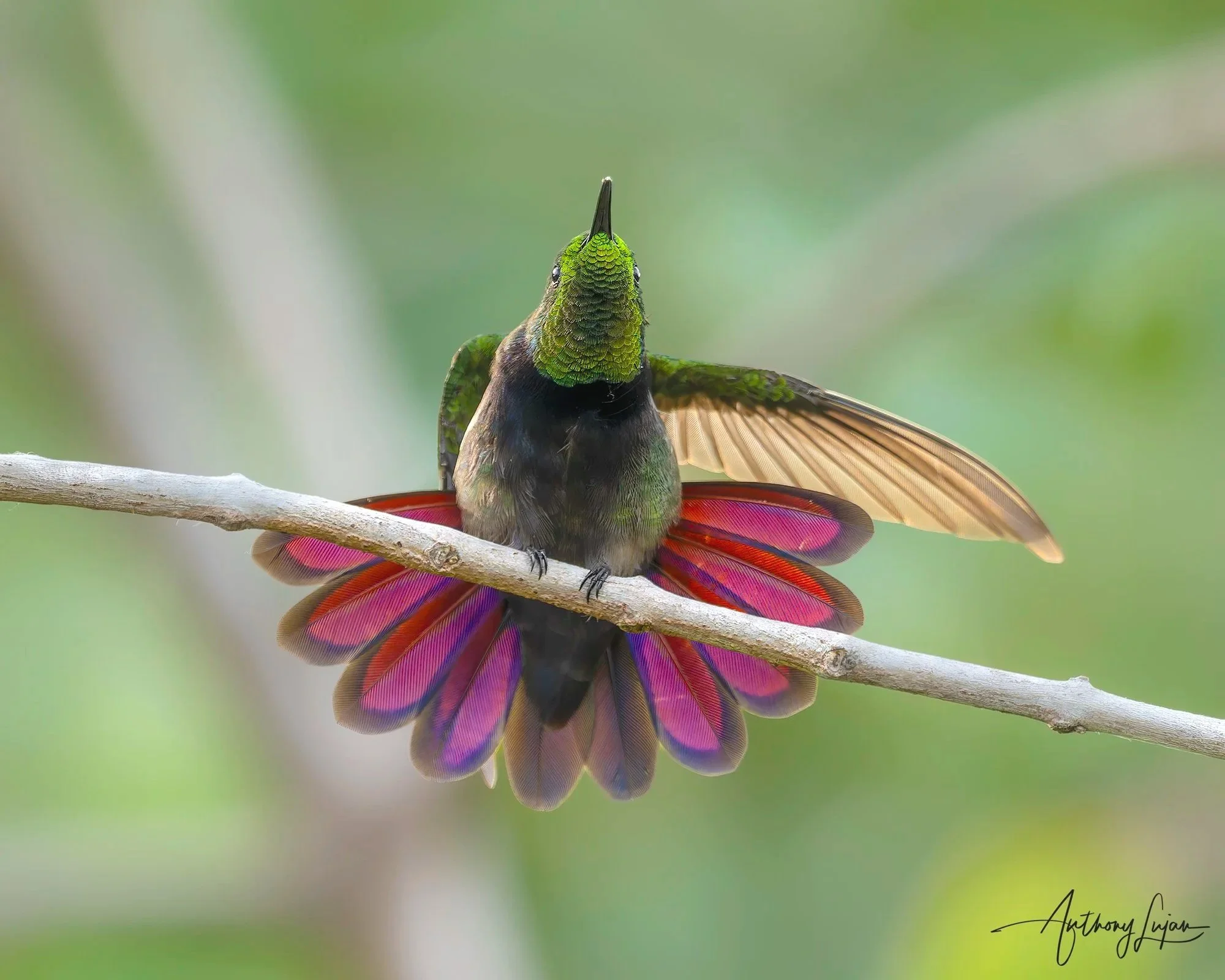
Adult males have metallic green upperparts and a slightly decurved, dark bill. The throat and belly are washed with blue to blue‑green rather than solid black, forming a diffuse colored area across the underparts instead of a sharp dark stripe. The tail is mostly maroon or reddish-purple, with dark central feathers and outer feathers showing rich red or maroon tones. Overall, the male appears as a green mango hummingbird with pale blue‑green underparts and a distinctly maroon-toned tail, lacking the bold black ventral stripe of the Green-breasted Mango.
Female Description
Females have metallic green upperparts similar to males. The underparts are mostly white with a central blue‑green stripe running from the throat down through the breast, which is colored but not black as in comparable Green-breasted Mango females. The tail shows dark central feathers and maroon to purplish outer feathers, often with paler tips, creating a noticeable contrast when fanned. Young birds resemble adult females but may show some buffy or rufous tinges around the throat and breast.
Habitat & Behavior
Veraguan Mangos favor open and semi-open lowland habitats, including pastures, agricultural mosaics, forest edges, stream margins, village gardens, and other areas with scattered trees and flowering shrubs. They feed primarily on nectar from a variety of flowering trees and shrubs, often visiting blossoms high in the canopy as well as lower-level garden flowers. Like other mango hummingbirds, they also take small insects and other arthropods, which they capture by hawking from perches or gleaning from vegetation. The species is considered resident and not a long-distance migrant, though individuals may move locally as flowering peaks shift across the landscape.
Population
The estimated number of mature individuals is between 20,000 and 49,999. Within suitable habitat, the Veraguan Mango can be locally common, especially in Pacific lowlands with abundant flowering trees and semi-open country. Its use of human-modified habitats such as gardens and pastures suggests a degree of resilience, and there is currently no strong evidence of rapid declines, leading to the assessment of a stable population trend.
Conservation
Although the Veraguan Mango has a relatively small global range, it is assessed as Least Concern because it remains fairly widespread and locally common within that range. Conservation concerns focus on the loss or heavy alteration of Pacific lowland habitats, including extensive clearing, intensive agriculture without flowering hedgerows or scattered trees, and urbanization. Measures that preserve or restore open country with scattered native trees, protect riparian corridors, and maintain flowering hedges and garden plants are likely to benefit this species. Continued monitoring in both Panama and southern Costa Rica will help detect any future changes in its status.
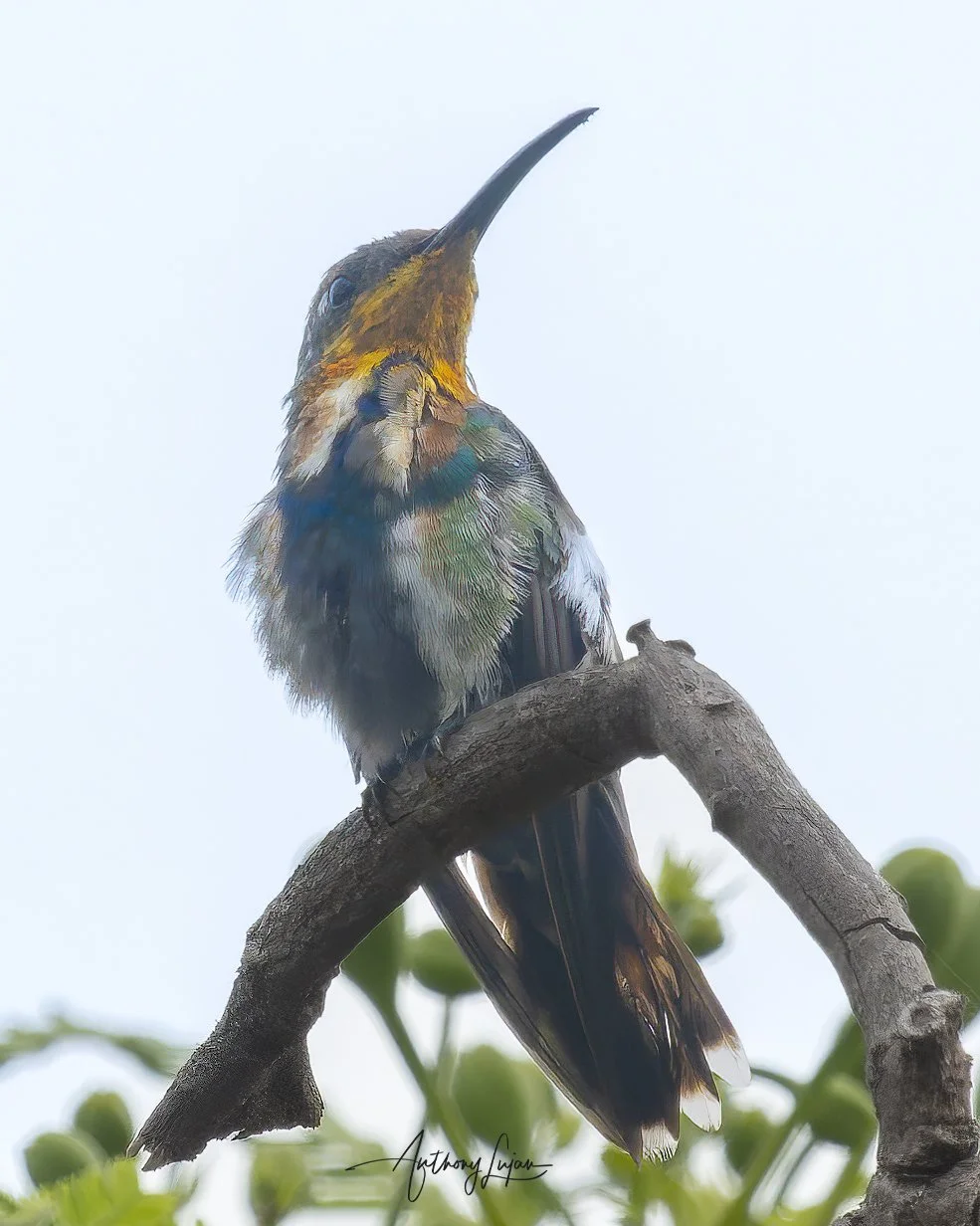
Checkout Anthony’s playlist of this species! Click the top right dropdown to see all the videos.
Related species in the Anthracothorax genus (8 species total):