
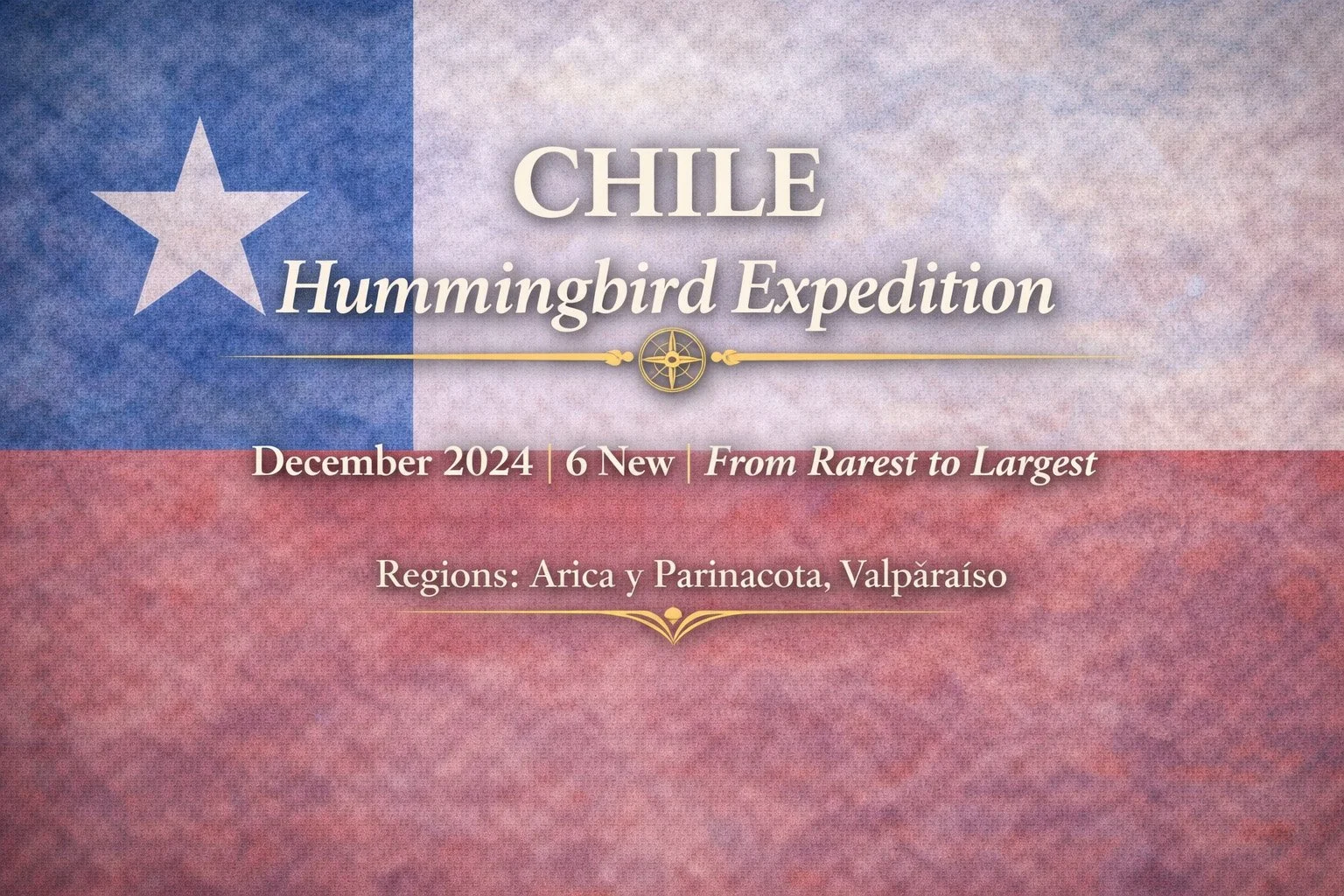
Chile Hummingbird Expedition | January 2025
2 New Species | Critically Endangered Island Firecrown
Trip overview
Dates: January 1–6, 2025
Regions:
Región Metropolitana de Santiago: Lo Barnechea
Valparaíso: Juan Fernández, Viña del Mar
Total hummingbird species observed: 3
New hummingbird species photographed: 2
Focus: A Critically Endangered island endemic and a high-Andes hillstar
This second Chile expedition was built around two very different goals. On one side, a remote oceanic island with a Critically Endangered hummingbird found nowhere else on Earth. On the other hand, high Andean slopes where a hillstar perches on rocks, leaves, and branches as if it owns the mountain. Together, they completed a larger Chile story that began in December 2024 with the desert-bound Chilean Woodstar.
Why return to Chile
Chile does not have a long hummingbird list, but the species it does have are full of extremes. The first trip focused on the Chilean Woodstar and on the contrast among desert oases, high-Andean slopes, and coastal habitats. This second expedition pushed further into that theme. The plan was simple: mainland to find the White-sided Hillstar in the Andean terrain near Santiago, then reach the Juan Fernández Archipelago to witness the Juan Fernández Firecrown.
During this expedition, I photographed two hummingbird species, both new to my list:
#216 LC White-sided Hillstar, Oreotrochilus leucopleurus
#217 CR Juan Fernandez Firecrown, Sephanoides fernandensis
By the end of this trip, I had photographed all ten hummingbird species that occur in Chile. The tenth is the Glittering-bellied Emerald (Chlorostilbon lucidus), which I had already photographed in nearby countries.
Juan Fernandez Firecrown
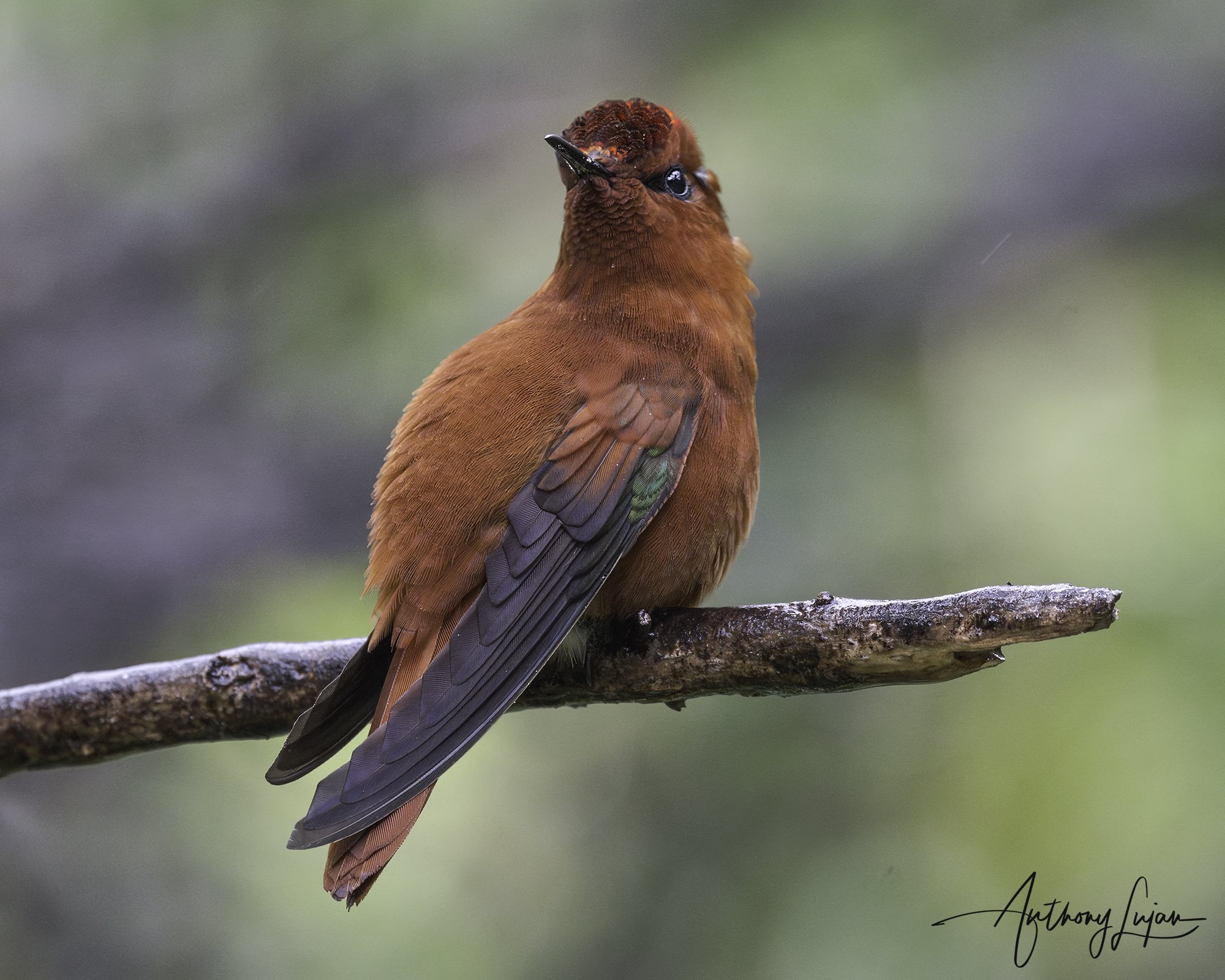
Critically Endangered, island endemic, and 420 miles offshore
Juan Fernandez Firecrown was one of the main reasons I came to Chile at all. It is endemic to the Juan Fernández Archipelago, roughly 420 miles off the Chilean mainland. The ocean crossing alone drives home how isolated this hummingbird is. Once you arrive, you realize just how small the world really is. A single island system, a limited set of forest and scrub habitats, and a population estimated at roughly 1,000 individuals.
Being there changed the way the species felt. It is not an abstract number on a page. It is a real, tangible hummingbird whose entire future is tied to one remote island. Firecrowns move through forest edges, native vegetation, and modified landscapes, feeding on flowers and perching that sometimes sit within sight of human activity. Photographing them felt like working with a bird that lives right on the line between wild and managed, between survival and vulnerability. My goal was not only to create strong images, but also to increase visibility for a hummingbird that could easily be overlooked simply because it lives so far from everything else.
White-sided Hillstar
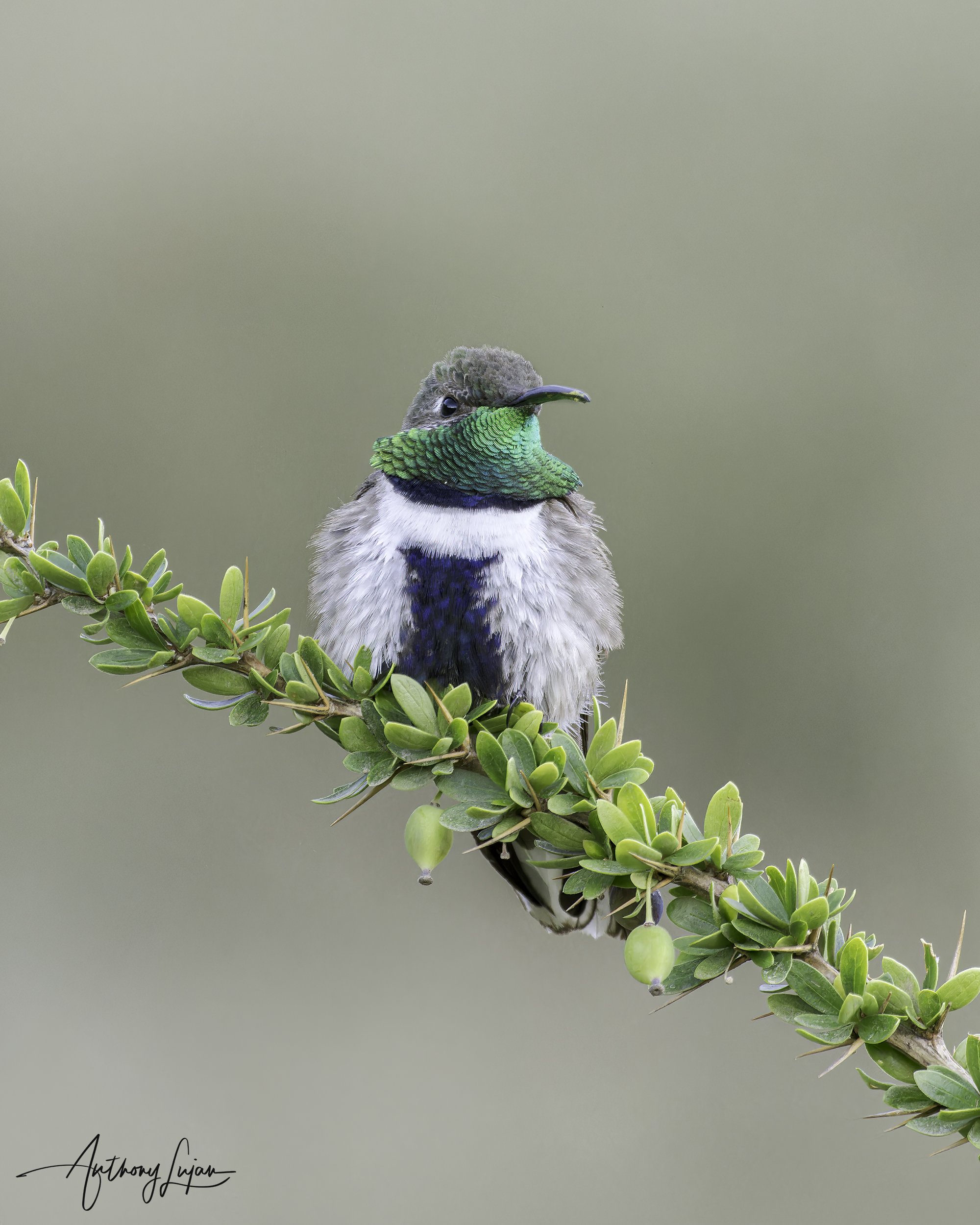
High-Andes hummingbird with a taste for rocks
White-sided Hillstar was the other anchor of this expedition, and it could not be more different from the firecrown. This is a high-Andes hummingbird that moves through open, exposed mountain terrain. It perches on leaves, branches, and rocks, often in places where the wind is strong, the vegetation is sparse, and the sky feels very close.
I had seen photographs of White-sided Hillstars perched on bare rock faces and low shrubs, the bird standing out sharply against cold, muted backgrounds. I knew I wanted to see that for myself. In the Andean zones near Lo Barnechea, the setting matched those expectations. Open slopes, scattered bushes, and a feeling of altitude that you can sense in your breathing. The hillstars used rocks, posts, and small plants as vantage points, moving between them with deliberate, purposeful flights. Photographing them was about working with big light and big space, finding compositions where the bird, the rock, and the mountain air all came together cleanly in a single frame.
Completing Chile’s hummingbird story
This trip was also about closure. With the Chilean Woodstar, Giant Hummingbird, Andean Hillstar, Oasis Hummingbird, Peruvian Sheartail, and Green-backed Firecrown already photographed on the previous expedition, Chile’s hummingbird list was almost complete. Adding White-sided Hillstar and Juan Fernandez Firecrown brought the total to all ten species that occur in the country, with Glittering-bellied Emerald already covered elsewhere.
What stands out about Chile is not the number of species but the spread of their stories. A micro endemic woodstar hanging on in desert valleys. A giant hummingbird that pushes size limits. High Andean hillstars perched on rock. Cerrado and oasis specialists. A Critically Endangered firecrown is surviving on an island far out in the Pacific. This second expedition tied those threads together, turning Chile from a side chapter into a complete, self-contained section of the larger hummingbird project.
If you want to see the full list of species photographed during this trip, you can view the complete travel overview here: 2025 01 Chile
Chile hosts 10 hummingbird species; see the ones I’ve photographed.
Join me on future trips like this. You can find more details here: Visit Travel with Me!
Frequently asked questions
Every trip raises its own set of questions. This quick FAQ adds context before you move on to the next Hummingbird Travel Story.
-
Because both species sit at important extremes: a Critically Endangered island endemic and a high-Andes hillstar. Each required specific logistics and conditions that did not fit into the earlier December 2024 itinerary.
-
It feels uniquely isolated. Many rare hummingbirds live in remote mountains or valleys, but the firecrown’s isolation on a distant island adds another layer of vulnerability and responsibility.
-
Yes. Seeing it perched on rocks and open slopes, with white sides clear against Andean backgrounds, matched and exceeded what I had seen in other people’s photos. It is a bird that belongs to the mountains in a very literal way.
-
It means Chile is no longer an abstract map point in the project. It is a complete story, from desert woodstar and high-altitude hillstars to giant hummingbirds, firecrowns, and open-country specialists, each tied to a specific part of the country.
Please note: The content provided in this article reflects Anthony’s personal experience and photographic approach. Results can vary depending on light, weather, location, equipment, subject behavior, and field conditions.