
Rufous Hummingbird
Scientific name: Selasphorus rufus
The Rufous Hummingbird is a small, fiery‑colored hummingbird famous for its long‑distance loop migration between western North America and Mexico. Breeding from the Pacific Northwest into Alaska and western Canada, it winters mainly in Mexico and parts of the southeastern United States. Despite an estimated 22,000,000 mature individuals, it has undergone steep, long‑term declines and is now assessed as Near Threatened.
At a Glance
Family: Trochilidae (hummingbirds)
Clade: Mellisugini – “Bee” hummingbirds
Genus group:Selasphorus — small hummingbirds with bright gorgets or rich rufous plumage and distinctive migratory and display behaviors
Range: Breeds from southern Alaska, British Columbia, and Alberta south through the Pacific Northwest and interior mountains (e.g., Washington, Oregon, Idaho, Montana, Wyoming) into northern California; winters mainly in southern, central, and western Mexico and locally in the southeastern U.S.Habitat: On breeding grounds, uses forest edges, clearings, second‑growth coniferous and mixed forests, chaparral, meadows, parks, orchards, and gardens; on migration, mountain meadows and a wide variety of habitats; in winter, pine‑oak woods, montane woodlands, and other shrubby or wooded habitats in Mexico and the southeast U.S.
Elevation: Around 1,800–3,000 m (6,000–9,800 ft) in many breeding and migratory areas, but occurs from sea level to high mountain meadows depending on season and region.
Length: About 8–9 cm (3.1–3.5 in)
Weight: About 2.5–4.5 g (0.09–0.16 oz)
Number of mature individuals: 22,000,000
Population trend: Decreasing
Status: Near Threatened (IUCN)
Name Origin
The genus name Selasphorus is derived from Greek roots interpreted as “light-bearing” or “glowing,” referring to the bright iridescent plumage of many species in this group. The species name rufus comes from Latin for “red” or “reddish,” referring to the rich rufous plumage of the male. Together, Selasphorus rufus means the “glowing red” or “rufous” hummingbird, an apt description of this fiery‑colored species.
Subspecies and Distribution
Rufous Hummingbird is monotypic — no recognized subspecies.
It breeds along the Pacific Northwest coast and adjacent interior from southern Alaska and western Canada (British Columbia, Alberta) south through Washington, Oregon, Idaho, and western Montana to northern California. During migration, it travels a clockwise loop: northward in spring largely up the Pacific Coast, and southward in late summer and fall mostly through interior mountain ranges such as the Rockies. In winter it occurs mainly in southern, central, and western Mexico, especially in pine–oak and other montane woodlands, and increasingly also in parts of the southeastern United States.
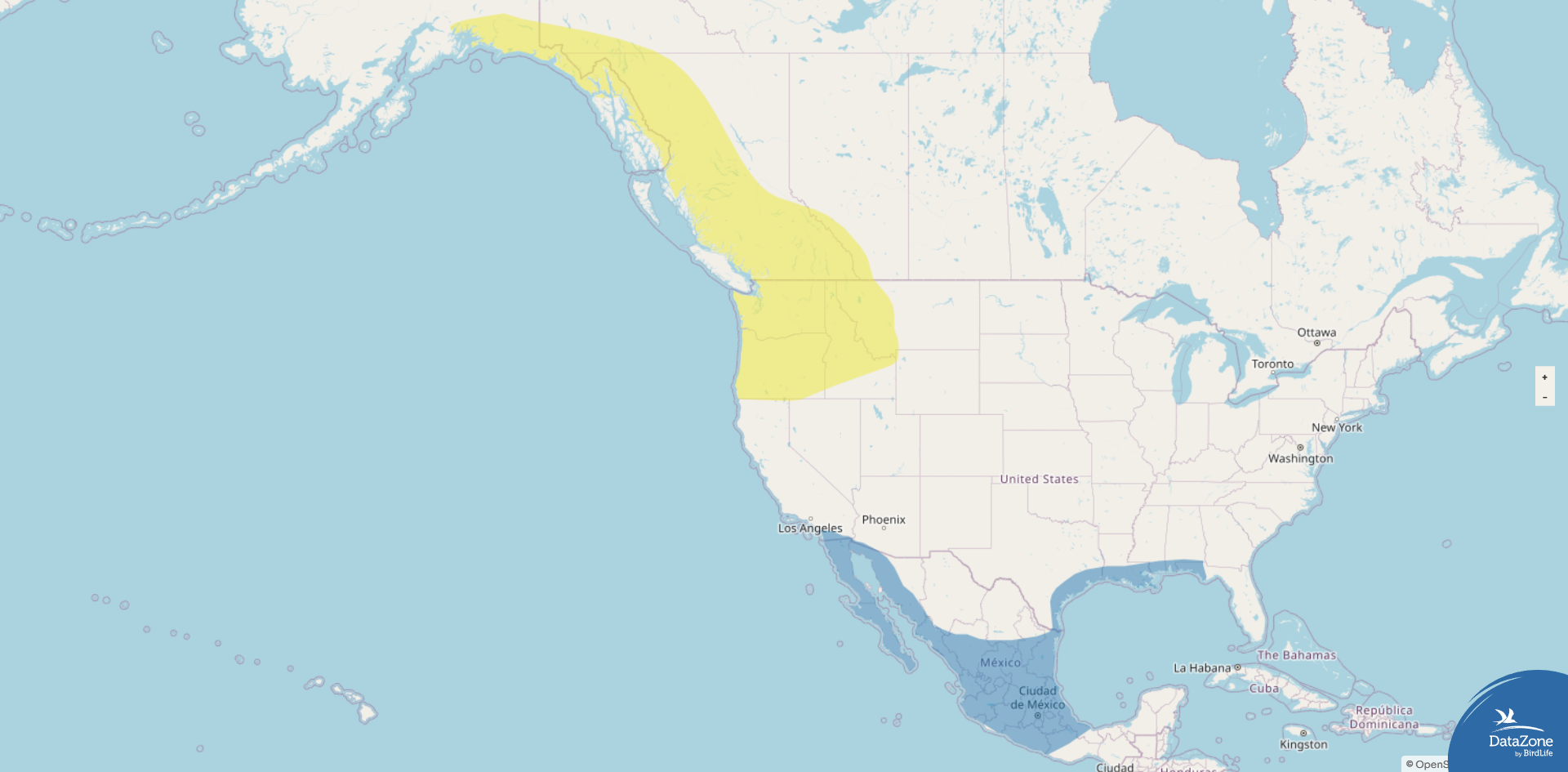
Legend
Yellow Breeding
Blue Non-breeding
Species Overview
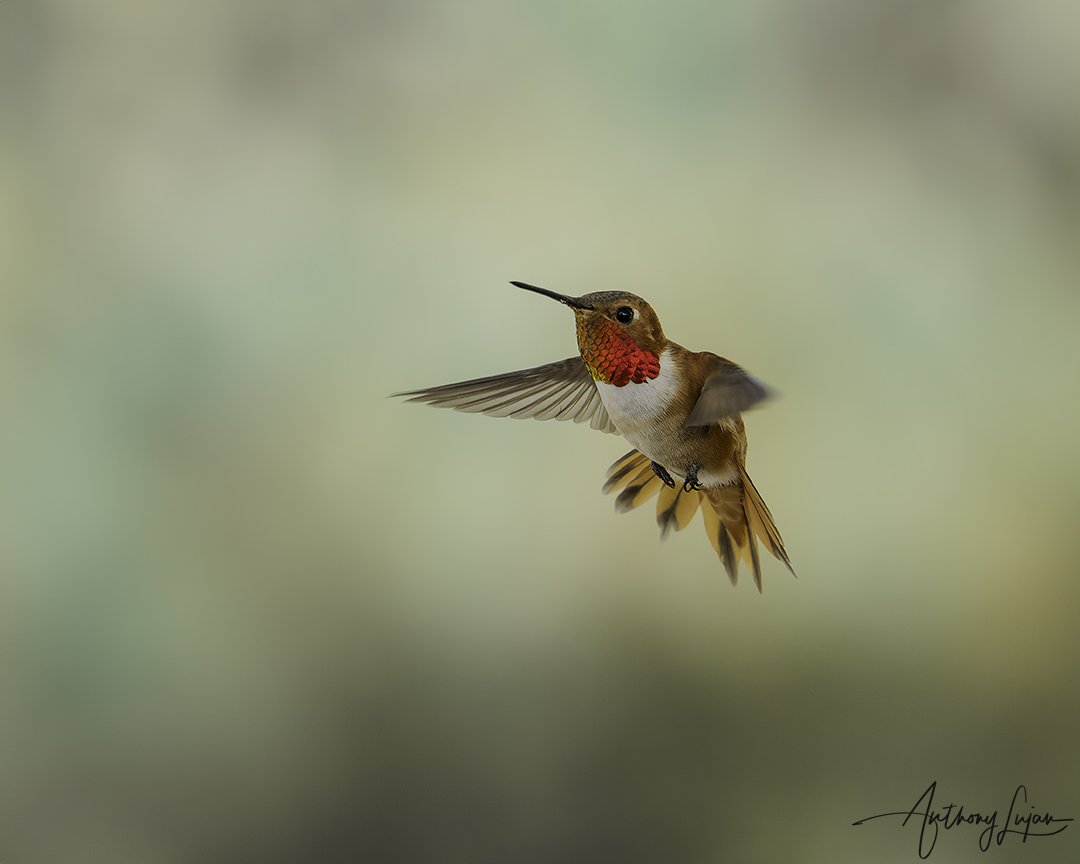
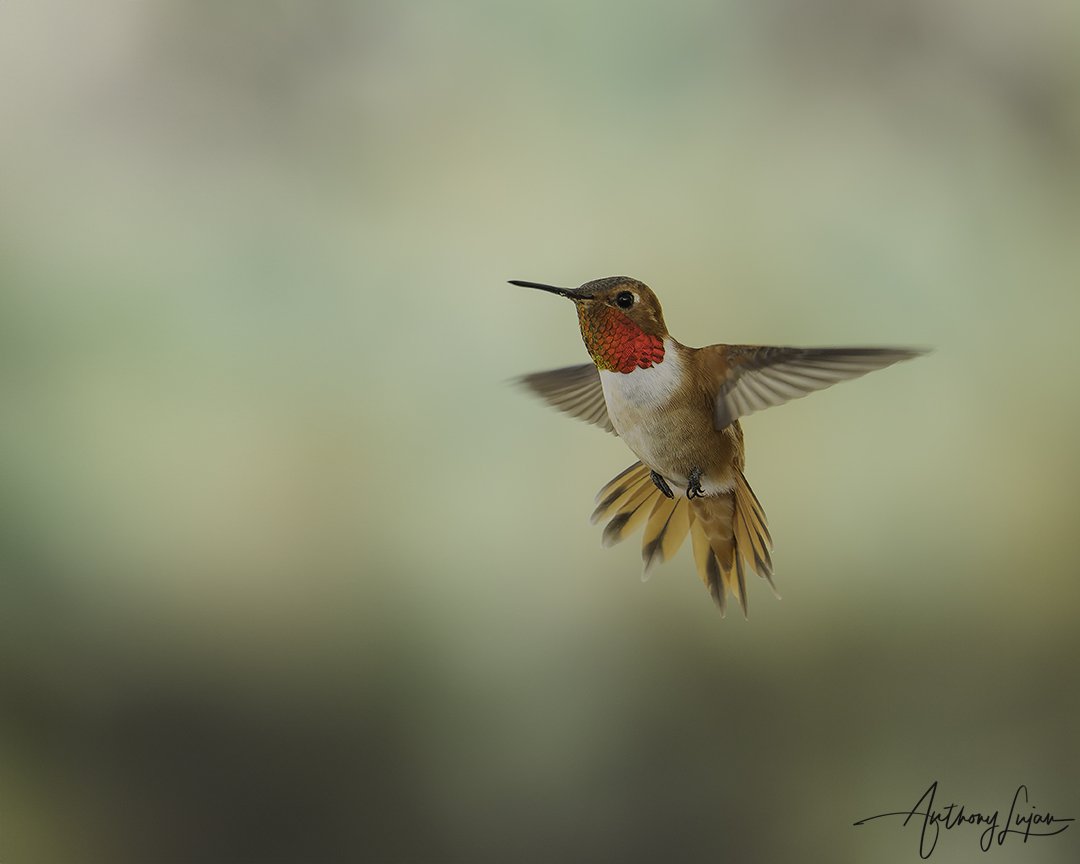
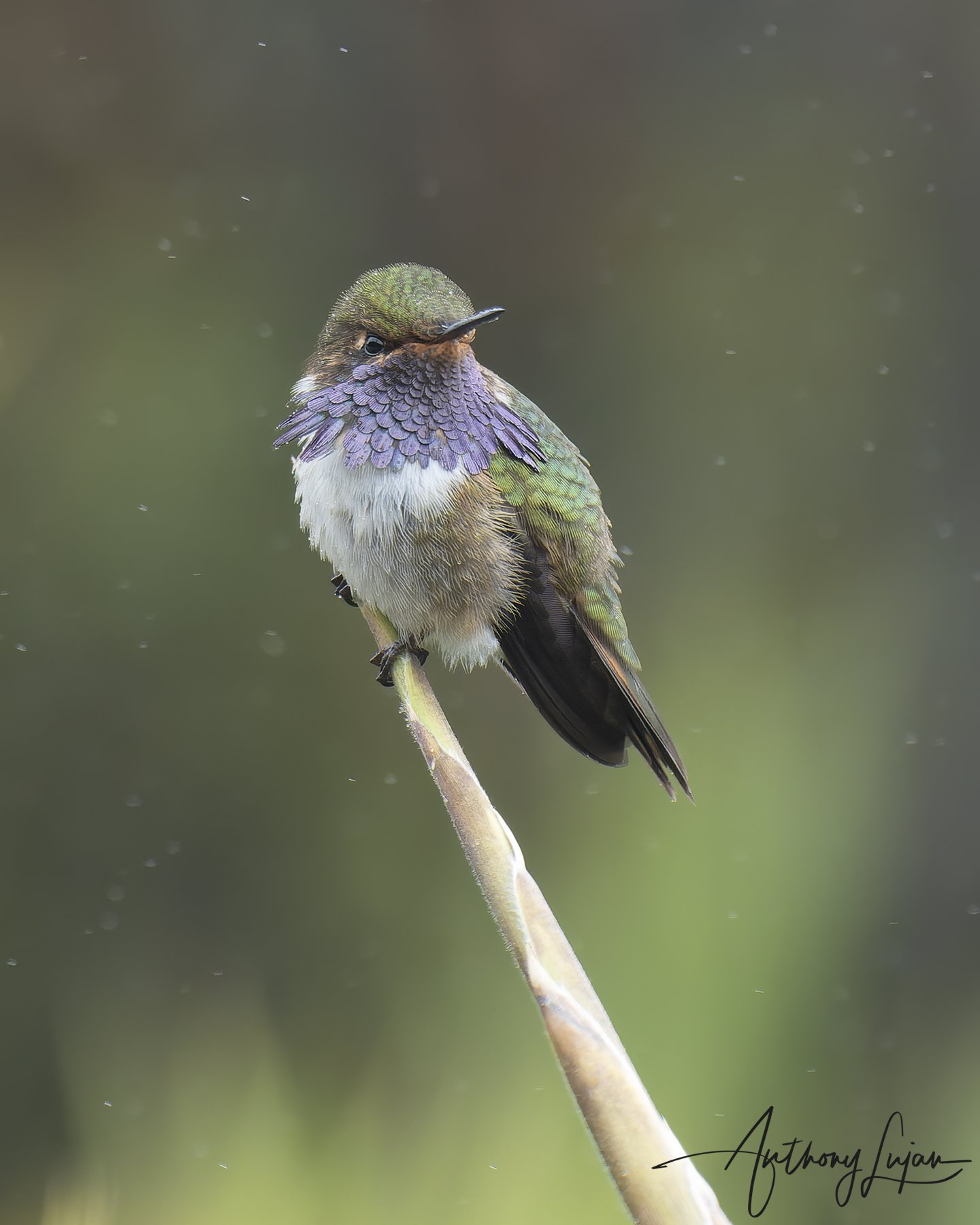
Rufous Hummingbird is renowned for its extraordinary migration, with some individuals traveling nearly 4,000 miles from breeding grounds in Alaska and northwest Canada to wintering sites in Mexico. Males are among the most distinctive of North American hummingbirds, with rich rufous body plumage, white breast, and a glittering orange‑red gorget. However, this species has suffered substantial long‑term declines—estimated around 65% since the 1970s—and its IUCN status has been elevated to Near Threatened as concerns over habitat loss and climate-driven change have grown.
Identification
Male
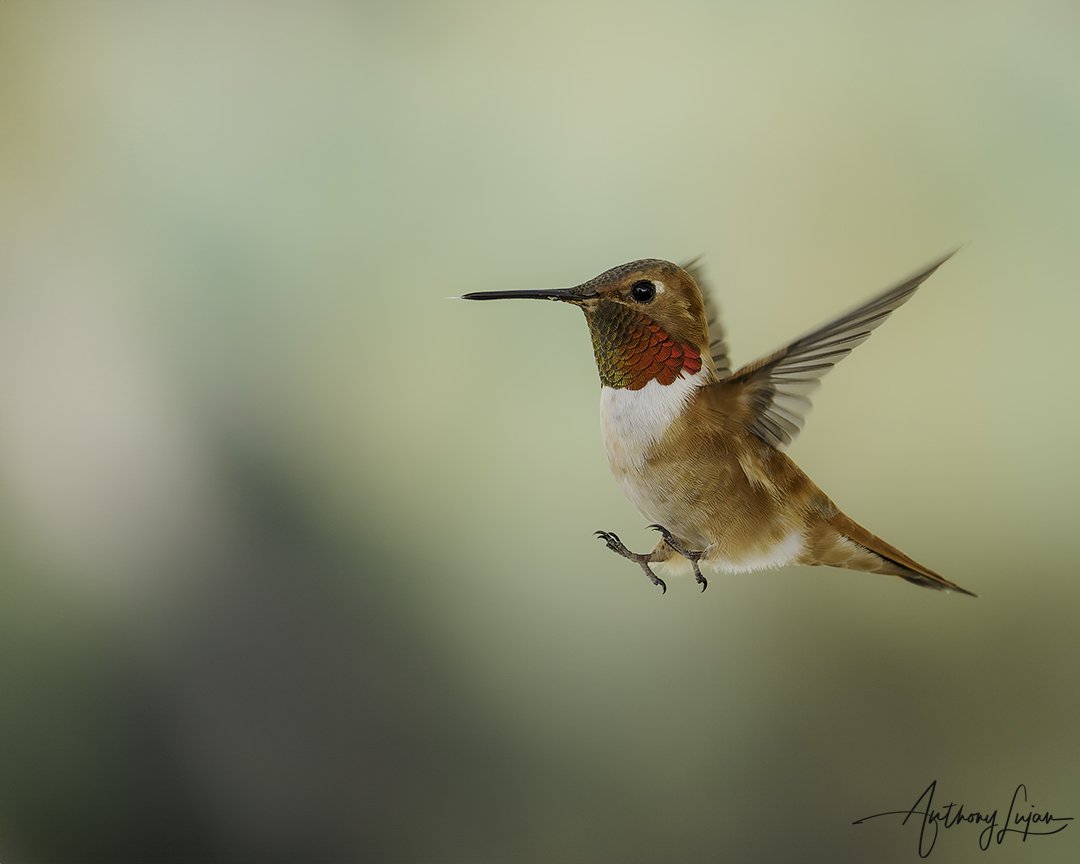
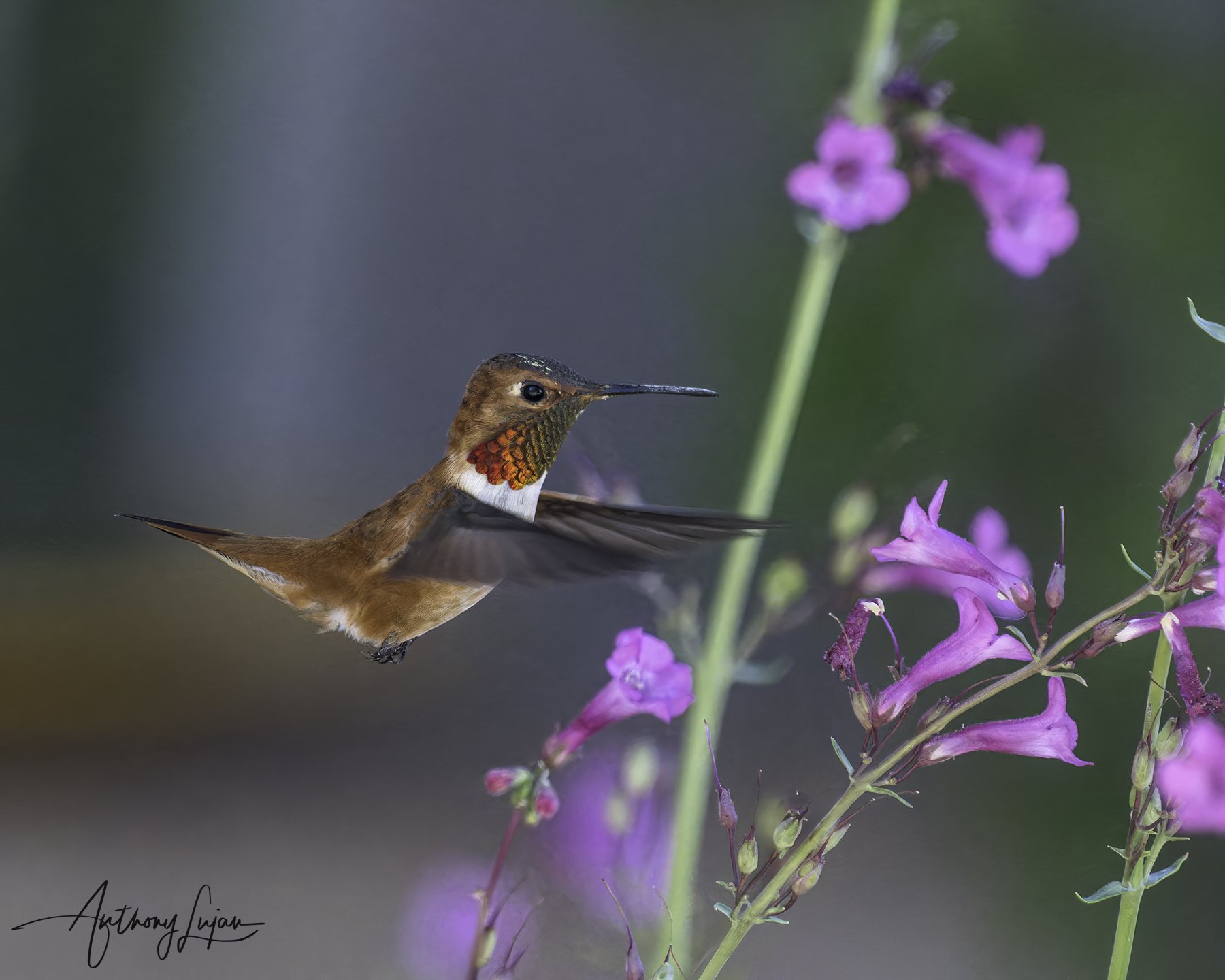
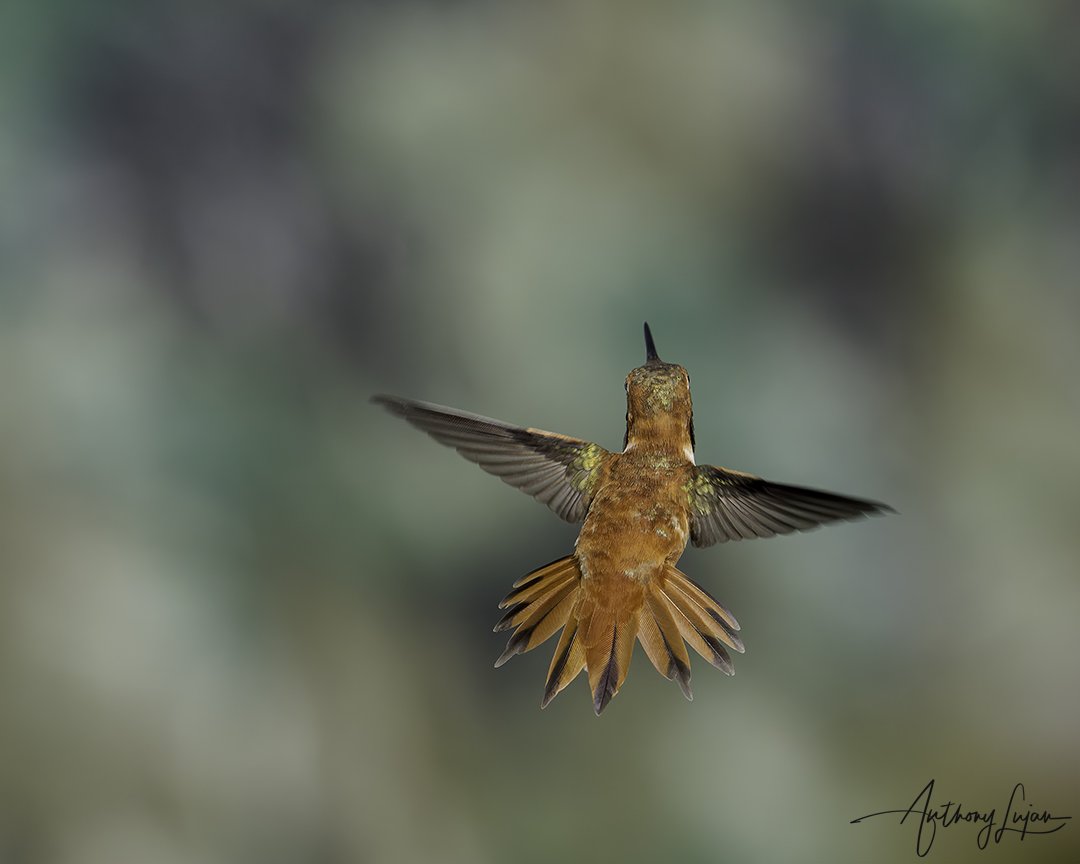
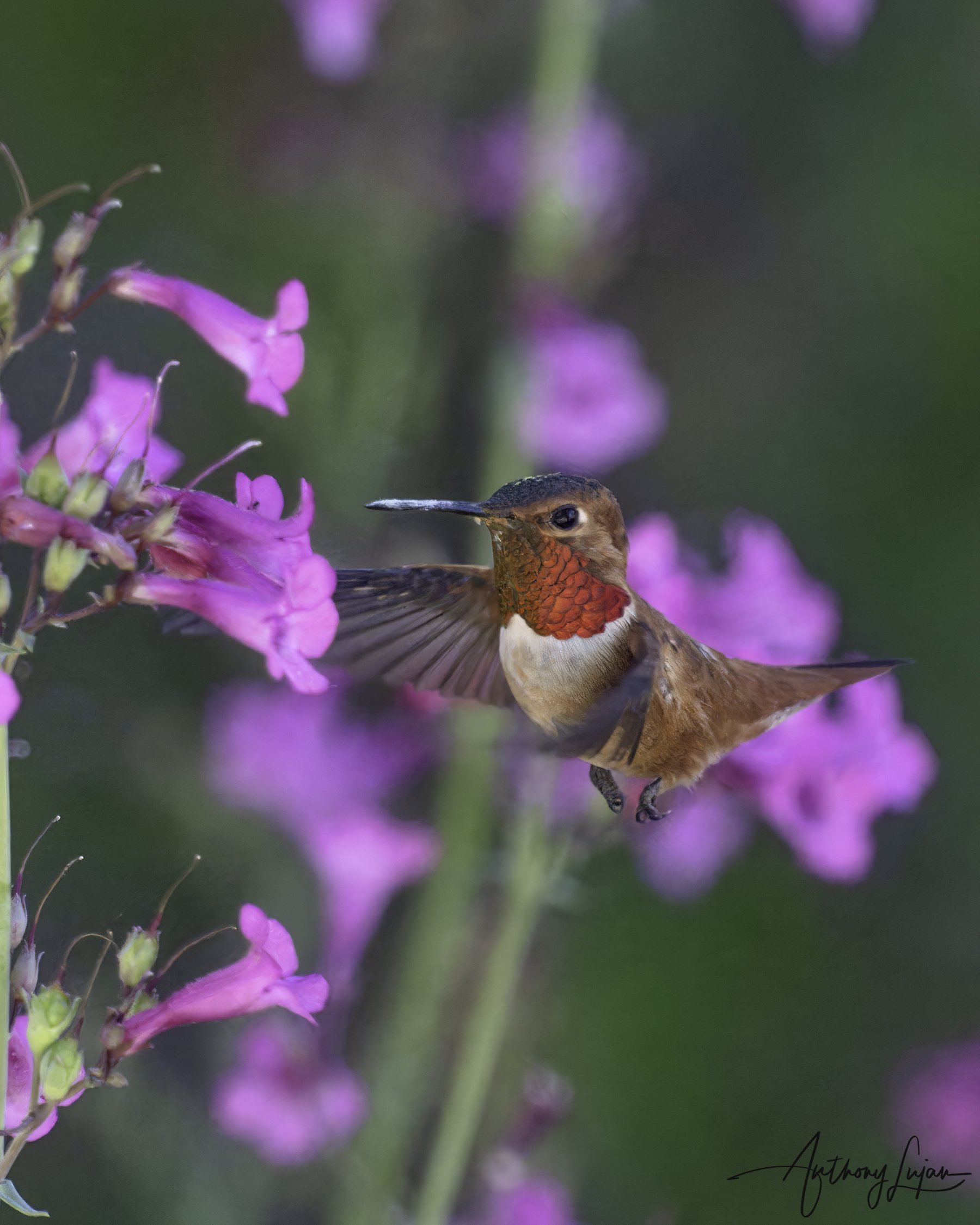
Adult males are small hummingbirds with bright rufous upperparts and flanks, a white breast, and an iridescent orange‑red gorget that can appear dark when not catching the light. Some males have limited green on the back or crown, but most appear largely rufous above. The tail is rufous with dark tips to the feathers, and the wings are relatively short and pointed; the bill is straight and dark. In flight, the combination of rufous body, white breast, and brilliant gorget makes males striking and hard to confuse with other species, though Allen’s Hummingbird can be similar in California.
Female
Females are mostly green above with rufous washes on the flanks and base of the tail, and a whitish underside. The throat is whitish with variable dark spots or small orange‑red feathers but never shows the full solid gorget of adult males. The tail is green and rufous with white tips on the outer feathers, and overall females can resemble female Allen’s Hummingbirds; range, tail pattern, and subtle structural differences help distinguish them. Juveniles resemble adult females; young males gradually acquire more rufous on the back and tail and begin to develop the orange‑red throat patch.
Habitat and Behavior
On breeding grounds, Rufous Hummingbirds use a wide variety of habitats including forest edges, clearings, brushy second growth, mountain meadows, parks, orchards, coniferous and mixed forests, chaparral, and gardens. They favor areas with abundant nectar‑producing flowers and often nest in coniferous or mixed forests near openings or streams. During migration they pass through habitats from lowland valleys to high mountain meadows—sometimes above treeline—tracking flower blooms and feeder resources.
Rufous Hummingbirds are highly territorial, vigorously defending flower patches and feeders from other hummingbirds and even larger birds. They feed on nectar from a wide range of flowering plants and also consume small insects and spiders for protein. The species undertakes a loop migration: moving north along the Pacific Coast in late winter and spring, reaching British Columbia and Alaska by May, then returning south beginning as early as July through the Rockies and interior mountains to winter in Mexico and the southeastern U.S.
Population and Threats
Rufous Hummingbird has an estimated 22,000,000 mature individuals but has experienced pronounced declines over recent decades. Studies indicate about a 65% population decline since the 1970s, with rates of decline accelerating in the 2000s and 2010s. These declines are most severe along the Pacific coastal regions of the breeding range, where habitat loss and degradation have been greatest.
Drivers of decline are still being clarified but likely include loss and alteration of breeding habitats (especially coastal and near‑coastal forests and second growth), changes in flower phenology and availability due to climate change, and possibly shifts in insect prey and wintering habitat quality. Despite some habitat gains and stable survival in parts of the interior range, the overall trend remains strongly Decreasing, prompting its Near Threatened status.

Conservation
Conserving Rufous Hummingbird requires protecting and managing key habitats across its entire migratory loop—from breeding forests and meadows in the Pacific Northwest and Alaska to migratory stopover sites and wintering areas in Mexico and the southeastern U.S. Maintaining diverse forest structures with edges, second growth, and rich understory flowers, as well as preserving mountain meadows and riparian corridors, is important on the breeding grounds. In wintering regions, conserving pine–oak and other montane woodlands, reducing deforestation, and protecting flowering plant communities are crucial to support this species during the nonbreeding season.
Checkout Anthony’s playlist of this species! Click the top right dropdown to see all the videos.
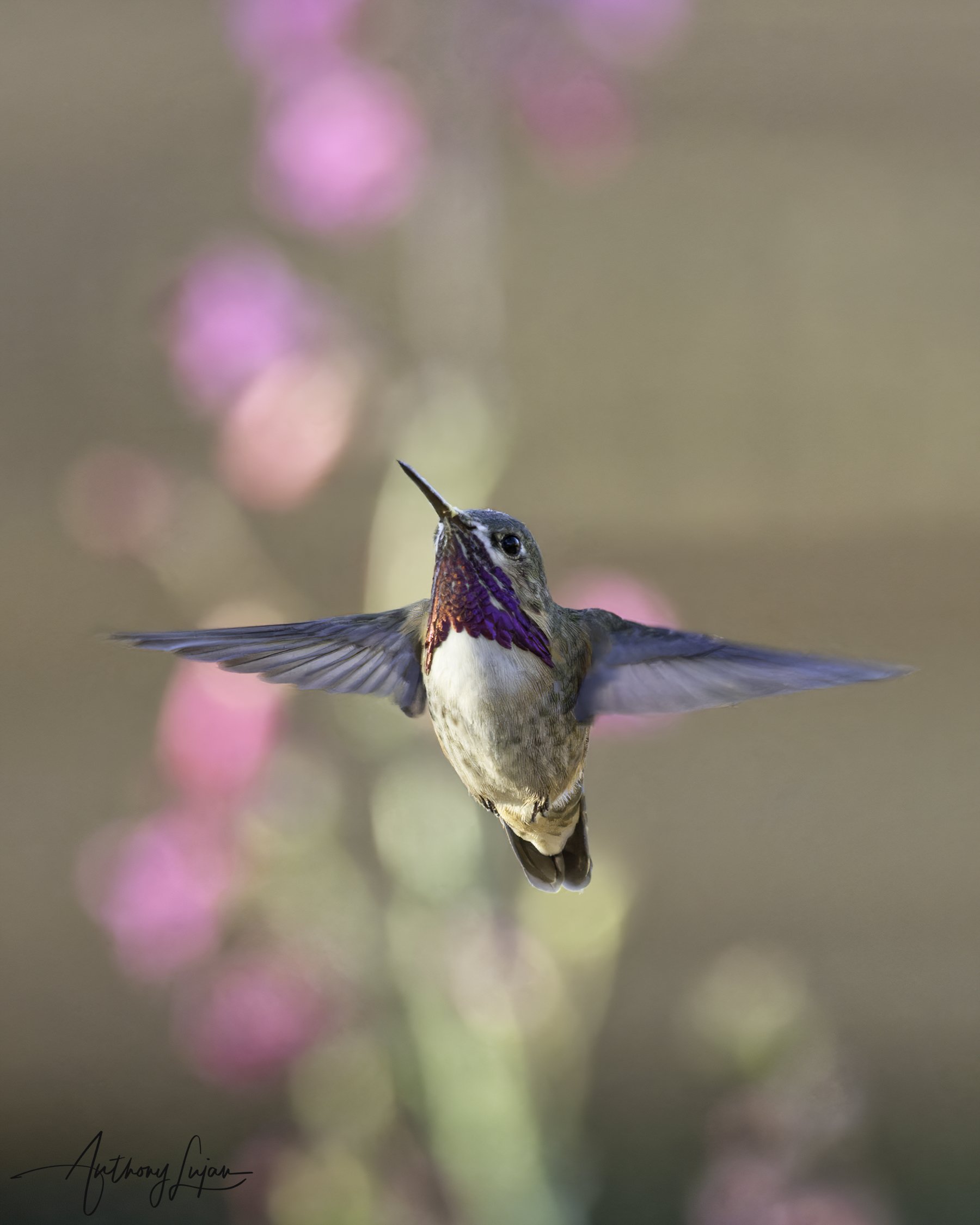
Related species in the Selasphorus genus (9 species total):





Please note: The content provided in this article reflects Anthony’s personal experience and photographic approach. Results can vary depending on light, weather, location, equipment, subject behavior, and field conditions.