
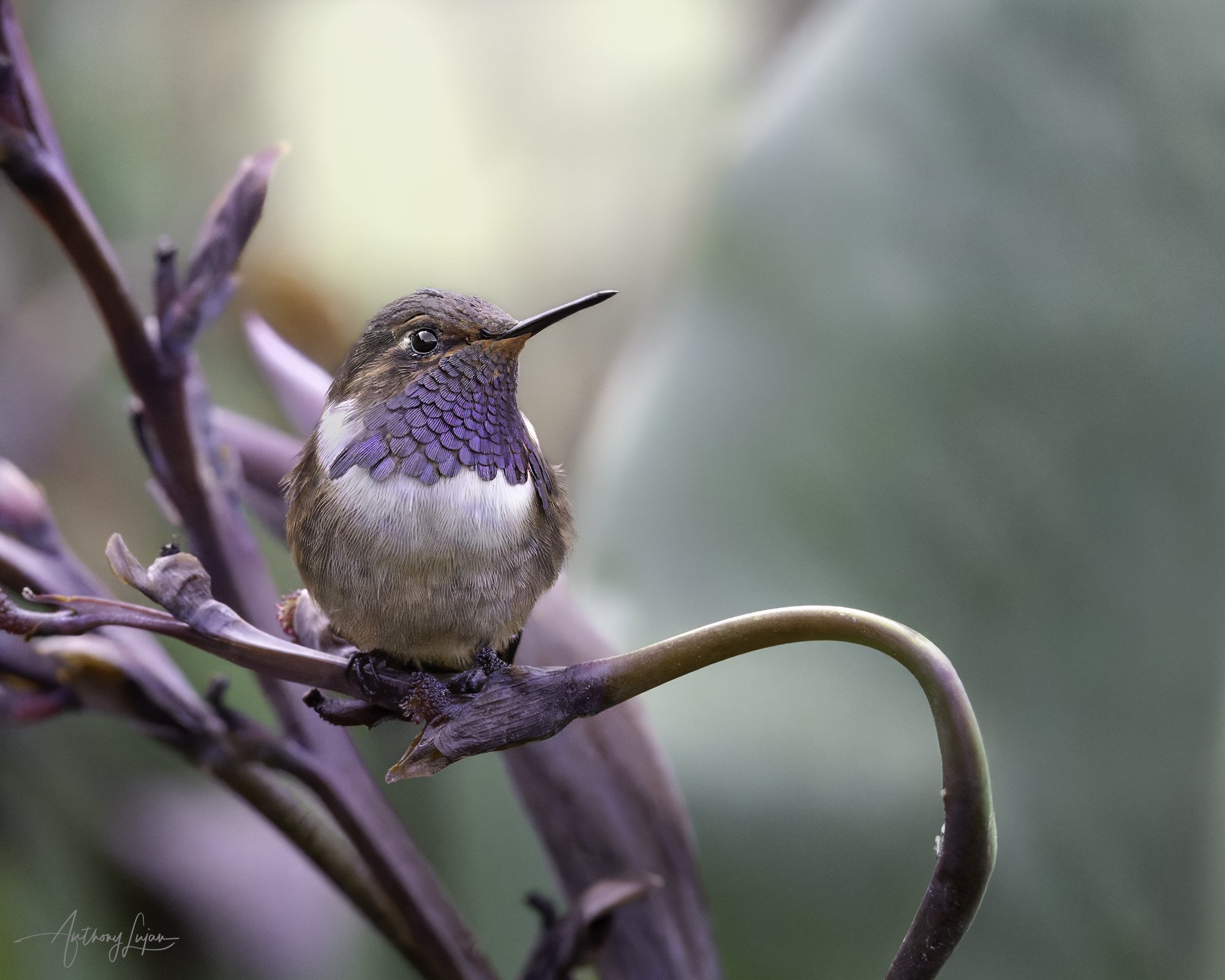
Scientific name: Selasphorus flammula
The Volcano Hummingbird is a tiny high‑elevation hummingbird, semi‑endemic to Costa Rica and also found in adjacent western Panama. It lives on volcanic slopes and in páramo and montane scrub, often above the range of Scintillant Hummingbird, and shows striking variation in male throat color among its subspecies.
At a Glance
Family: Trochilidae (hummingbirds)
Clade: Mellisugini – “Bee” hummingbirds
Genus group:Selasphorus — small hummingbirds with fiery gorgets or rufous tones and distinctive displays (includes Rufous, Allen’s, Scintillant, etc.)
Range: Highlands of Costa Rica and western Panama, especially the Cordillera Central and Cordillera de Talamanca, including volcanoes Poás, Barva, Irazú, Turrialba, and Barú
Habitat: High‑elevation páramo and subpáramo, open brushy slopes, second growth on landslides and ashfall areas, scrubby pastures, and edges of elfin forest and taller montane forest
Elevation: Mostly 2,000–3,500 m (6,600–11,500 ft), locally down to about 1,800 m (5,900 ft) and seasonally to ~1,350 m (4,400 ft)
Length: About 7.5 cm (3.0 in)
Weight: About 2–3 g (0.07–0.11 oz); males around 2.5 g, females about 2.8 g
Number of mature individuals: 20,000–49,999
Population trend: Stable
Status: Least Concern (IUCN)
Name Origin
The genus name Selasphorus comes from Greek roots interpreted as “light‑bearing” or “glowing,” referring to the brilliant iridescent plumage typical of many species in this group. The species name flammula is Latin for “little flame,” alluding to the glowing throat colors of males and perhaps its association with volcanic slopes. Together, Selasphorus flammula evokes a “glowing little flame” hummingbird of the volcanoes.
Subspecies and Distribution
Three subspecies:
Selasphorus flammula flammula (Purple‑throated)
Distribution: Volcán Irazú and Volcán Turrialba in central Costa Rica.Selasphorus flammula torridus (Heliotrope‑throated)
Distribution: Cordillera de Talamanca of southern Costa Rica and Volcán Barú in extreme western Panama.Selasphorus flammula simoni (Rose‑throated)
Distribution: Volcán Poás, Volcán Barva, and Cerros de Escazú in central Costa Rica.
Across these subspecies, Volcano Hummingbird is restricted to high volcanic and montane ridges in Costa Rica and western Panama, where it inhabits páramo, subpáramo, landslide scars, ashfall slopes, scrubby pastures, and edges of elfin and taller montane forest, mostly between about 2,000 and 3,500 m.
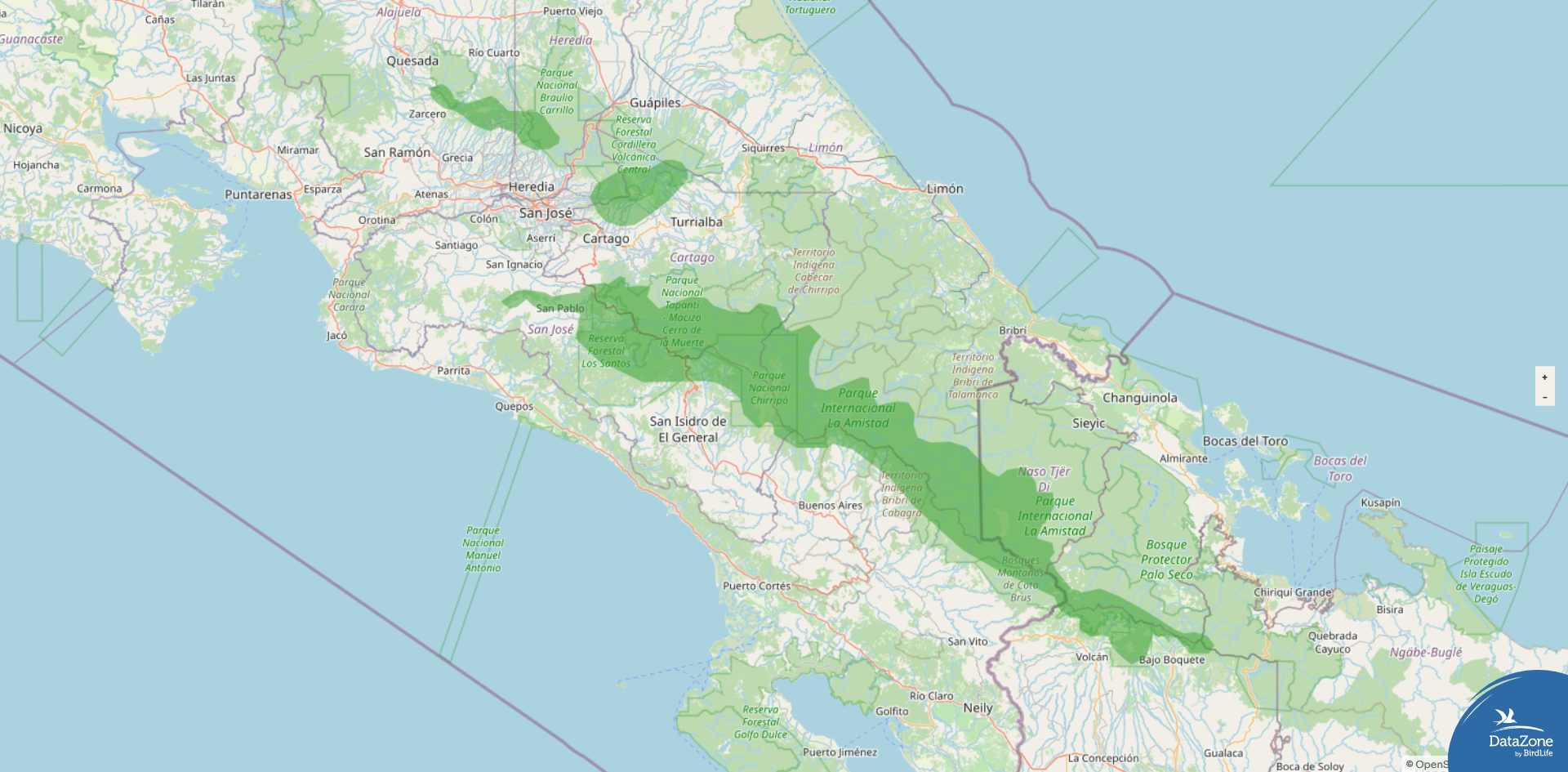
Legend
Green Resident
Species Overview
The Volcano Hummingbird is a classic bird of high‑elevation páramo and scrub on Costa Rica’s and western Panama’s volcanoes. It is tiny even by hummingbird standards and shows remarkable geographic variation in male gorget color, from purple to heliotrope to rosy across its three subspecies. With a relatively small global population (20,000–49,999 mature individuals) confined to a narrow elevational band but a Stable trend and occurrence in several protected areas, it is currently assessed as Least Concern.
Identification
Male
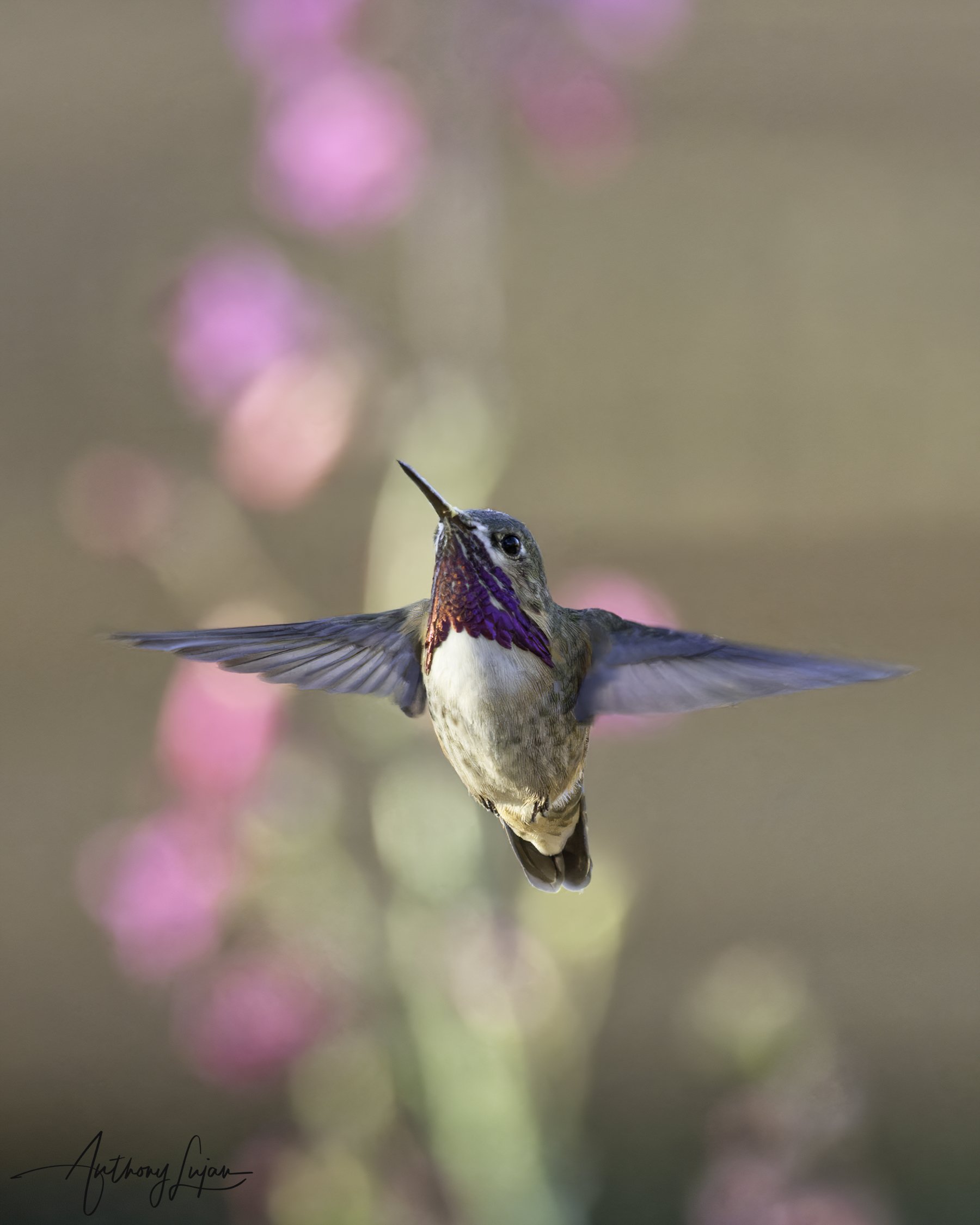
Adult males are very small with bronze‑green upperparts and a short, straight black bill. The tail has rufous‑edged black outer feathers, giving a rufous‑and‑dark look when spread. The underparts are mostly white with some rufous or buff on the flanks, but the key field mark is the flaring gorget, whose color varies by subspecies: grey‑purple in much of the Talamanca range, red in the Poás–Barva mountains, and pink‑purple in the Irazú–Turrialba area. In flight or when displaying, males flash the gorget and often appear slightly larger‑bodied than Scintillant Hummingbird, which favors somewhat lower elevations.
Female
Females are similar in size and structure but lack the bright flaring gorget. They have bronze‑green upperparts, white underparts with buffy or cinnamon wash on the flanks, and a white throat lightly spotted with dusky markings. The tail shows rufous‑edged dark outer feathers with paler tips. Young birds resemble females but have buff fringes to upperpart feathers until they molt into adult plumage.
Habitat and Behavior
Volcano Hummingbird inhabits high‑elevation habitats on volcanic and montane slopes, including páramo, open brushy areas, scrubby pastures, regenerating second growth on landslide scars and ashfall zones, and edges of elfin forest and taller montane forest. It is most common between about 2,000 and 3,500 m, but can range slightly lower and occasionally down to around 1,350–1,800 m, especially seasonally. Within these habitats it often occurs in low shrubs and herbaceous vegetation, visiting small flowers and perching conspicuously on shrub tops.
Its diet includes nectar from a variety of small flowers, such as Salvia, Fuchsia, and other insect‑pollinated plants, and it also takes tiny insects as an important protein source. Volcano Hummingbirds can be quite territorial, with males defending flower patches and performing short display flights, and they readily visit feeders in highland lodges and homes. The species makes local elevational movements, tracking flowering plants along slopes rather than undertaking long‑distance migrations.
Population and Threats
Volcano Hummingbird has a relatively small global population of about 20,000–49,999 mature individuals but is considered Stable overall. Its range is restricted to high mountain areas of Costa Rica and western Panama, where much habitat remains relatively intact within national parks and protected reserves, especially in the Talamanca and Central Cordilleras. However, it is potentially vulnerable to climate change, which can shift the suitable elevational range of páramo and montane scrub upslope and compress habitat into smaller areas near peaks.
Additional local threats may include habitat loss from expansion of agriculture, infrastructure, or tourism development in some highland areas, as well as changes in fire regimes that alter páramo vegetation. For now, though, the species remains fairly common in appropriate high‑elevation habitats and is not believed to be undergoing rapid declines.

Conservation
Conservation of Volcano Hummingbird centers on protecting high‑elevation habitats in Costa Rica and western Panama, particularly páramo, subpáramo, and adjacent elfin forest and scrub. Many key sites, such as national parks encompassing volcanoes like Irazú, Turrialba, Poás, Barva, and Talamanca peaks, already safeguard important portions of its range. Continued protection of these areas, careful management of tourism and development at high elevations, and monitoring of climate‑driven habitat shifts will be important to maintain this unique high‑mountain hummingbird.
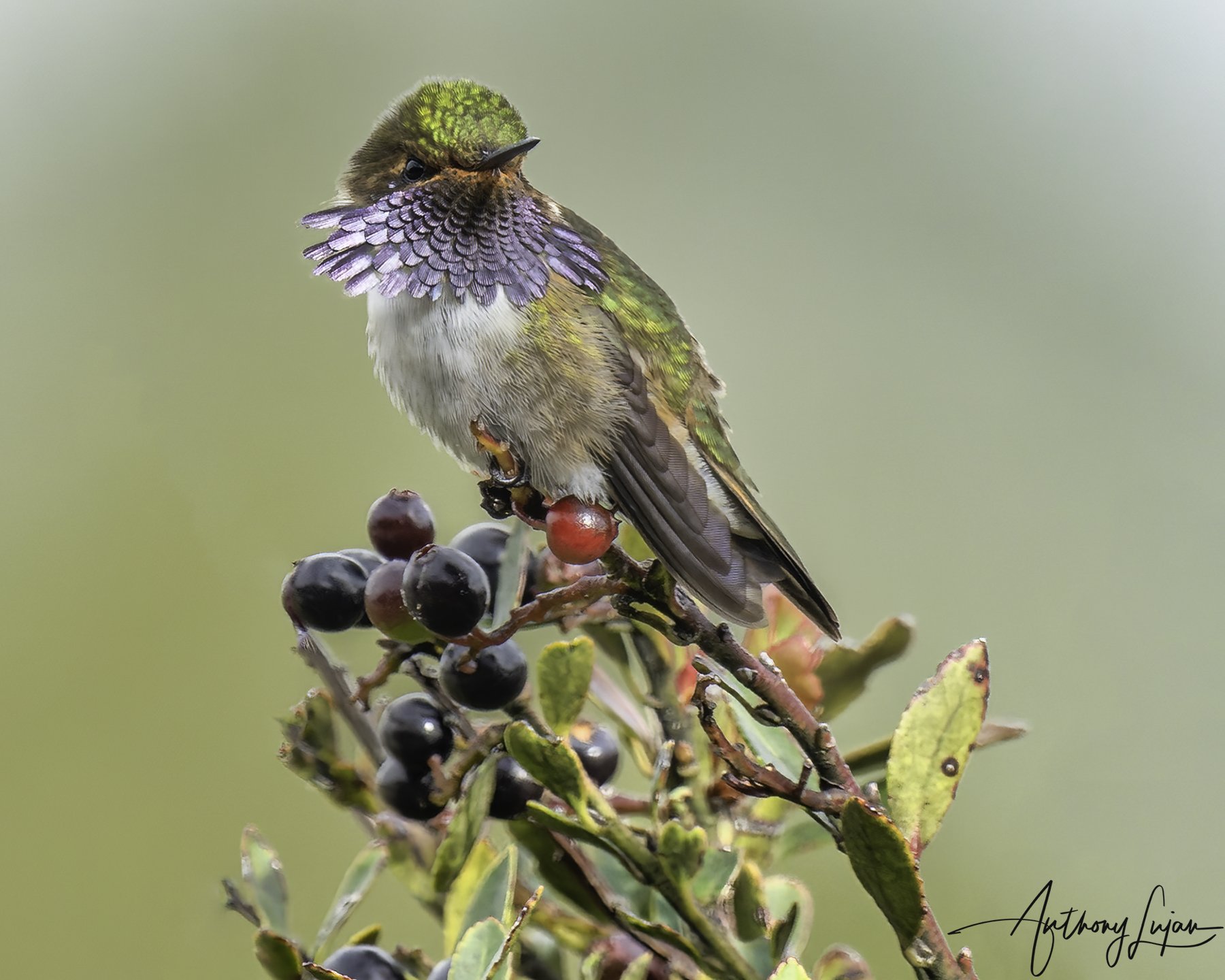
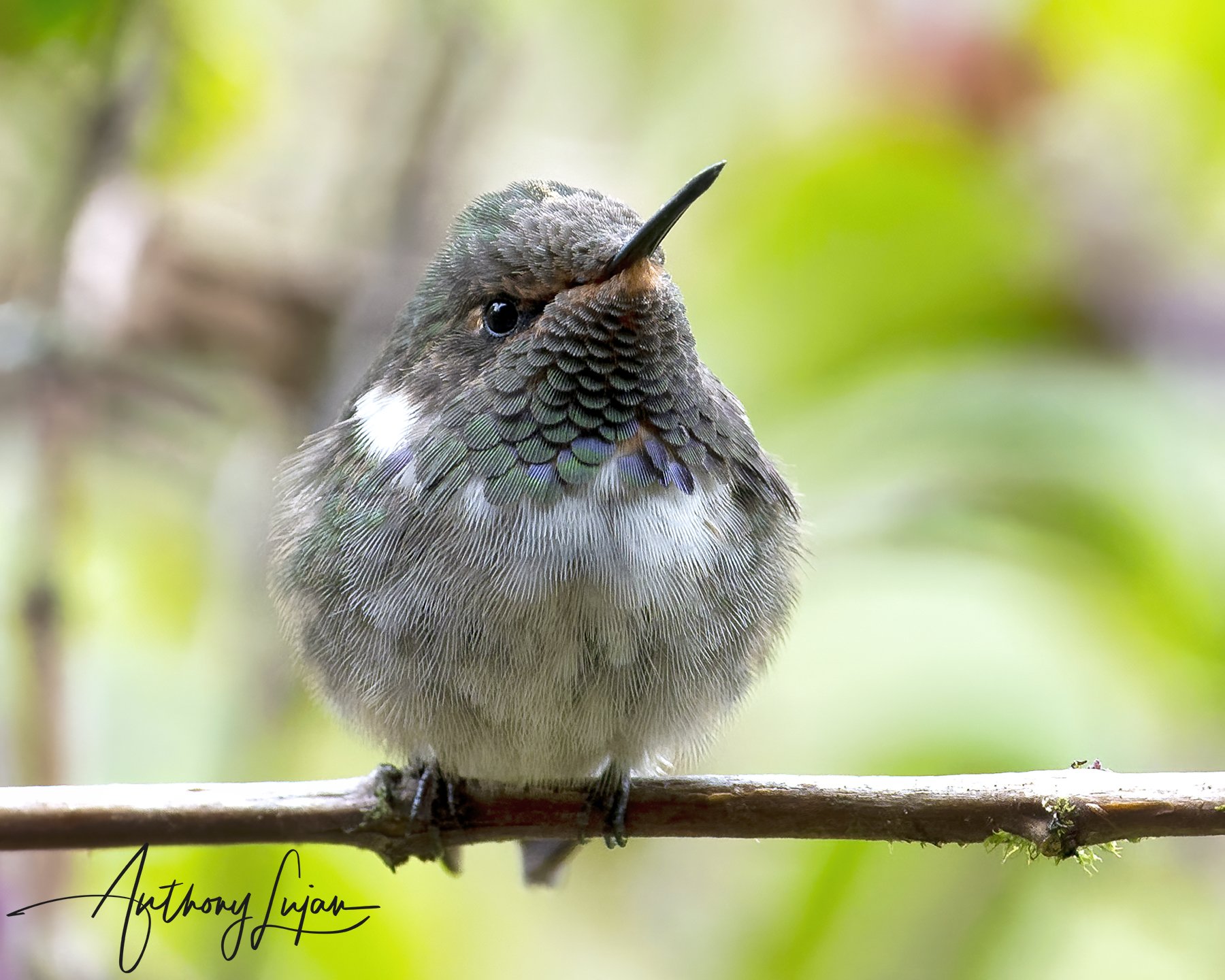
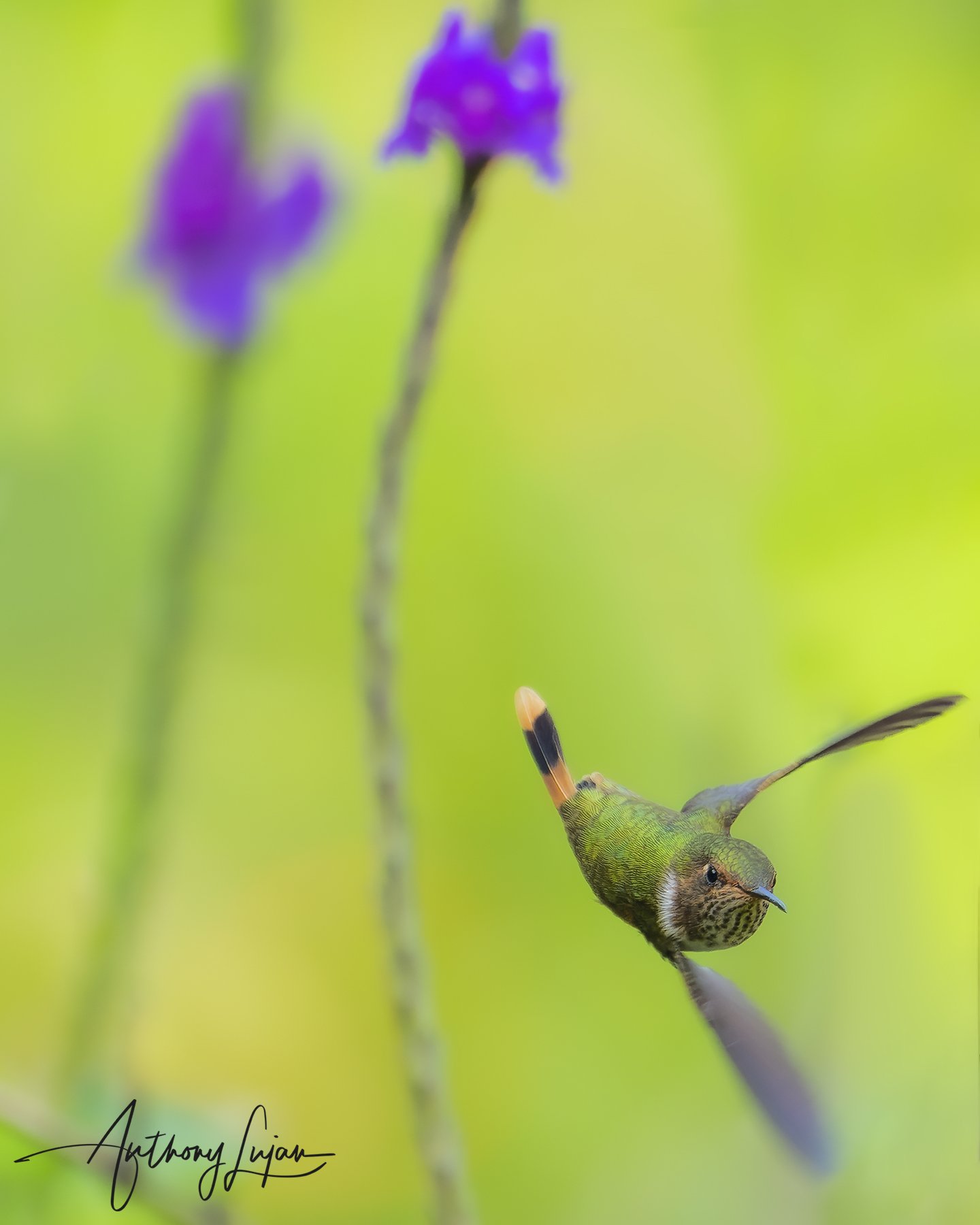
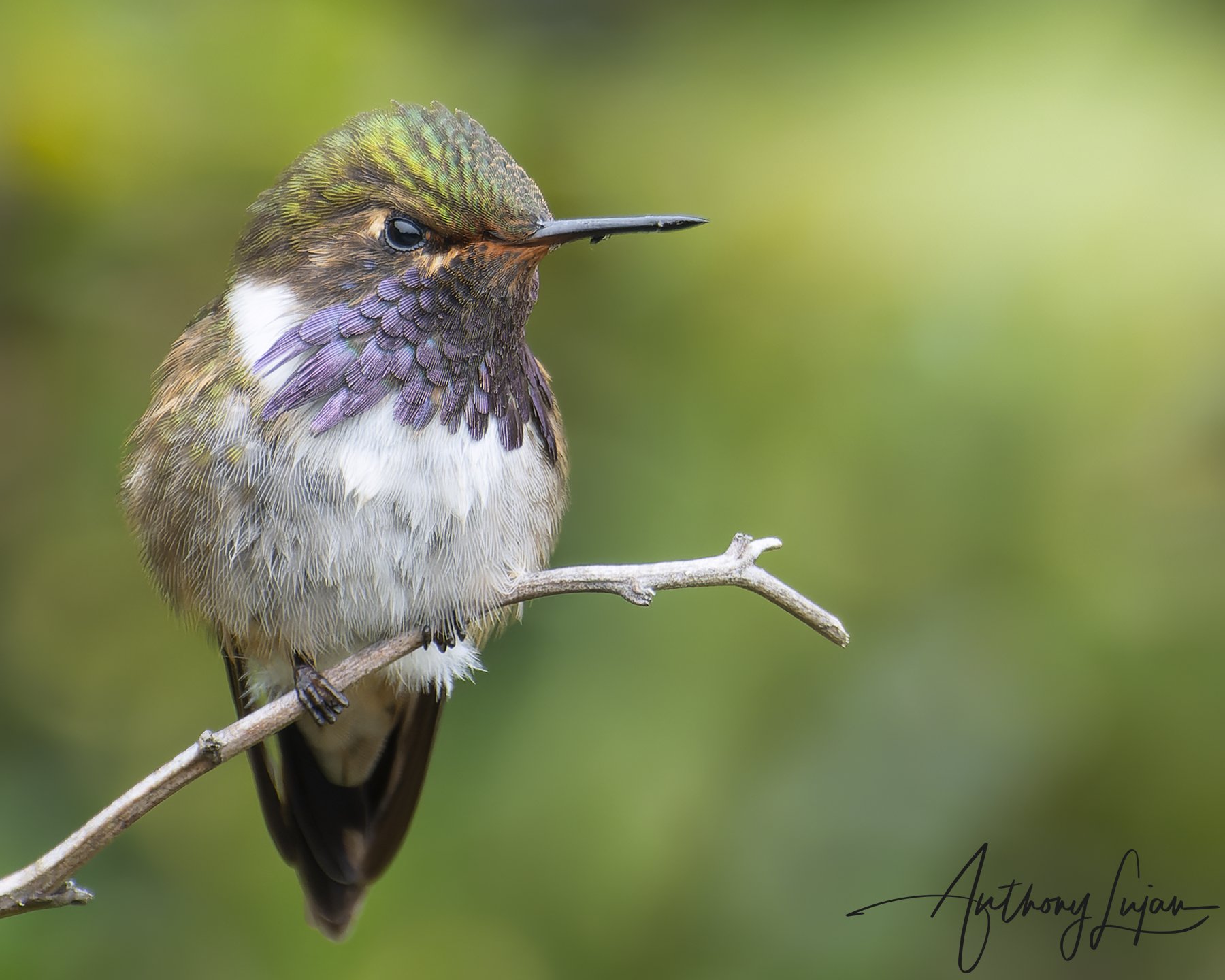
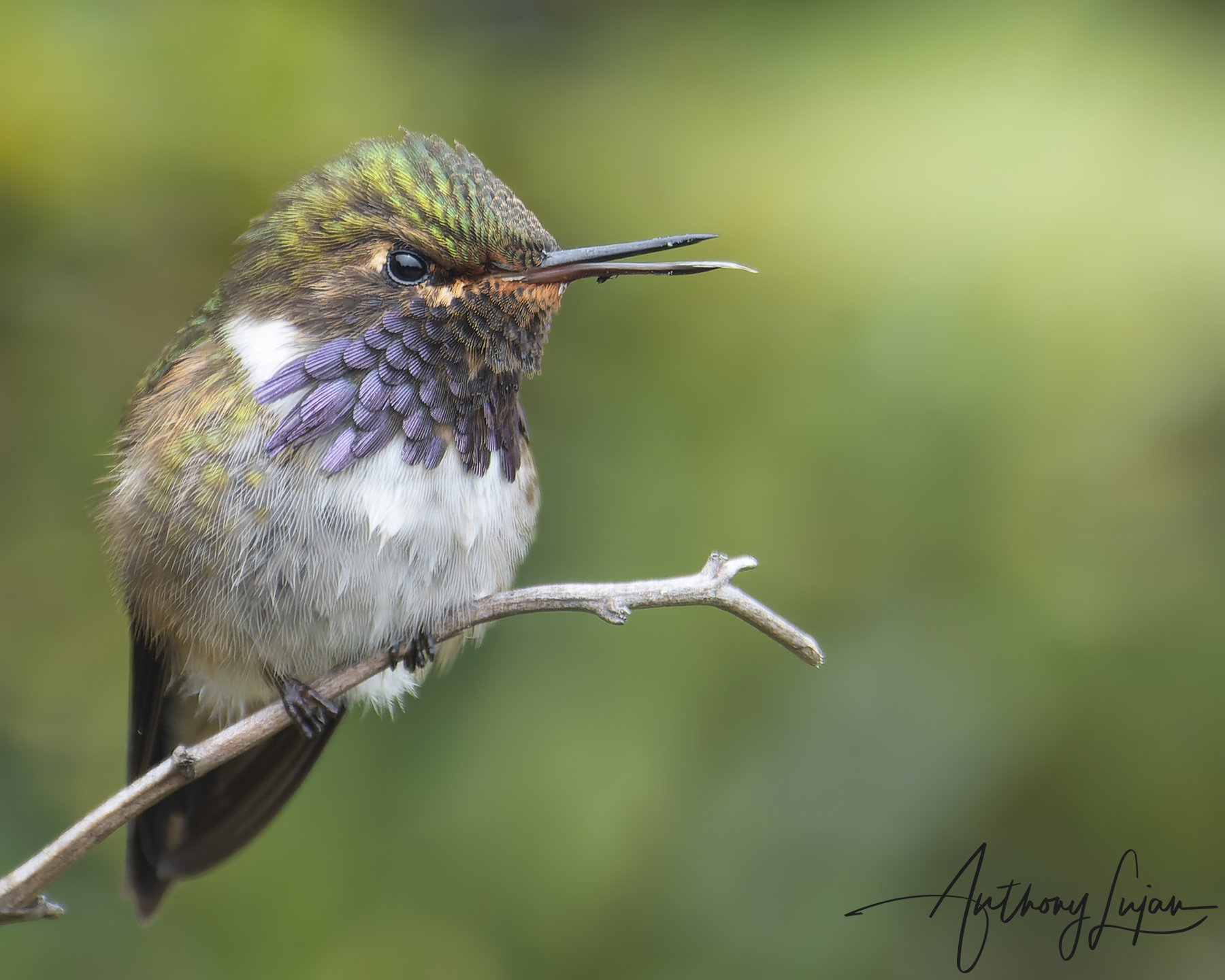
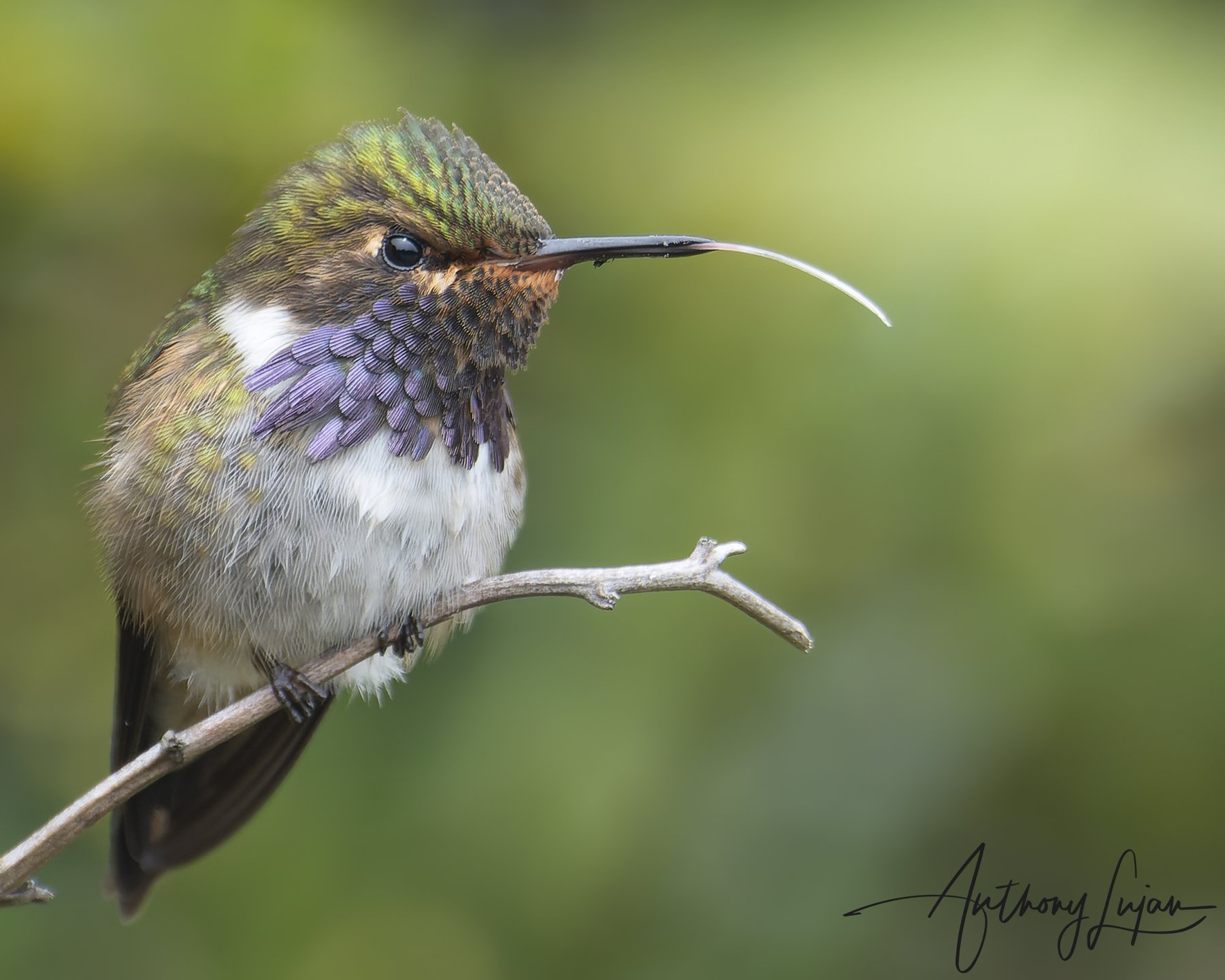
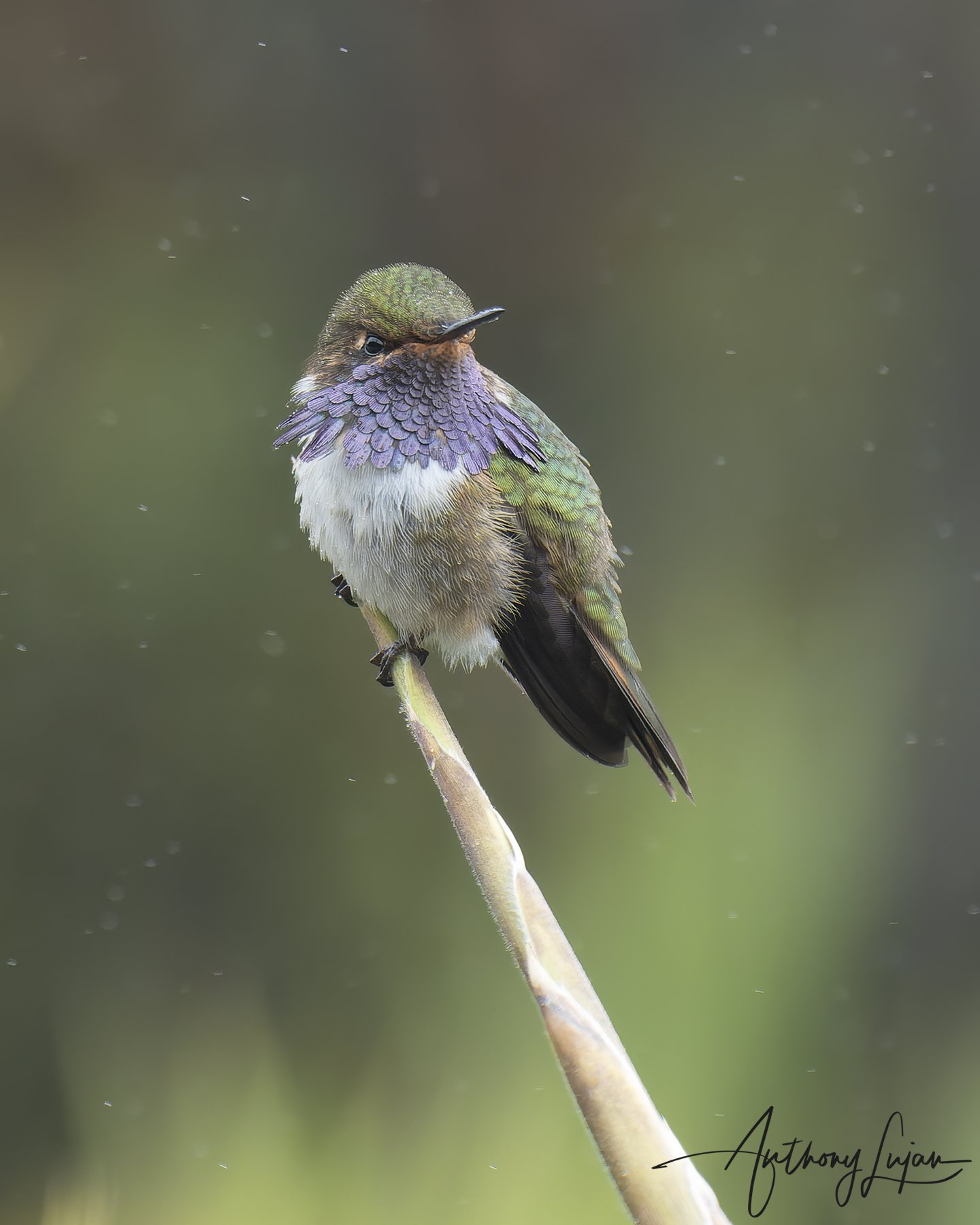
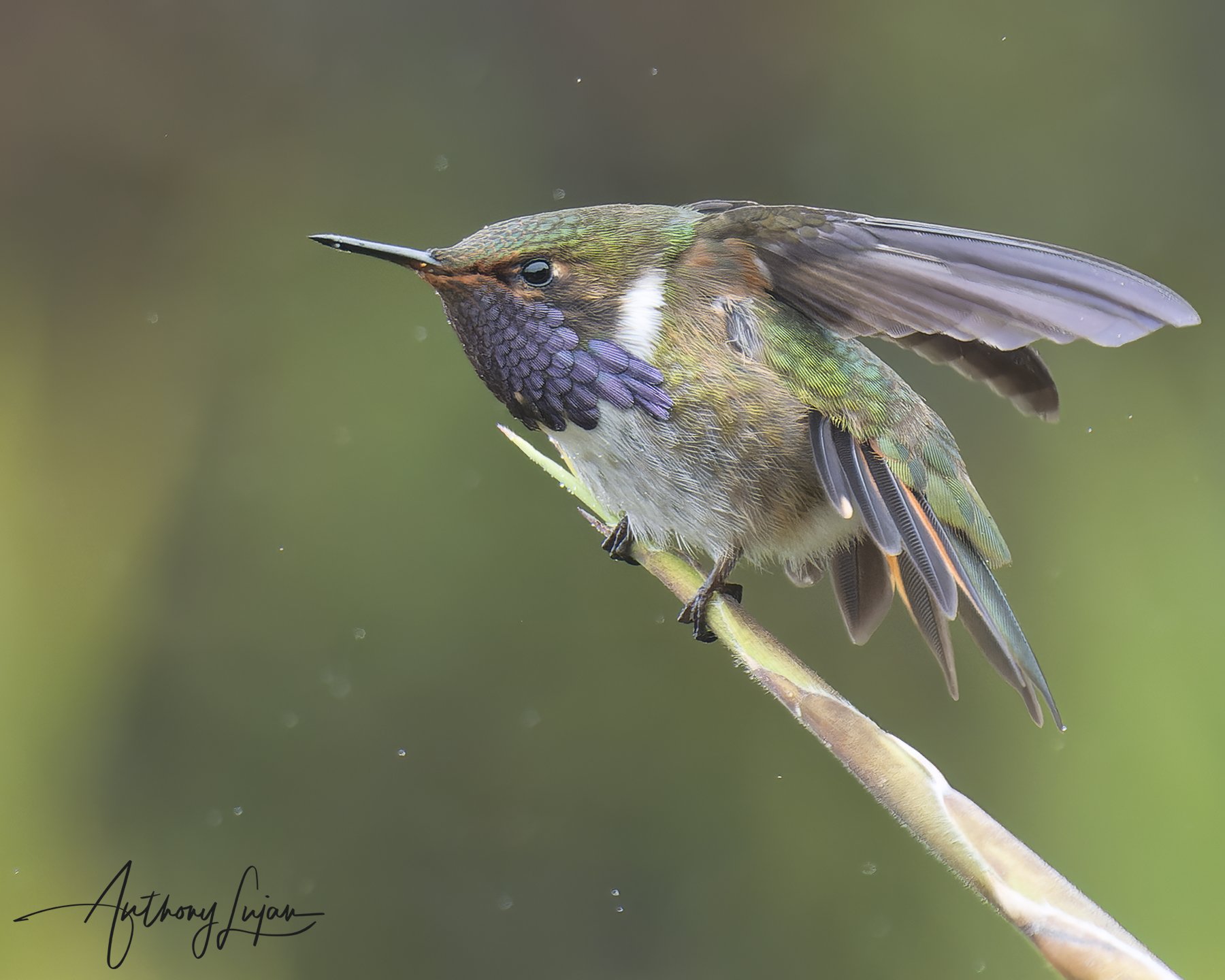
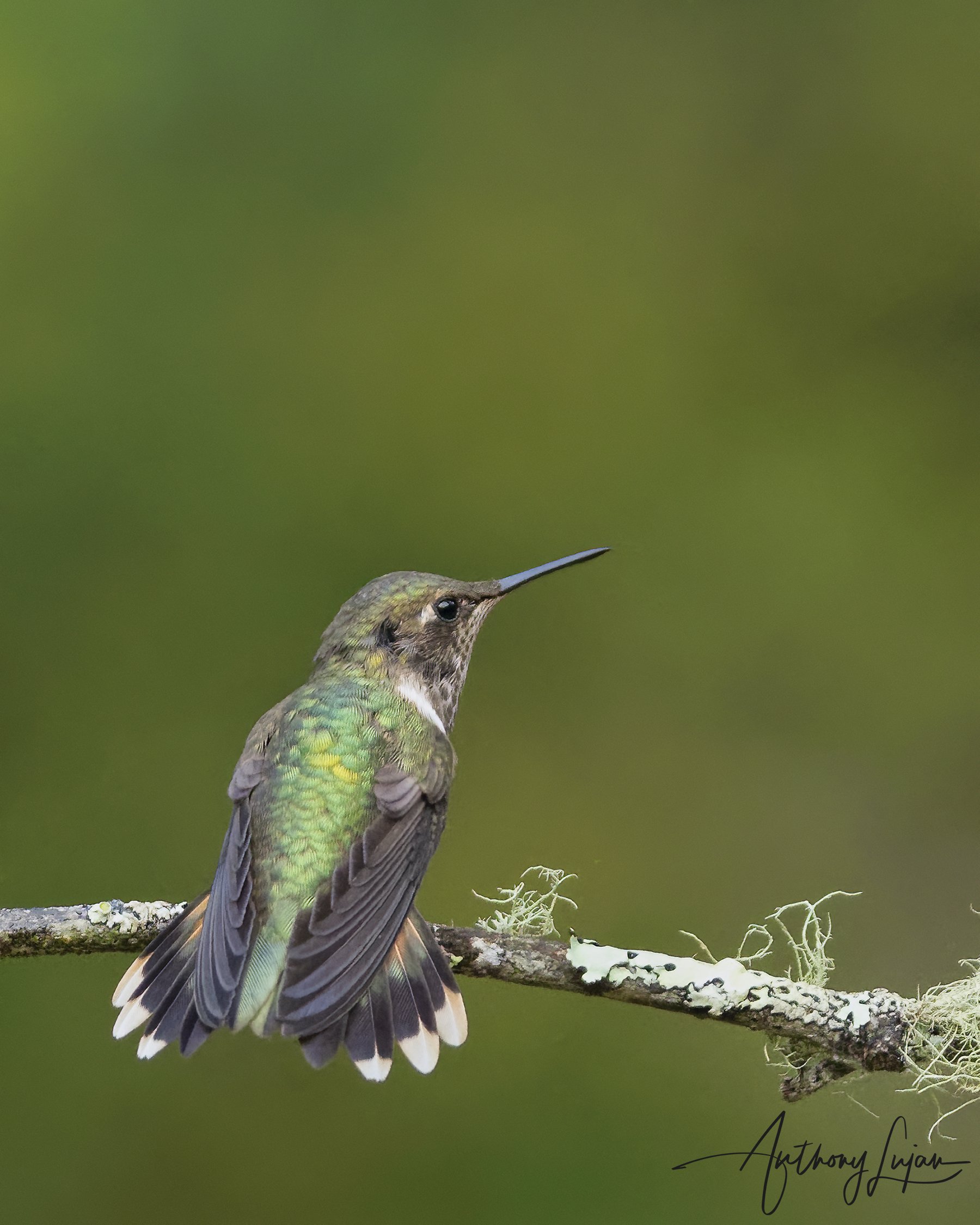
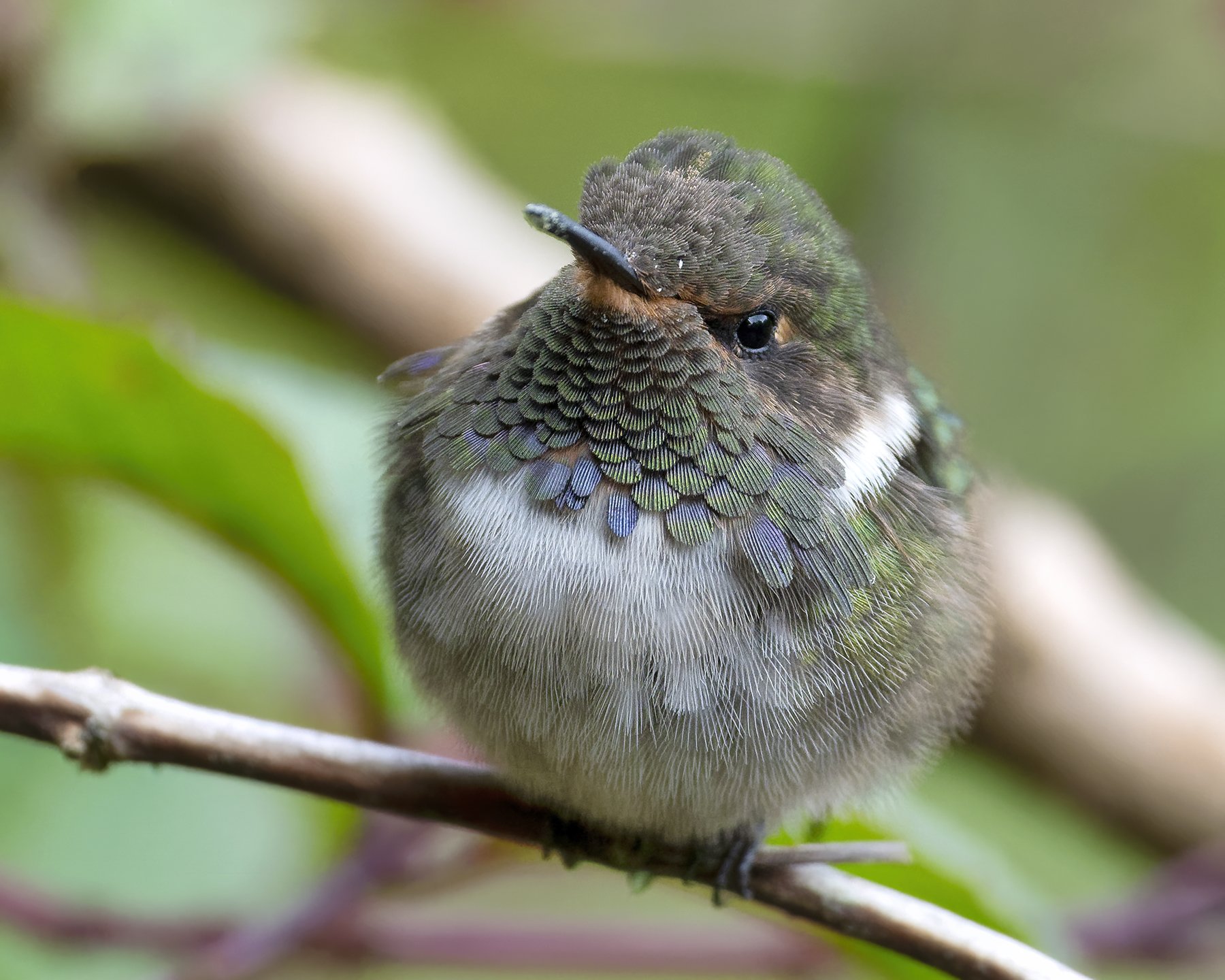
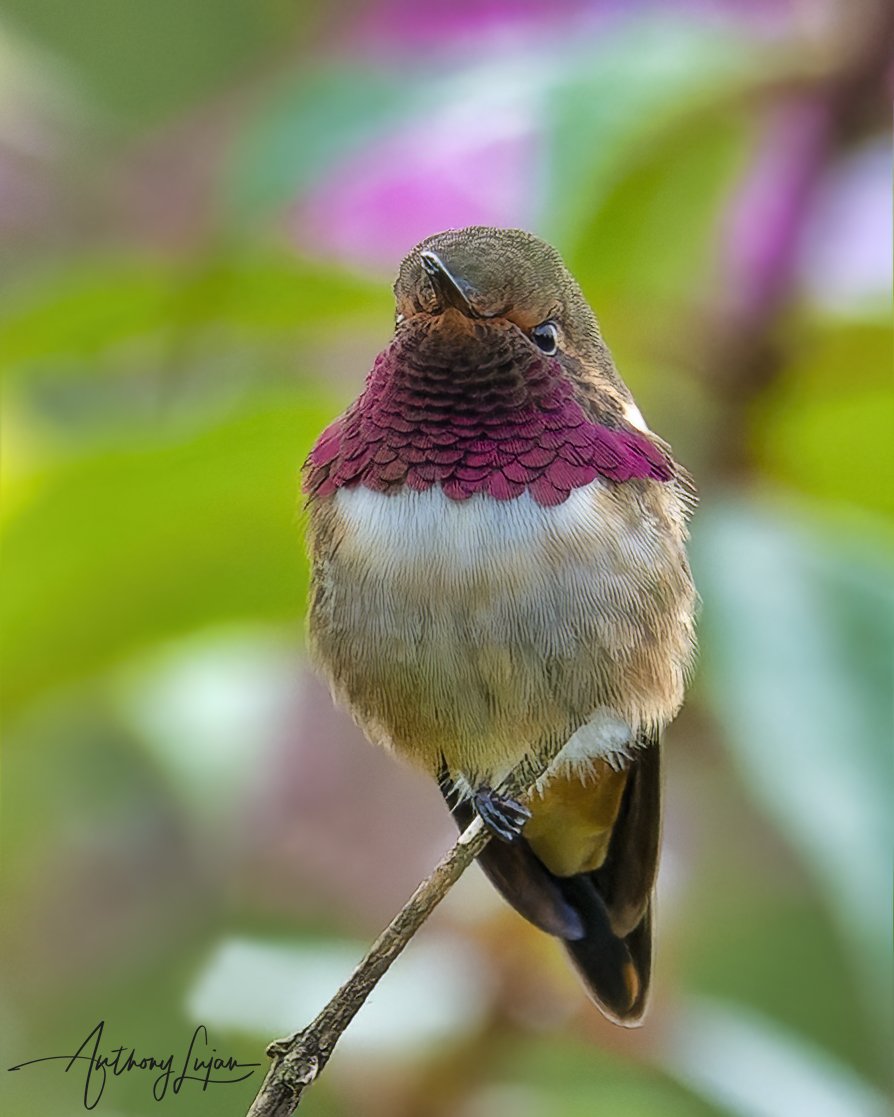
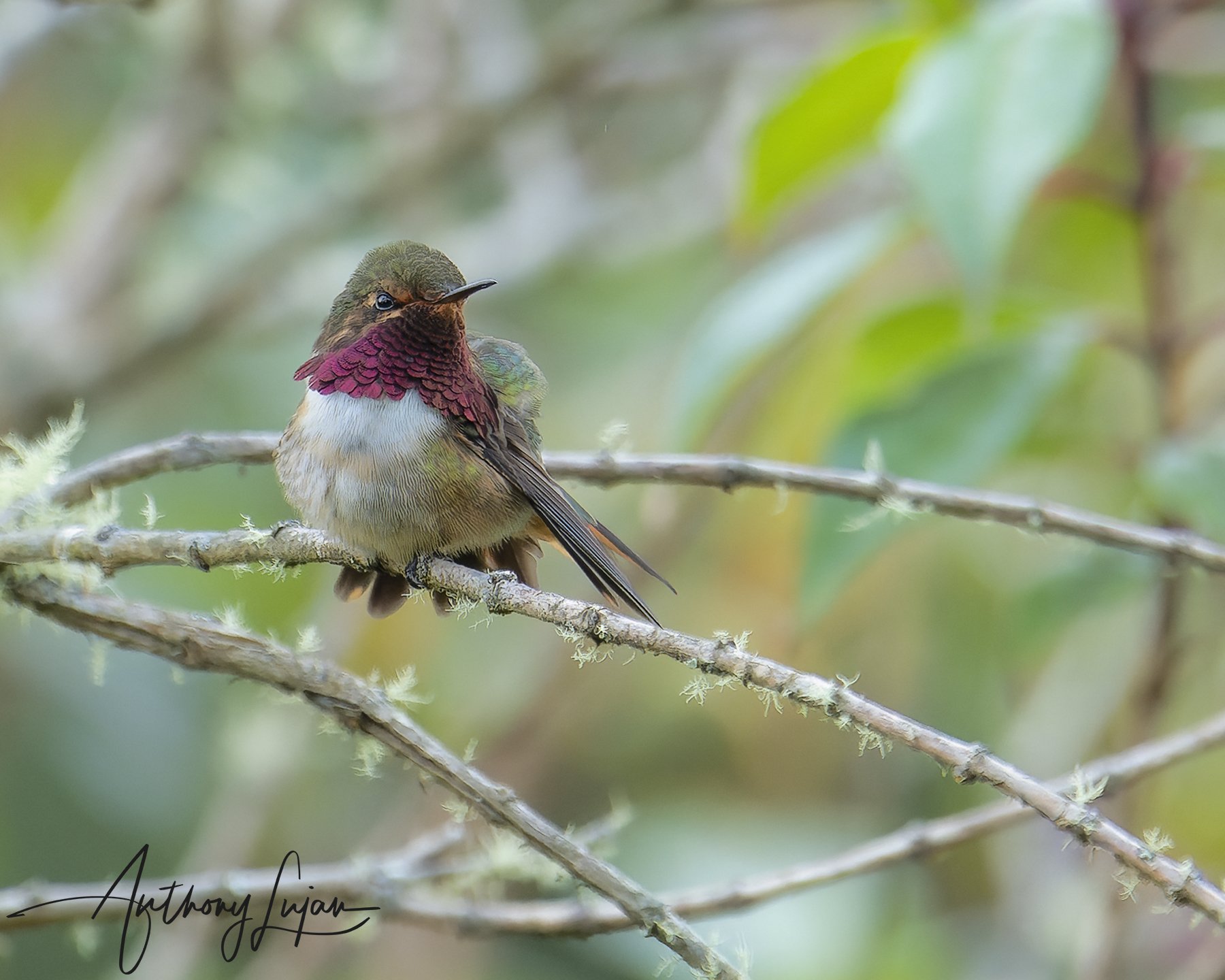
Below are individuals of the Volcano Hummingbird (Heliotrope-throated) (Selasphorus flammula torridus)
Photographed at:
Batsú Gardens, Savegre, San José, Costa Rica
Paraiso Quetzal Lodge – Km 70, San José, Costa Rica
PN Los Quetzales – Cerro Buenavista communication towers, San José, Costa Rica
These individuals belong to the subspecies torridus, which occurs in the Cordillera de Talamanca in southern Costa Rica and barely into western Panama. It is typically found at very high elevations near treeline, favoring páramo and stunted forest. Males have a heliotrope-tinged iridescent gorget and slightly darker upperparts than the northern populations.

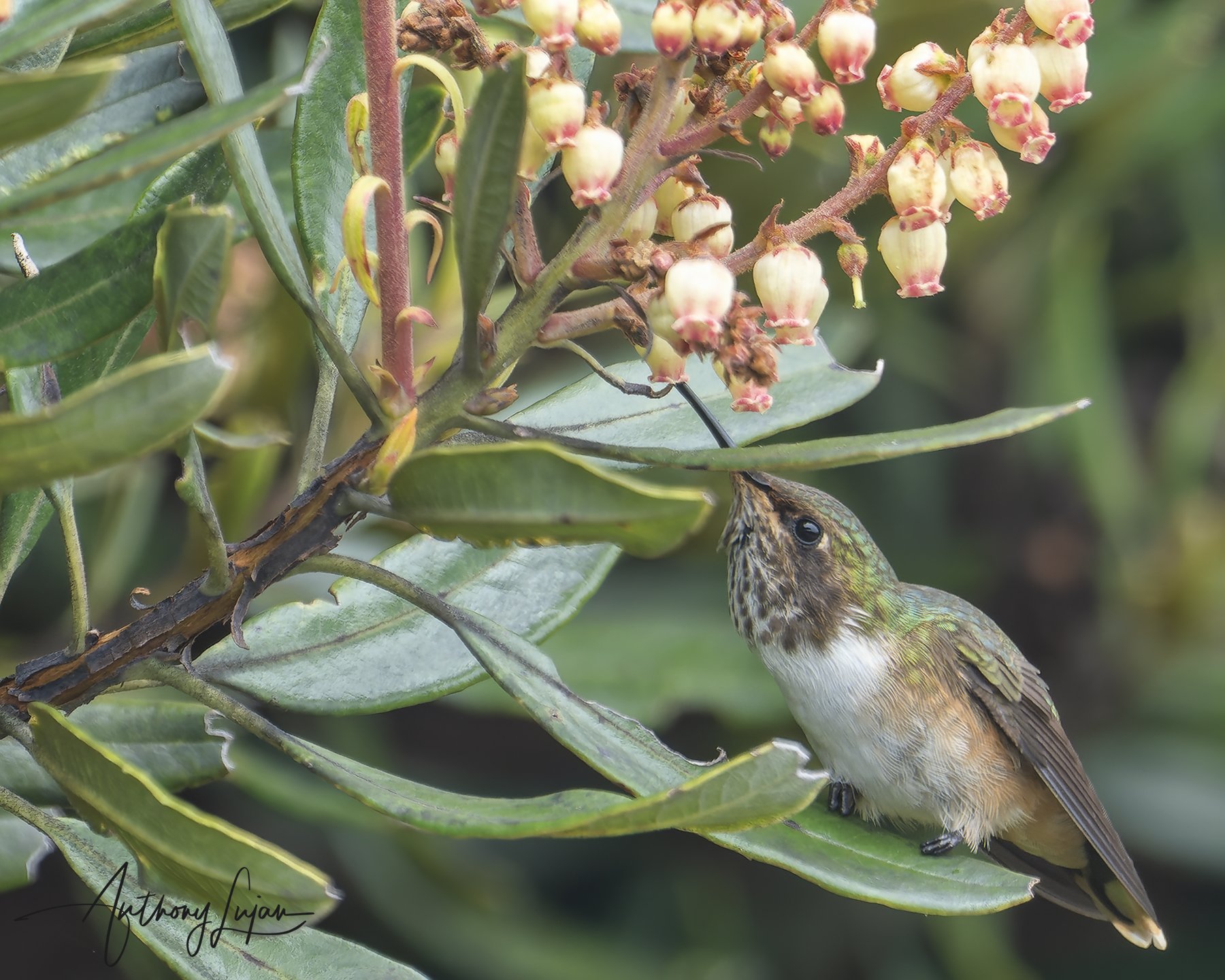
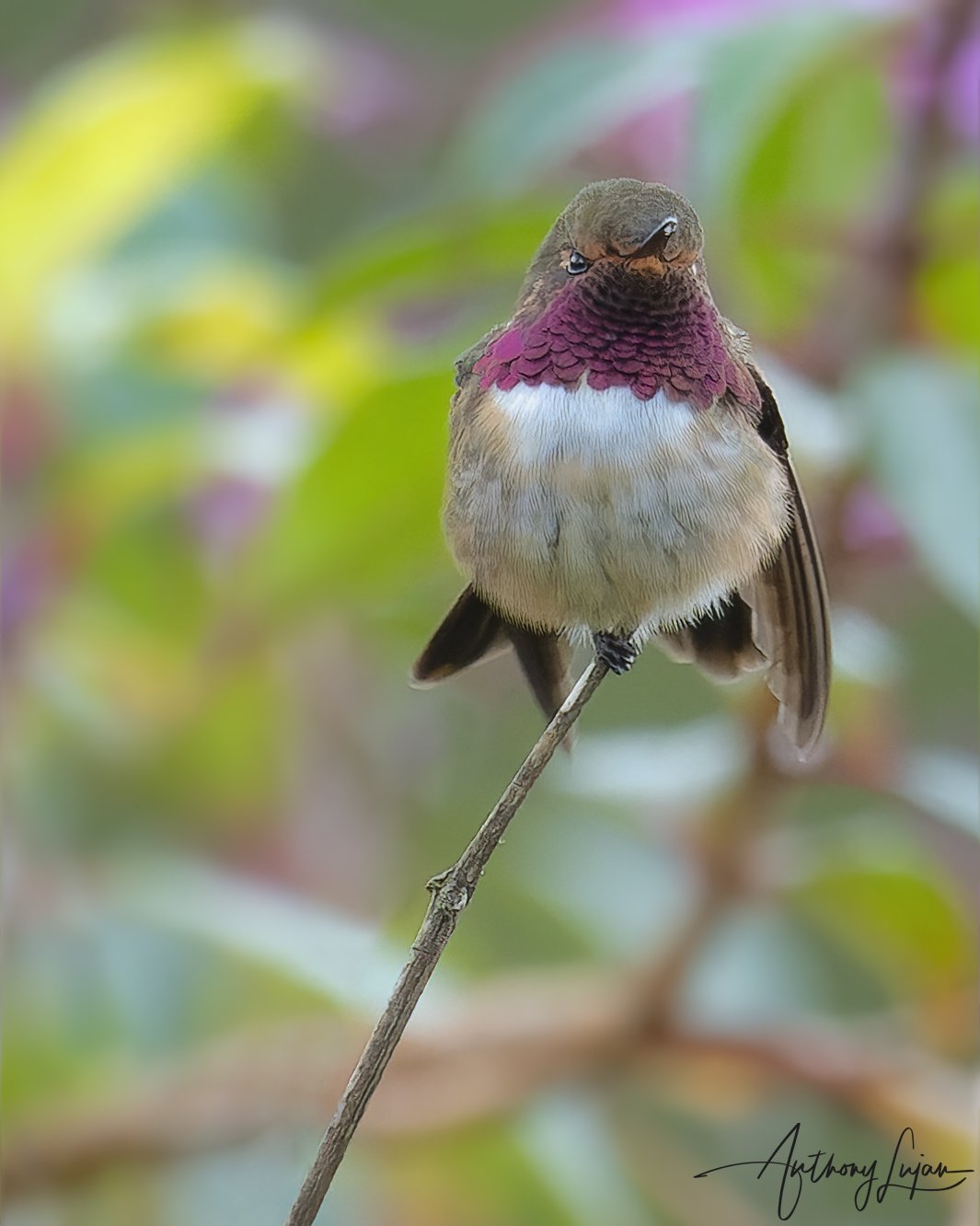
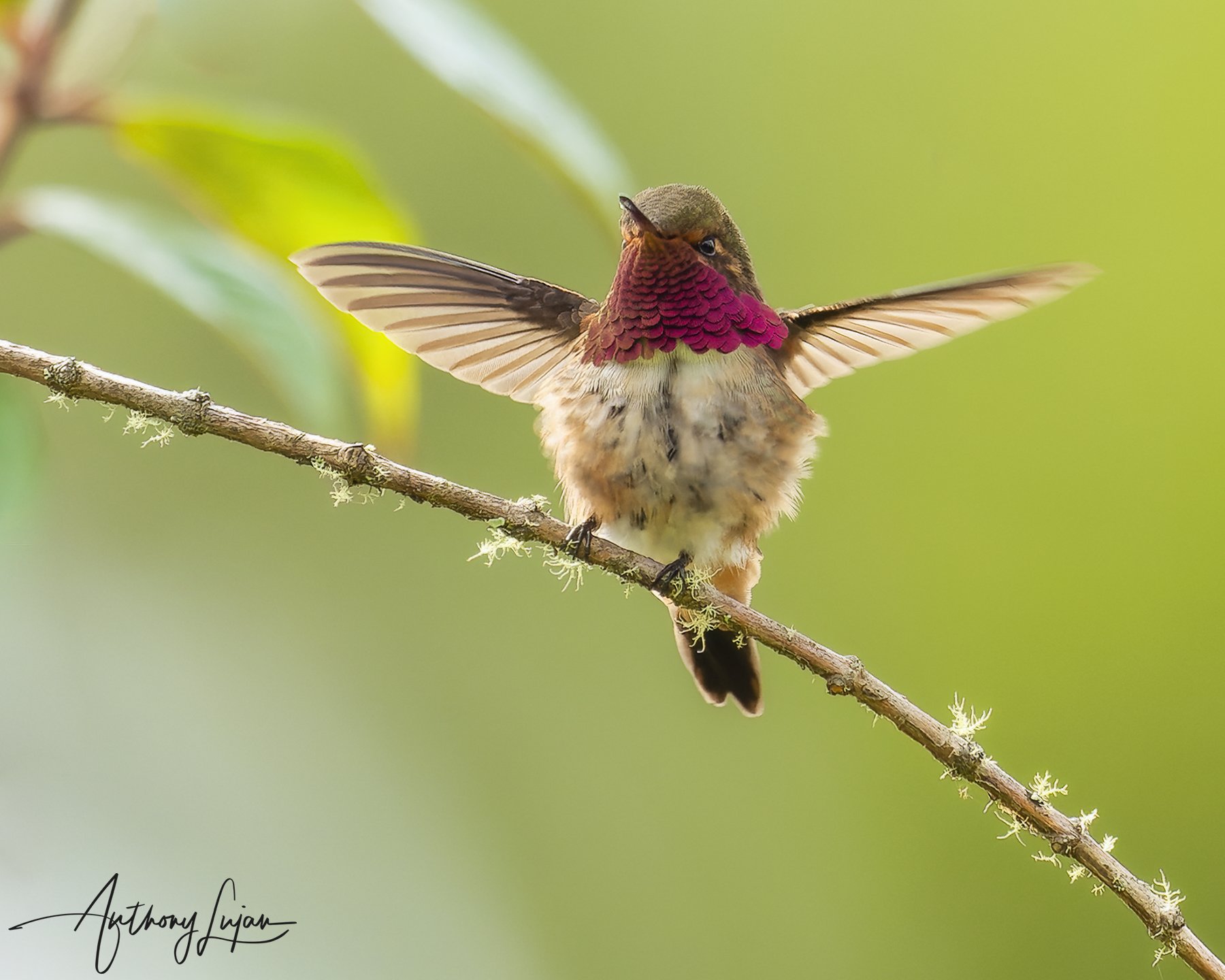
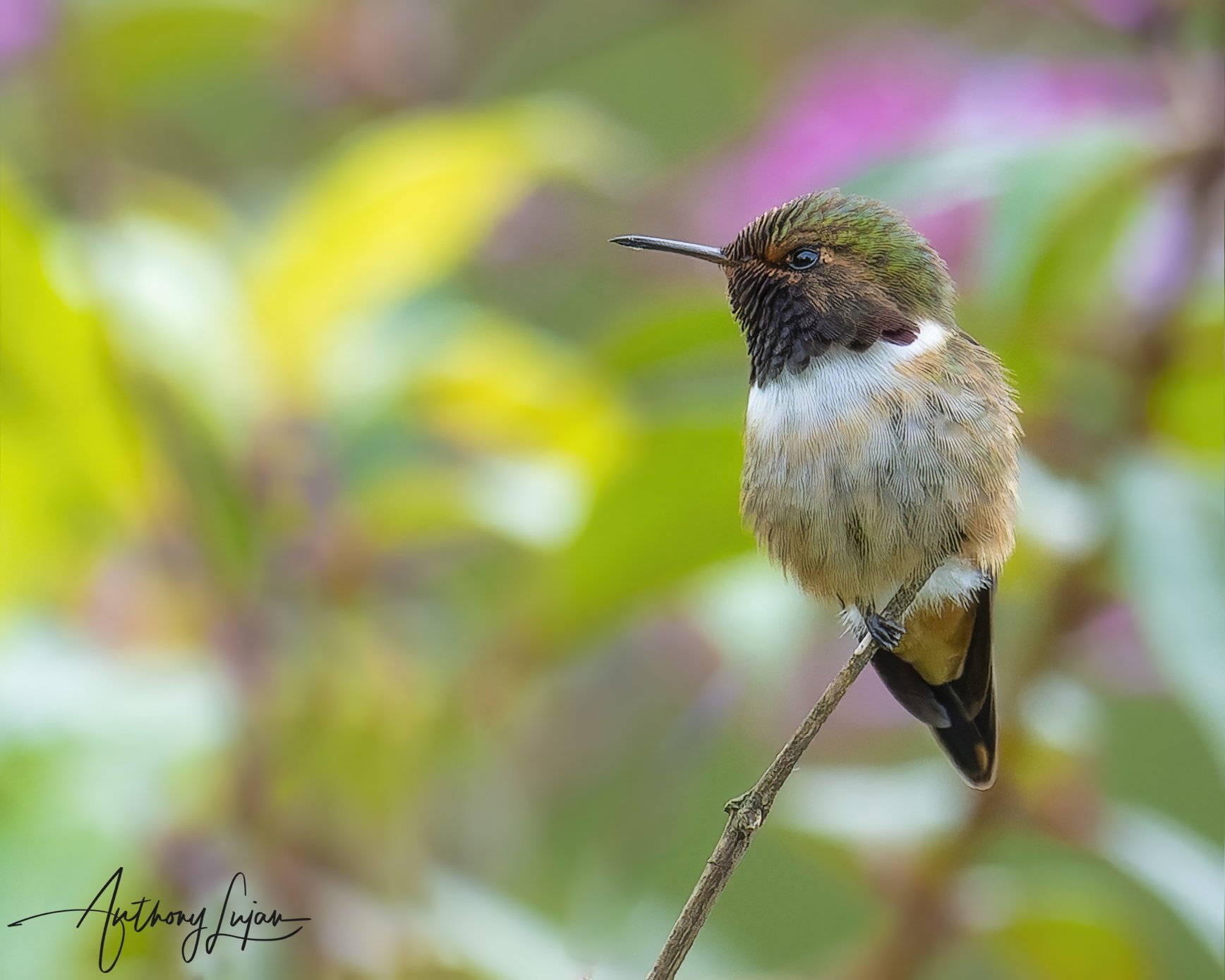
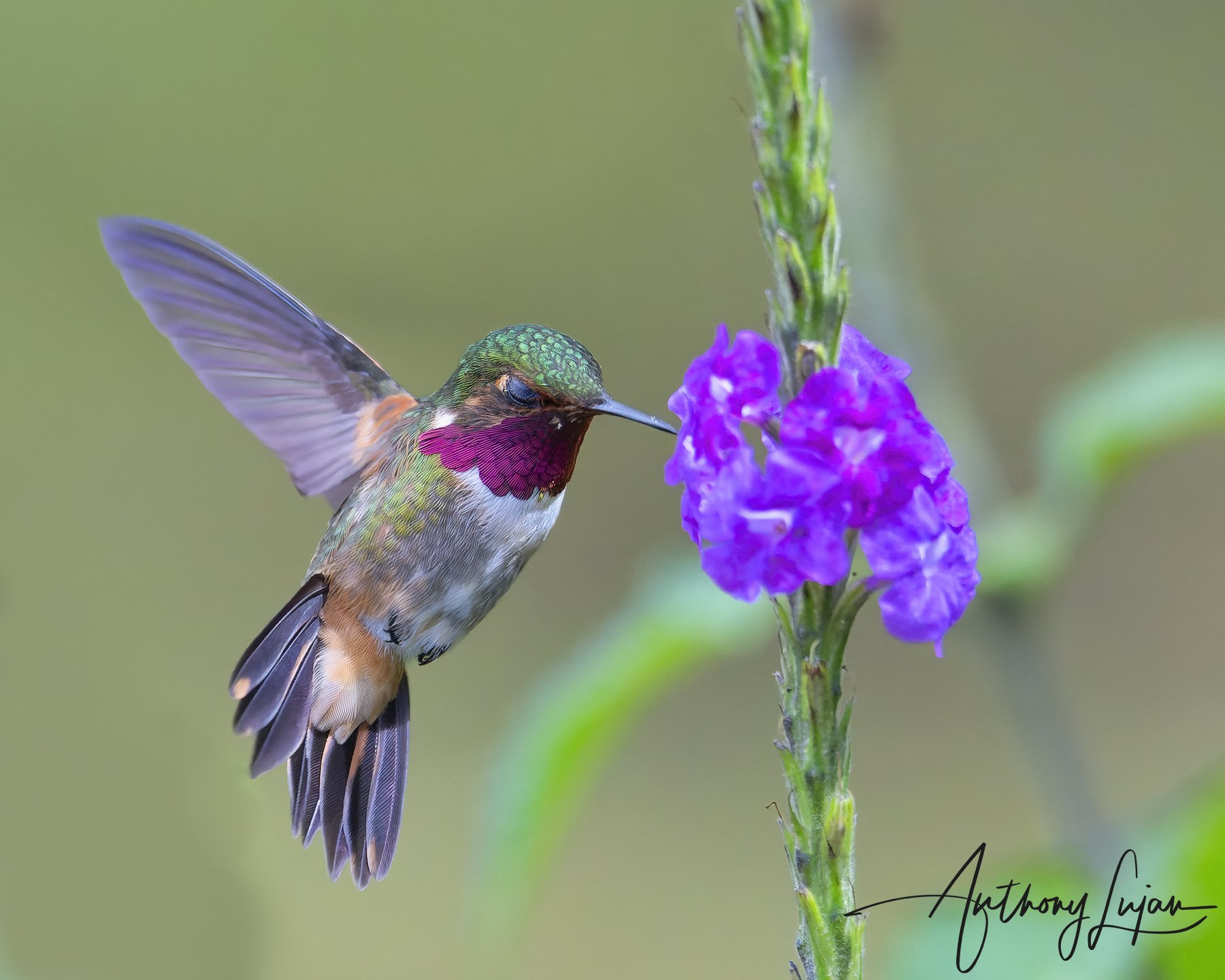
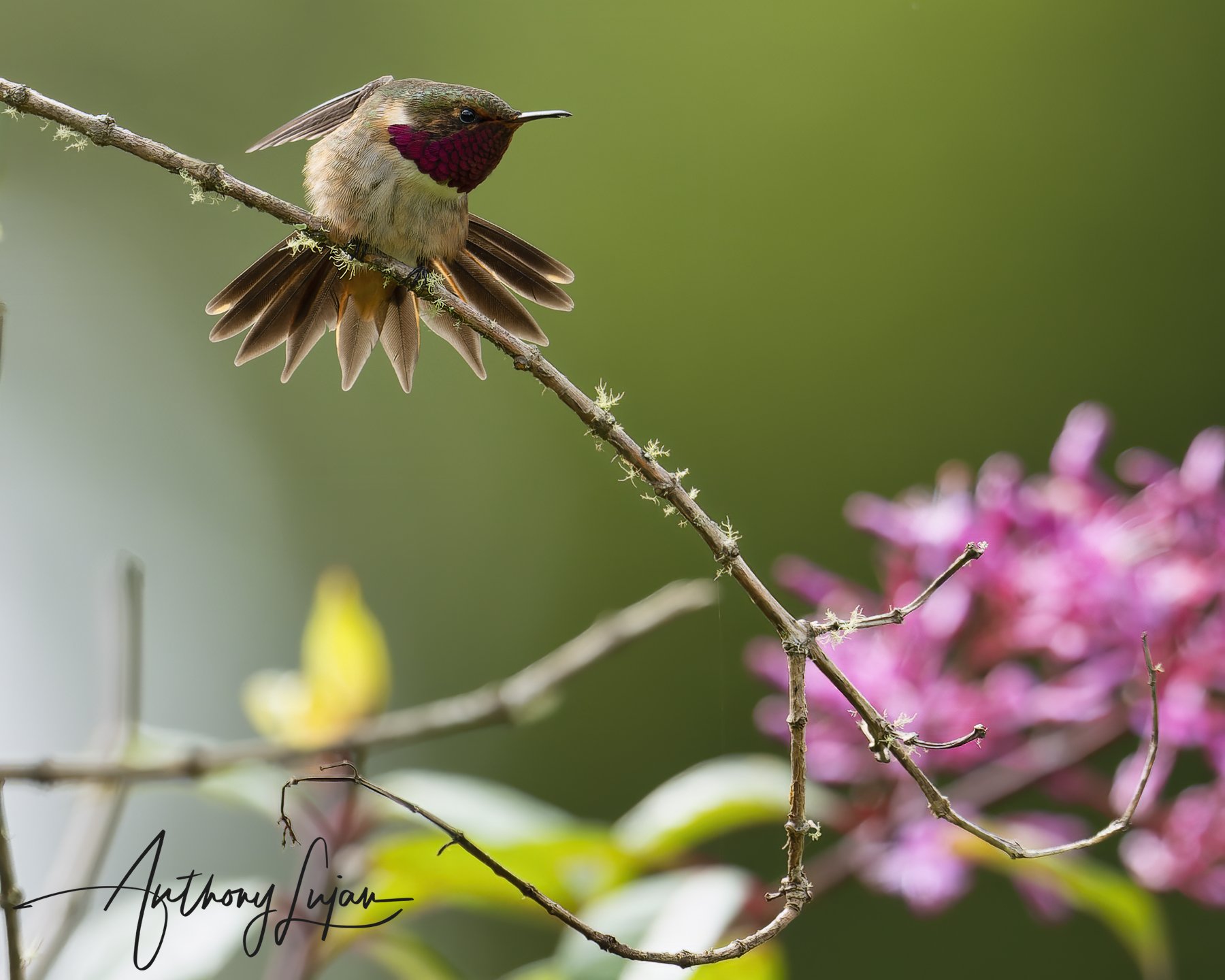
Below are individuals of the Volcano Hummingbird (Rose-throated) (Selasphorus flammula simoni)
Photographed at:
Poasito–Freddo Fresas, Alajuela, Costa Rica
Corso Lechería Tour, Alajuela, Costa Rica
Vía sin nombre, Heredia (10.124, -84.125), Heredia, Costa Rica
These individuals belong to the subspecies simoni, found on the high volcanic peaks of Central Costa Rica, particularly Poás and Barva. Males are distinguished by a rose-colored gorget and more bronzy tones on the flanks compared to other subspecies. This subspecies occupies high-altitude scrub and montane forest edges and is locally common within its restricted range.
Interested in coming along? Visit Travel with Me!
Also visit Costa Rica Hummingbird Expedition | July 2021 | 10 Species | Where It All Started
Also visit Costa Rica Hummingbird Expedition | November 2021 | 22 New Species | Second Chances
Also visit Costa Rica Hummingbird Expedition | July 2025 | 32 Species | 10 New | Closing the Gap
Related species in the Selasphorus genus (9 species total):




Please note: The content provided in this article reflects Anthony’s personal experience and photographic approach. Results can vary depending on light, weather, location, equipment, subject behavior, and field conditions.