
How Crabapples Help Your Hummingbird Garden
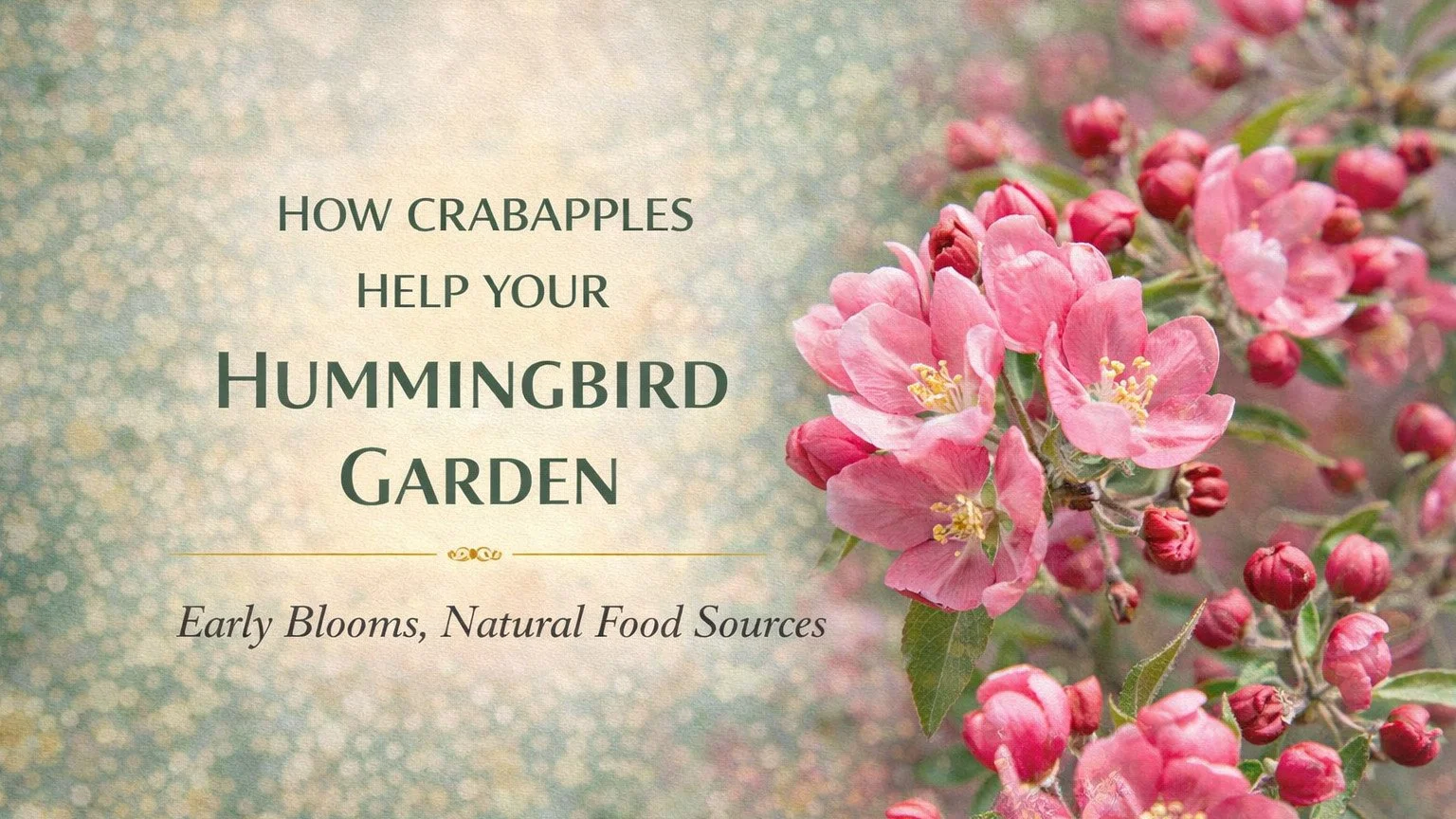
Crabapple trees add four season beauty to the landscape with spring blossoms, summer foliage, colorful fruit, and striking winter form. While they are best known for feeding songbirds and other wildlife with their small fruits, crabapples can also play a helpful role in a hummingbird friendly garden when paired with nectar plants and thoughtful design.
By using crabapple trees as structural anchors and seasonal highlights, you can create a garden that supports hummingbirds, other birds, and pollinators all year long.
Plant Details
Botanical Name:
Malus spp. (ornamental crabapple hybrids and species)
Common Name:
Crabapple, Flowering crabapple
Plant Type:
Deciduous tree
Mature Size:
Typically 8 to 25 feet tall and wide, depending on variety
Sun Exposure:
Full sun
Soil Type:
Well drained loam is ideal, but many varieties tolerate a range of soils
Bloom Time:
Spring
Flower Colors:
White, pink, or red, often with colorful buds that open to lighter flowers
Hardiness Zone:
Generally hardy in USDA Zones 4 to 8 (varies by cultivar)
Native Area:
Various species native to Europe, Asia, and North America; many ornamental varieties are hybrids
How Crabapple Trees Support a Hummingbird Garden
Spring blossoms for early pollinators
Crabapple trees are covered in blossoms in spring, attracting bees and other pollinators. While their flowers are not a primary nectar source for hummingbirds the way tubular flowers are, the insect activity around them can provide additional food, since hummingbirds also eat small insects and spiders.
Structure and perching spots
Hummingbirds need safe spots to perch, preen, and rest between feeding flights. Crabapple trees offer branches at different heights, giving birds vantage points to watch over the garden and defend feeding areas.
Seasonal interest and wildlife value
Crabapple fruits feed many other bird species in fall and winter. Integrating crabapples into your yard helps create a more complete wildlife habitat, which can make your garden a richer, more dynamic place overall.
Choosing the Best Crabapple Varieties for Your Garden
Size and form
Select a crabapple variety that fits your space. Smaller, ornamental forms work well in modest yards, near patios, or as focal points in garden beds. Larger varieties can anchor bigger landscapes or provide light shade for understory plantings.
Disease resistance
Look for varieties bred for resistance to common crabapple problems such as apple scab, fire blight, and powdery mildew. This will keep your tree healthier and more attractive with less maintenance.
Flower and fruit display
Flower color and fruit persistence vary between varieties. Some hold their fruits well into winter, providing extended visual interest and food for other birds. Consider whether you want persistent fruit for wildlife viewing or varieties that drop fruit more quickly to minimize cleanup.
Planting and Caring for Crabapple Trees
Planting Tips
Site selection
Choose a sunny location with room for the mature size of the tree. Full sun encourages better flowering, fruiting, and overall health.Soil preparation
Crabapples prefer well drained soil. If your soil is heavy clay, consider amending with organic matter or planting on a slight mound to improve drainage.Planting time
Fall and early spring are generally the best times to plant crabapple trees. Fall planting allows roots to establish before new growth in spring.
Maintenance
Watering
Water newly planted trees regularly during the first couple of years, especially in dry periods. Once established, many crabapples are moderately drought tolerant but still appreciate occasional deep watering in prolonged dry spells.Mulching
Apply a 2 to 3 inch layer of mulch around the base of the tree, keeping it a few inches away from the trunk. Mulch helps conserve moisture and moderate soil temperature.Pruning
Prune in late winter or early spring to remove dead, crossing, or damaged branches and to maintain a balanced structure. Avoid heavy pruning that removes too many flowering branches.Fertilizing
In many gardens, crabapple trees need little fertilizer. If growth is weak or leaves are pale, a soil test and targeted fertilization can help.
How to Use Crabapple Trees in Your Hummingbird Garden
Anchor points for planting beds
Use crabapple trees as focal points and then design hummingbird friendly planting beds around them. Plant nectar rich perennials, annuals, and shrubs beneath and around the canopy where sunlight allows.Perch trees near feeders and flower beds
Position crabapples within sight of your hummingbird feeders and flower rich areas. The branches give hummingbirds comfortable perches between feeding visits.Layered wildlife habitat
Combine crabapple trees with other berry producing shrubs and nectar plants to create multiple layers of habitat. Hummingbirds benefit from perches and insects, while other birds enjoy the fruits and shelter.
Frequently Asked Questions
Gardeners often have questions when they start adding trees like crabapples to a hummingbird focused yard. Here are a few common ones.
-
Crabapple blossoms are not a primary nectar source for hummingbirds the way tubular flowers are. However, the flowers support insect life, and hummingbirds will sometimes feed on small insects around the tree.
-
Hummingbirds do not typically eat the fruits themselves, but many other bird species rely on crabapple fruits, especially in fall and winter. Supporting a variety of birds can make your garden more dynamic and enjoyable.
-
It depends on placement and the tree’s mature size. Choose a variety and location that allow enough sun to reach your key nectar plants. You can plant sun loving flowers at the drip line or in nearby beds, and shade tolerant hummingbird plants closer to the trunk.
-
Many modern crabapple varieties are relatively low maintenance, especially if you choose disease resistant cultivars and plant them in suitable conditions. Basic care includes watering while young, occasional pruning, and monitoring for common issues.
-
Yes. Many compact or dwarf crabapple varieties are available that stay within a manageable size for smaller urban or suburban yards. Always check the expected mature size before planting.
Please note: The content provided in this article is for educational purposes only and is based on general gardening knowledge and hummingbird friendly landscaping practices. Growing conditions can vary by region, and plant performance may differ depending on climate, soil, and care.