
Joe-Pye Weed: A Must-Have for Hummingbird Enthusiasts
Introduction
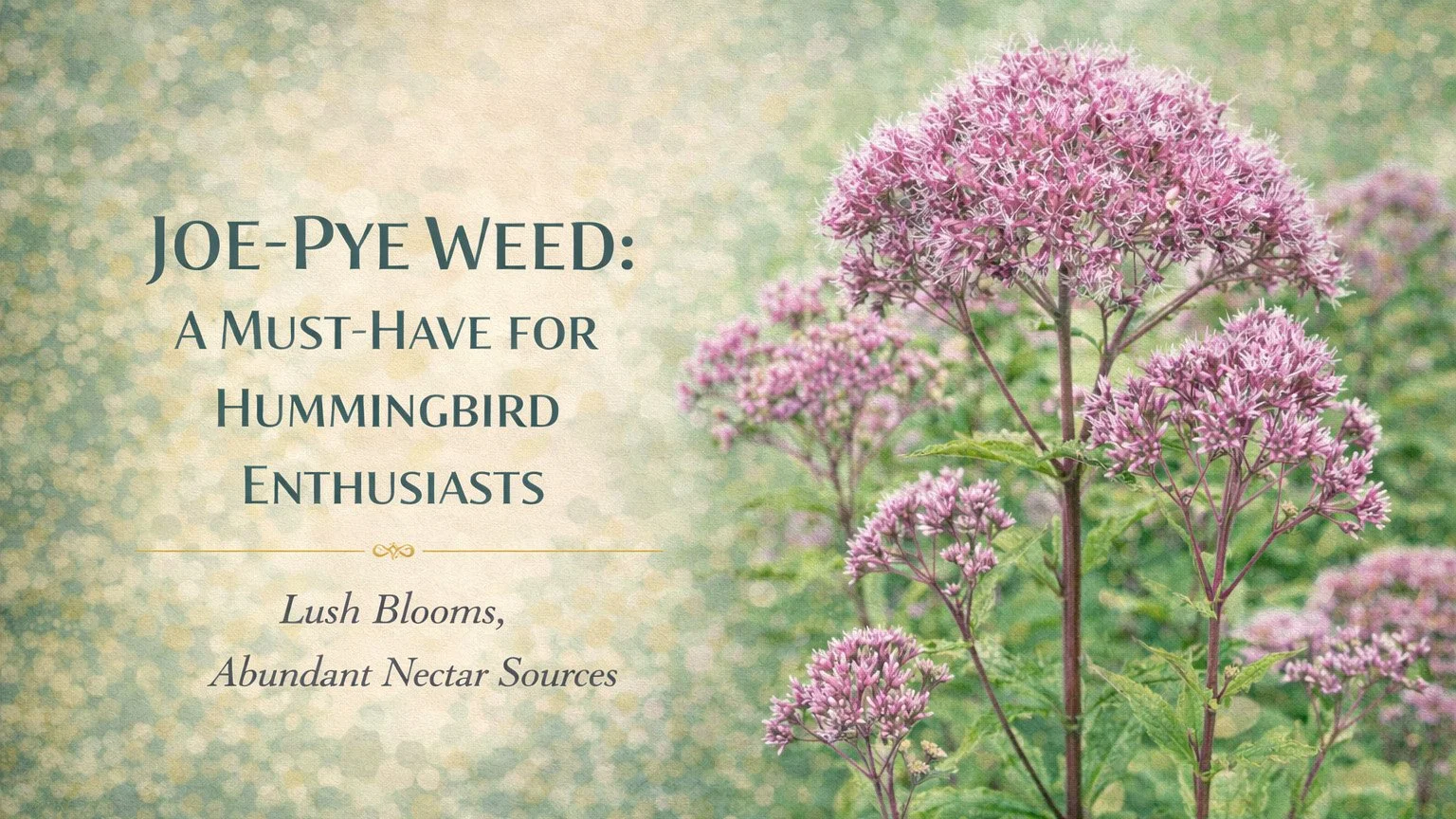
Joe-Pye Weed (Eutrochium spp.) is a fantastic addition to any garden, especially if you want to attract hummingbirds. Known for its tall stature and clusters of pinkish-purple flowers, this plant is a magnet for pollinators.
Benefits of Joe-Pye Weed
Attracts Hummingbirds and Butterflies The flowers provide a rich nectar source that attracts both hummingbirds and butterflies.
Long Blooming Season Joe-Pye Weed blooms from mid-summer to fall, ensuring a steady food supply for pollinators.
Low Maintenance This hardy plant is easy to grow and requires minimal care once established.
How to Grow Joe-Pye Weed
Optimal Conditions
Sunlight: Prefers full sun to partial shade.
Soil: Thrives in moist, well-drained soil.
Watering: Requires regular watering, especially during dry spells.
Planting Tips
Plant in early spring or fall for best results.
Space plants adequately to ensure proper air circulation.
Maintenance Tips
Pruning Cut back in late winter to early spring to encourage new growth.
Fertilizing Use a balanced, slow-release fertilizer in the spring to support healthy growth.
Pest Control Generally pest-resistant, but monitor for common garden pests and treat if necessary.
Conclusion
Incorporating Joe-Pye Weed into your garden is a great way to attract hummingbirds and add vibrant color. With proper care, this plant will thrive and create a lively, hummingbird-friendly environment.
Frequently Asked Questions
Some plants support a wide range of pollinators while also providing nectar for hummingbirds. Joe-Pye weed is one such plant that can add both height and pollinator activity to a garden. Here are some common questions people ask about Joe-Pye weed.
-
Joe-Pye weed is a tall flowering plant known for attracting pollinators.
-
The botanical name is commonly Eutrochium purpureum.
-
Hummingbirds may visit the flowers for nectar.
-
It typically blooms from mid-summer into early fall.
-
Yes, it is a native plant commonly found in moist environments.
Please note: The content provided in this article is for educational purposes only and is intended as general information. Results can vary depending on climate, growing conditions, plant variety, and regional differences.