
Introduction
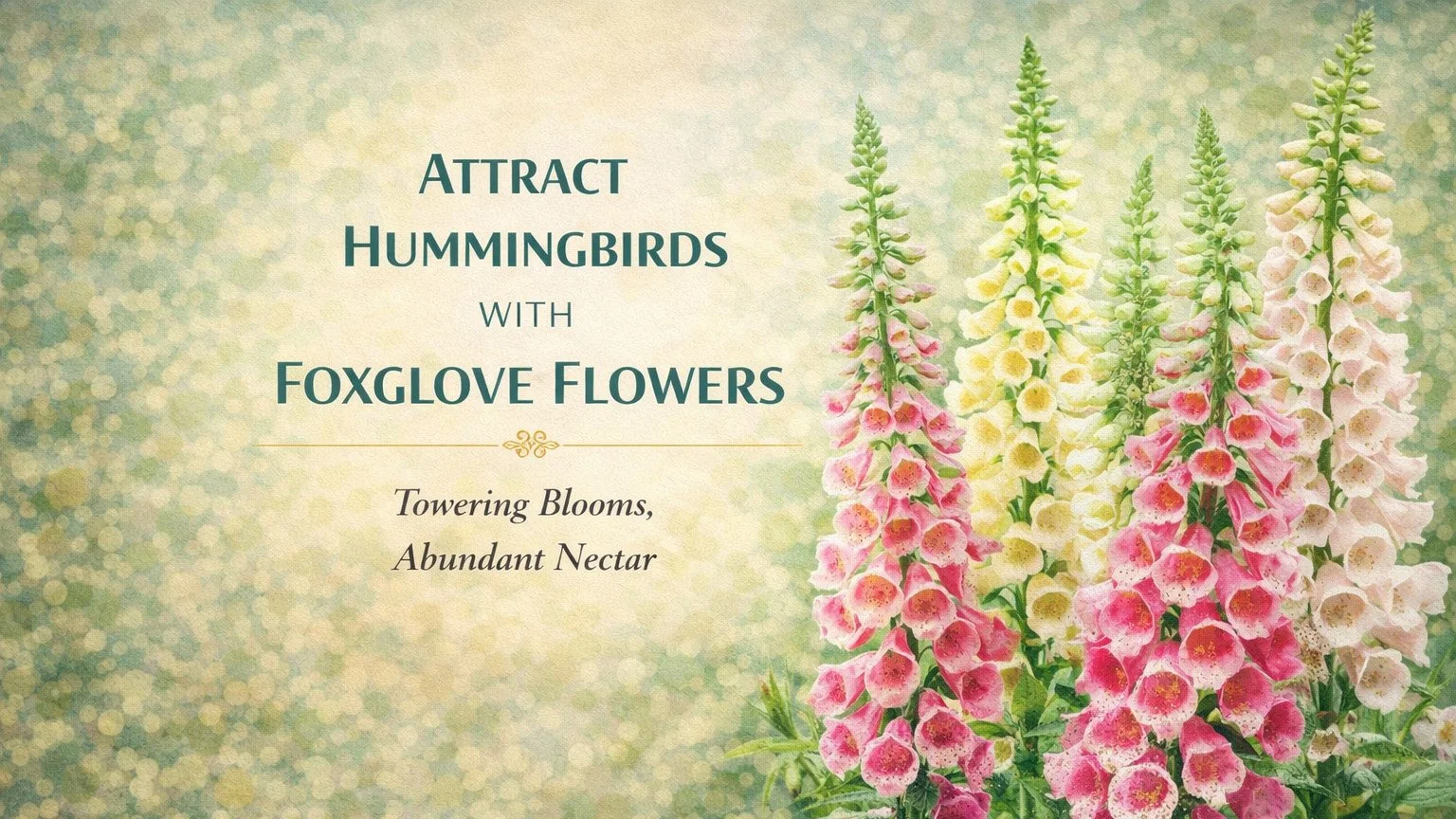
Foxglove (Digitalis spp) is a stunning addition to any cottage garden, known for its tall spikes and bell-shaped flowers. These blooms are not only beautiful but also highly attractive to hummingbirds. This guide covers the benefits of planting foxglove, how to care for it, and ways to safely incorporate it into your garden.
Why Foxglove Attracts Hummingbirds
Flower Shape and Nectar
Foxglove’s tubular flowers are perfect for hummingbirds, allowing easy access to nectar. The tall spikes of blooms, which can reach up to 5 feet, provide a striking focal point in your garden.
Extended Blooming Season
Foxglove blooms from late spring to early summer, offering a reliable nectar source during this period.
Growing and Caring for Foxgloves
Planting Tips
Seeds or Plants: Foxglove seeds are readily available, or you can purchase live plants. Check if the variety is an annual, biennial, or perennial.
Light and Soil: Prefers full to partial sun and well-draining, acidic soil (pH below 6.0).
Watering and Fertilizing: Keep the soil moist and use a balanced, slow-release fertilizer.
Safety Considerations
Foxglove is toxic if ingested, posing risks to pets and children. Handle with care and ensure it is not invasive in your area.
Incorporating Foxglove into Your Garden
Design and Layout
Place foxgloves at the back of borders or garden beds. They may need staking for support. Embrace informal layouts for a cottage garden aesthetic.
Companion Plants
Consider adding salvia, bee balm, and phlox alongside foxglove. These plants are also favored by hummingbirds and thrive under similar conditions.
Conclusion
Foxglove is a fantastic choice for attracting hummingbirds while adding vertical interest to your garden. With proper care and thoughtful placement, you can create a vibrant, hummingbird-friendly environment.
Frequently Asked Questions
Foxglove flowers are known for their tall, colorful spikes and tubular blooms that hummingbirds find easy to feed from. When planted in the right location, foxglove can provide a reliable nectar source while adding dramatic beauty to a garden. Here are some common questions people ask about foxglove flowers and attracting hummingbirds.
-
Yes. Foxglove flowers produce tubular blooms that contain nectar, which hummingbirds can easily reach with their long bills and tongues.
-
Hummingbirds are especially drawn to bright pink, red, and purple foxglove flowers, although they may visit other colors as well.
-
Foxglove typically blooms in late spring through early summer, depending on the climate and variety.
-
Many foxglove varieties are biennial, meaning they grow foliage the first year and bloom in the second year, although some perennial varieties are also available.
-
Yes. Foxglove plants contain compounds that can be toxic if ingested by humans or pets, so they should be planted carefully and handled with care.

Please note: The content provided in this article is for educational purposes only and is intended as general information. Results can vary depending on climate, growing conditions, plant variety, and regional differences.