
Aloe vera is best known for its soothing gel, but it can also play a helpful role in a hummingbird friendly garden. While not every aloe is a hummingbird magnet, Aloe vera and related aloe varieties can provide nectar rich blooms, interesting texture, and high heat tolerance that works well in dry or low maintenance gardens.
Used thoughtfully alongside other hummingbird favorites, Aloe vera can become part of a resilient planting that supports both birds and gardeners in hot, sunny conditions.
Plant Details
Botanical Name:
Aloe vera (syn. Aloe barbadensis), plus related ornamental Aloe species
Common Name:
Aloe vera, Aloe
Plant Type:
Succulent perennial
Mature Size:
Typically 1 to 2 feet tall and wide for common Aloe vera; some ornamental aloes can grow larger
Sun Exposure:
Full sun to light partial sun (more shade in very hot climates)
Soil Type:
Well drained, sandy or gritty soil; excellent drainage is essential
Bloom Time:
Late winter to spring in many climates, sometimes later depending on conditions
Flower Colors:
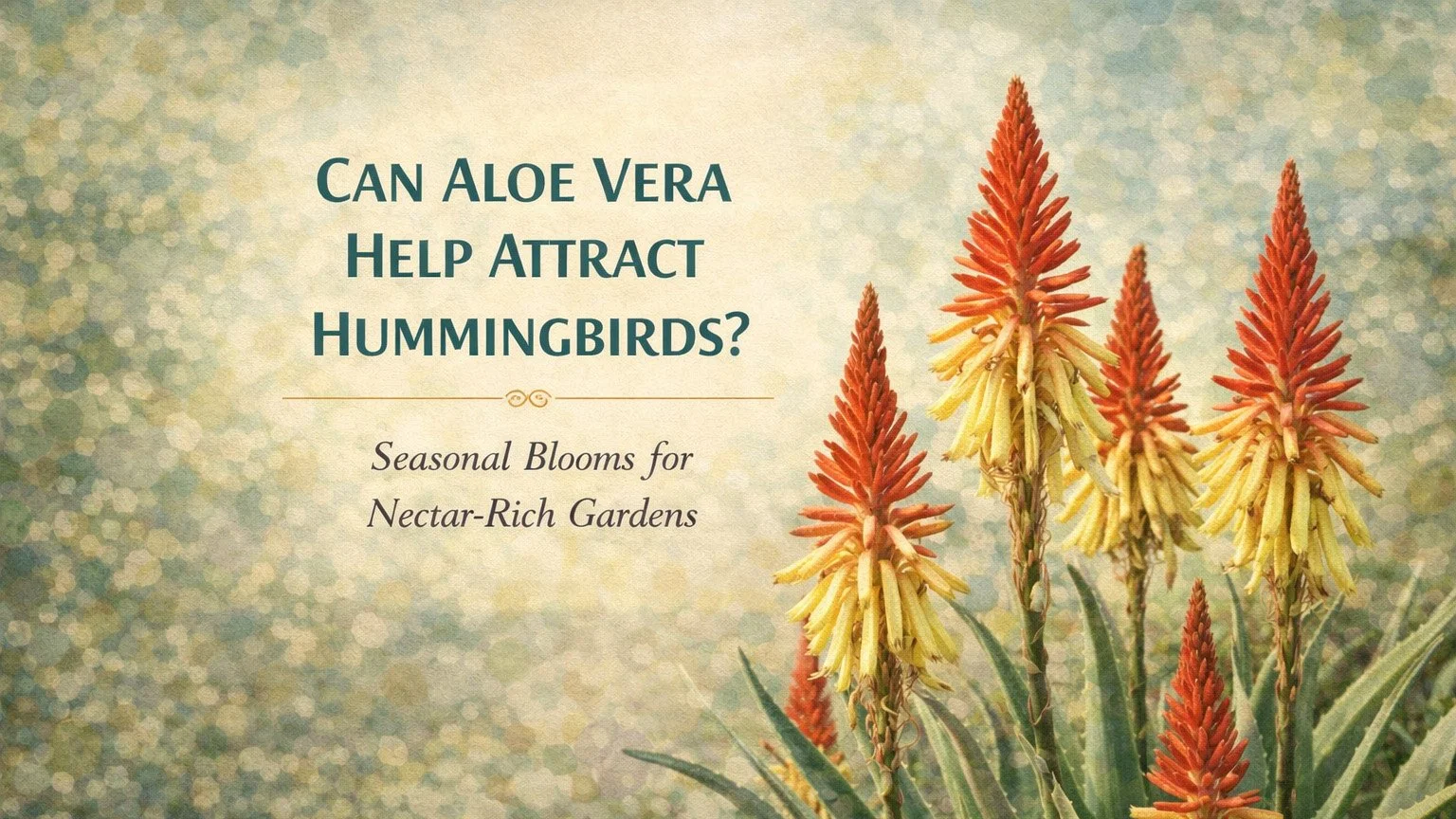
Usually orange, coral, yellow, or red tubular flowers on tall stalks
Hardiness Zone:
Generally hardy around USDA Zones 9 to 11; often grown in containers and brought indoors or given protection in colder regions
Native Area:
Believed to originate from arid regions of the Arabian Peninsula and North Africa; widely cultivated
Why Hummingbirds Can Benefit from Aloe Vera
Tubular, nectar bearing flowers
When in bloom, Aloe vera sends up tall flower stalks topped with tubular blossoms. These tubular flowers can provide nectar that hummingbirds may use, especially when other plants are not yet in full bloom.
Early or off season interest
In many climates, aloes bloom in late winter or early spring, just when hummingbirds are starting to move or local populations are becoming more active. This off season blooming can help bridge the gap before your main spring and summer nectar plants are flowering.
Drought tolerance and structure
Aloe’s fleshy, upright leaves add structure and a bold, architectural look to dry or low water plantings. This makes it useful in xeriscapes or areas where regular watering is difficult, while still offering some benefit to hummingbirds when in bloom.
Choosing and Placing Aloe for Hummingbirds
Select flowering ornamental forms
Common Aloe vera can bloom well in the right conditions, but many ornamental Aloe species and hybrids are especially showy. If you garden in a suitable climate, look for varieties known for strong flowering and bright, upright flower stalks.
Consider climate and exposure
In cooler climates, Aloe vera is best grown in containers that can be moved indoors or to sheltered spots during cold weather. In hot climates, provide full sun with a bit of afternoon shade if leaves start to scorch.
Combine with other nectar plants
Think of Aloe vera as one piece of a larger hummingbird garden. Pair it with flowering salvias, cuphea, penstemon, and other nectar rich plants that cover different seasons, heights, and color ranges.
Planting and Caring for Aloe Vera
Planting Tips
Containers vs. in ground
In regions with frost, Aloe vera is usually grown in containers. Use a cactus or succulent potting mix with excellent drainage and a container with large drainage holes.Soil and drainage
For in ground planting in mild climates, choose a site with sandy or gritty soil and good slope or drainage. Avoid low spots where water can collect.Sunlight
Provide plenty of bright light. In milder climates, full sun is ideal. In very hot areas, some light afternoon shade can prevent leaf scorch.
Maintenance
Watering
Aloe vera is very drought tolerant. Water deeply but infrequently, allowing the soil to dry out between waterings. Overwatering is one of the most common problems and can lead to root rot.Fertilizing
Aloes generally need little fertilizer. If desired, apply a diluted, low nitrogen fertilizer once or twice during the growing season. Too much fertilizer can cause soft, weak growth.Cold protection
Protect plants from freezing temperatures. In containers, move Aloe vera indoors or into a greenhouse when frost is expected. In the ground, cover plants or use frost cloth in rare cold snaps if you are gardening near the edge of their hardiness range.Pruning and cleanup
Remove spent flower stalks once they have finished blooming. Trim off any dead or damaged leaves at the base to keep the plant tidy.
How to Use Aloe Vera in Your Hummingbird Garden
Accent in dry or gravel gardens
Aloe vera looks at home in rock gardens, gravel beds, and desert inspired plantings. Use it as an accent amid other drought tolerant hummingbird plants like red yucca and certain salvias.Containers on patios and decks
Growing Aloe vera in pots allows you to move it closer to viewing areas when it is in bloom. Place containers near seating areas or windows where you can watch hummingbirds visit the flower stalks.Mixed with other succulents and shrubs
Combine Aloe vera with other structural plants, such as agaves, small shrubs, and flowering perennials. This creates a layered design that is both water wise and attractive to hummingbirds and other wildlife.
Frequently Asked Questions
Gardeners often have questions when they first start using succulents like Aloe vera in a hummingbird garden. Here are a few common ones.
-
In suitable climates, hummingbirds may visit Aloe vera and related aloes when they are in bloom, especially if the tubular flowers are rich in nectar and placed where birds can easily access them. They are most useful as part of a broader planting that includes other proven nectar plants.
-
Aloe vera can survive outdoors year-round only in mild, frost-free climates (generally Zones 9 to 11). In colder areas, it is best grown in containers and brought indoors or protected during freezing weather.
-
Healthy, mature plants can bloom once a year, often in late winter or spring, though exact timing depends on your climate and growing conditions. Good light, proper drainage, and avoiding overwatering help encourage flowering.
-
The gel inside Aloe vera leaves is commonly used in skin care, but some parts of the plant can be irritating or mildly toxic if ingested in quantity by pets or people. Keep plants out of reach of curious pets and children and always consult reliable sources before using Aloe internally.
-
No. Aloe vera is low maintenance compared to many garden plants. The main requirements are good drainage, careful watering, and protection from hard freezes. Occasional cleanup of dead leaves and spent flower stalks is usually all that is needed.
Please note: The content provided in this article is for educational purposes only and is based on general gardening knowledge and hummingbird friendly landscaping practices. Growing conditions can vary by region, and plant performance may differ depending on climate, soil, and care.