
Introduction
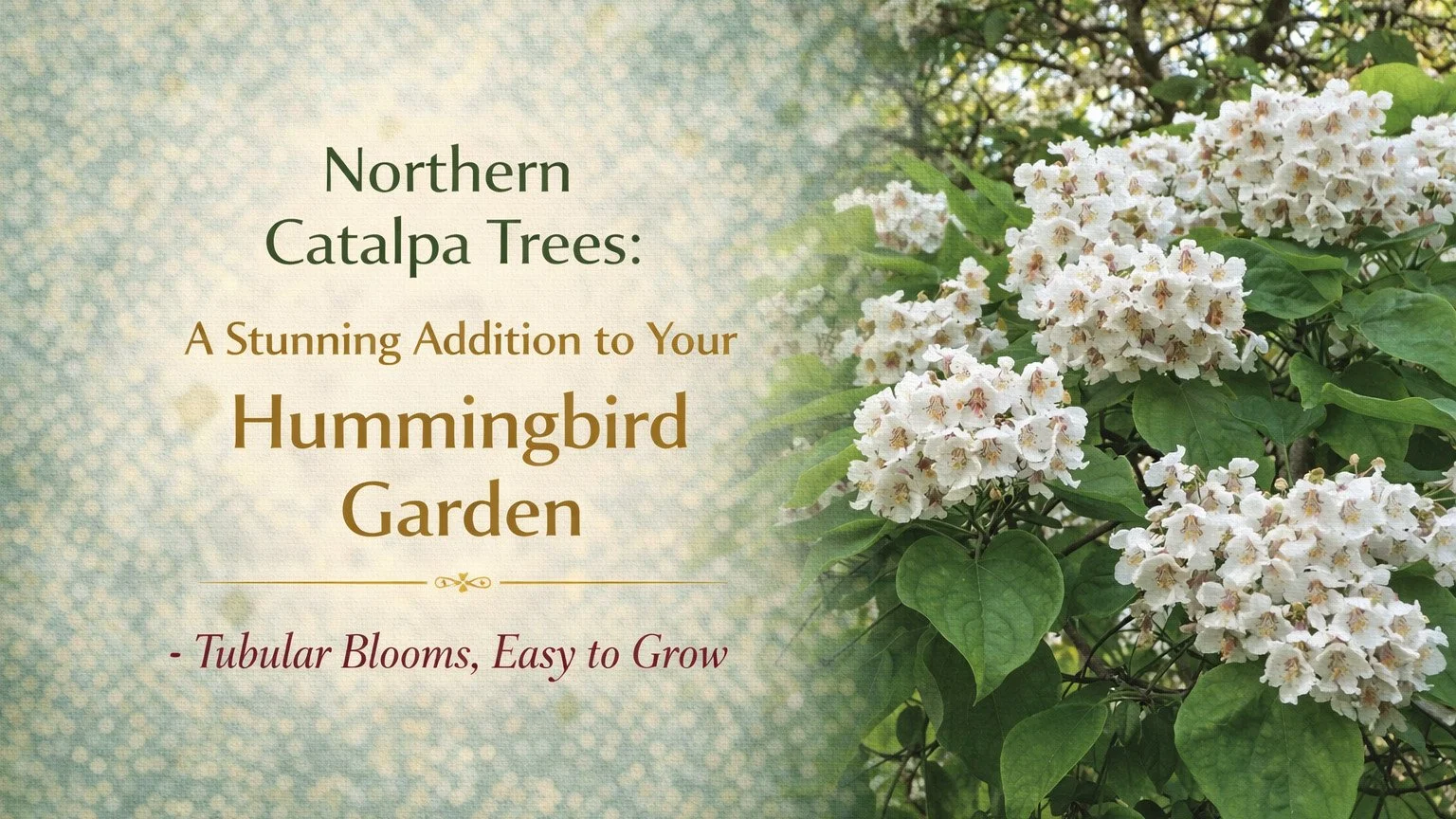
The Northern Catalpa (Catalpa speciosa) is a majestic tree known for its large heart-shaped leaves, showy white flowers, and long, slender seed pods. This tree not only adds aesthetic value to your garden but also offers numerous benefits for wildlife, including hummingbirds.
Benefits of Northern Catalpa
Attractive Blooms
Flowering: Produces clusters of white flowers with purple and yellow markings that attract hummingbirds.
Blooming Season: Blooms in late spring to early summer, providing a consistent nectar source.
Wildlife Support
Nectar Source: Flowers provide nectar for hummingbirds and other pollinators.
Shelter: Large leaves offer shade and shelter for birds and other wildlife.
Hardy and Versatile
Adaptability: Thrives in various soil types and conditions, making it a versatile garden plant.
Low Maintenance: Requires minimal care once established, ideal for busy gardeners.
Planting and Care Tips
Optimal Conditions
Sunlight: Prefers full sun to partial shade.
Soil: Well-drained, fertile soil is ideal.
Watering: Regular watering during the initial years; becomes more drought-tolerant once established.
Maintenance
Pruning: Prune in late winter to maintain shape and remove any dead or diseased branches.
Fertilizing: Use a balanced fertilizer in early spring to support healthy growth and blooming.
Conclusion
Incorporating Northern Catalpa into your garden can provide stunning visual appeal and support local wildlife, including hummingbirds. Its beautiful blooms and ease of care make it a valuable addition to any landscape.
Frequently Asked Questions
Northern catalpa trees are known for their large leaves and showy flowers. Gardeners often include them in wildlife-friendly landscapes.
-
The botanical name is Catalpa speciosa.
-
Hummingbirds may visit the flowers for nectar during bloom periods.
-
They typically bloom in late spring to early summer.
-
Catalpa trees can grow into large shade trees.
-
Yes, northern catalpa is native to parts of North America.
Please note: The content provided in this article is for educational purposes only and is intended as general information. Results can vary depending on climate, growing conditions, plant variety, and regional differences.