
Scientific name: Anthracothorax viridis
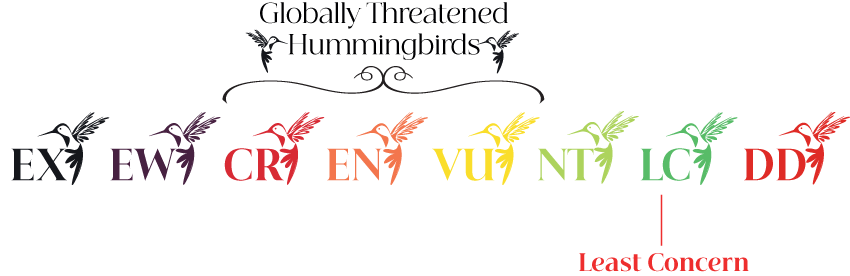
The Green Mango is a large, dark-green hummingbird endemic to Puerto Rico, where it is most closely associated with humid mountain forest, forest edges, and shade-coffee landscapes. Its global population is estimated at 20,000–49,999 mature individuals, the population trend is stable, it is an altitudinal migrant, and it is currently assessed as Least Concern.
At a Glance
Family: Trochilidae (hummingbirds)
Tribe: Polytminae – Mangoes
Genus: Anthracothorax — Mangoes
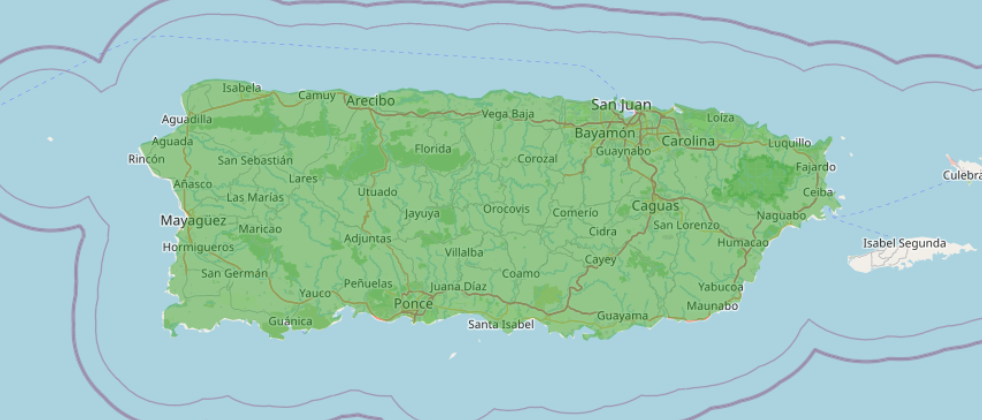
Range: Endemic to the main island of Puerto Rico
Habitat: Humid montane forest, woodland edge, ravines, shade-coffee plantations, and other forested mountain habitats
Elevation: Sea level to about 1,200 m; most common from roughly 800–1,200 m
Length: About 11–12 cm (4.3–4.7 in)
Weight: About 6–7 g
Number of mature individuals: 20,000–49,999
Population trend: Stable
Movement: Altitudinal migrant
IUCN Red List category: Least Concern
Subspecies: Monotypic — no subspecies recognized
Endemic to: Puerto Rico
Name Origin
The genus name Anthracothorax combines Greek roots meaning “coal” or “charcoal” and “chest,” referring to the dark, lustrous appearance of mango hummingbirds. The species name viridis is Latin for “green,” describing its brilliant green plumage. The common name “Green Mango” refers to its membership in the mango hummingbird group and its overall emerald-green appearance.
Subspecies & Distribution
Green Mango is monotypic:
The Green Mango occurs only on the main island of Puerto Rico. It is most common in the humid mountain forests of the central and western interior, including the Cordillera Central and upland forest tracts such as Maricao State Forest and Río Abajo State Forest. It is uncommon and local in eastern Puerto Rico and in lowland coastal regions, where drier conditions and different flowering communities prevail.
Ledged
Green Resident
Species Overview
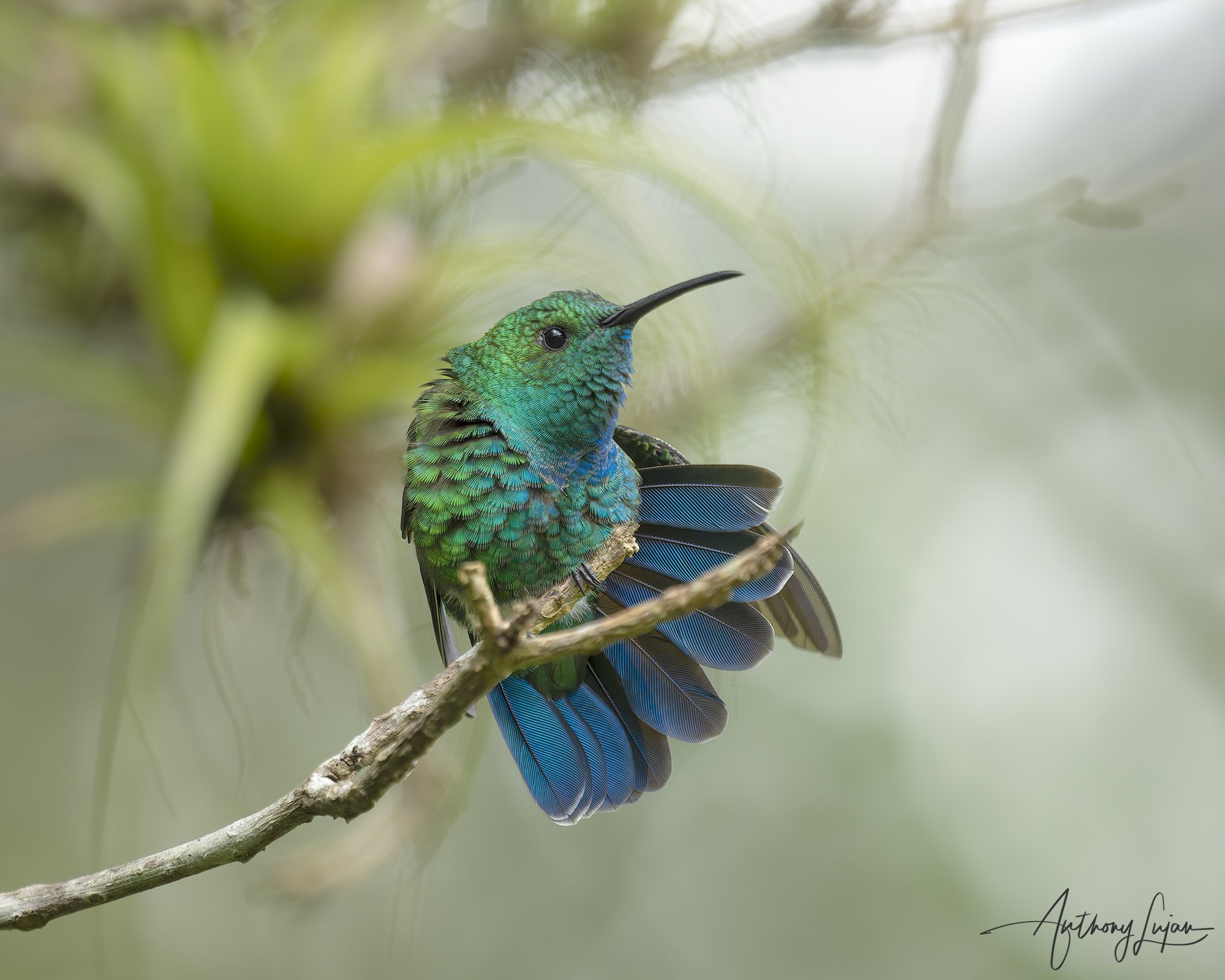
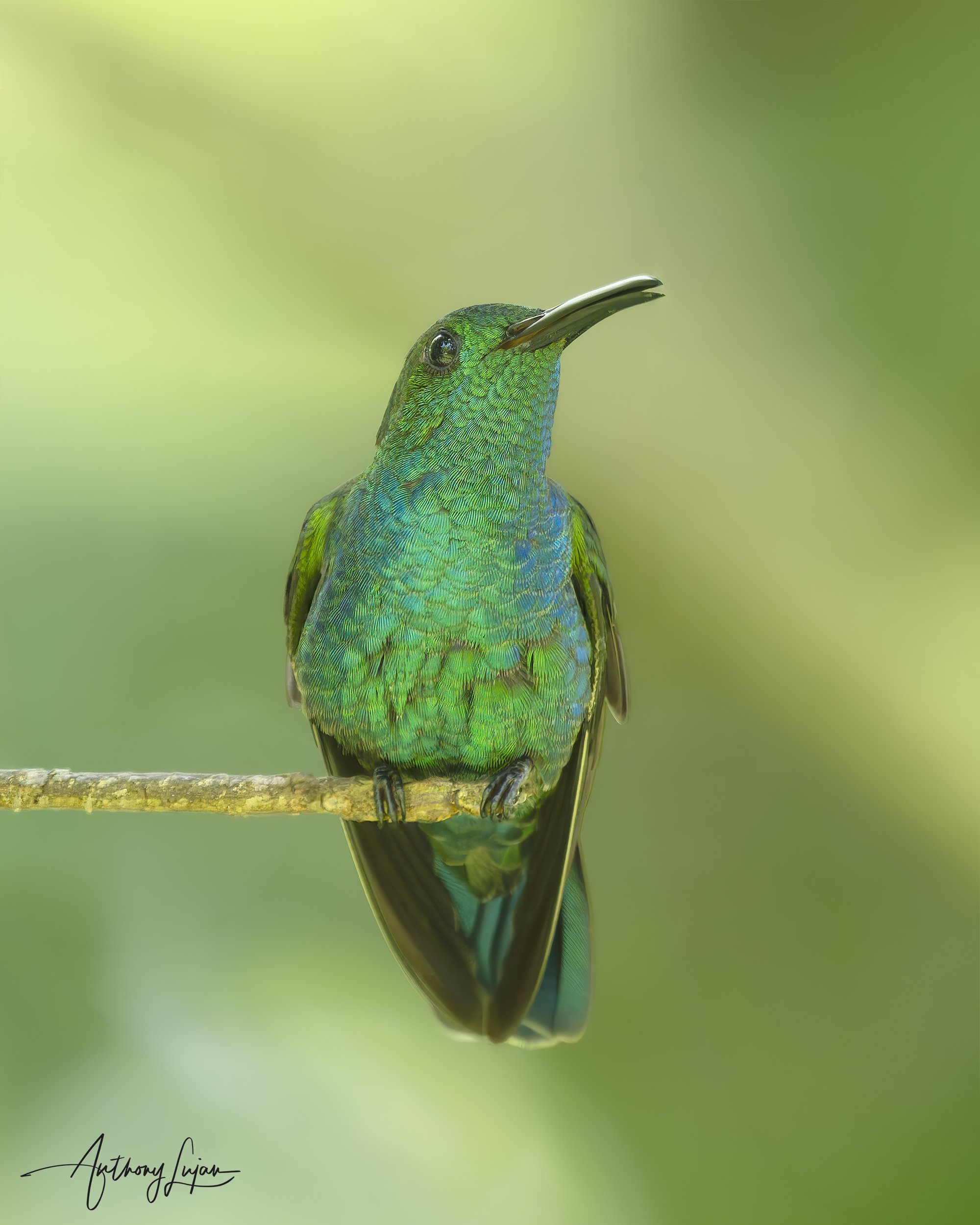
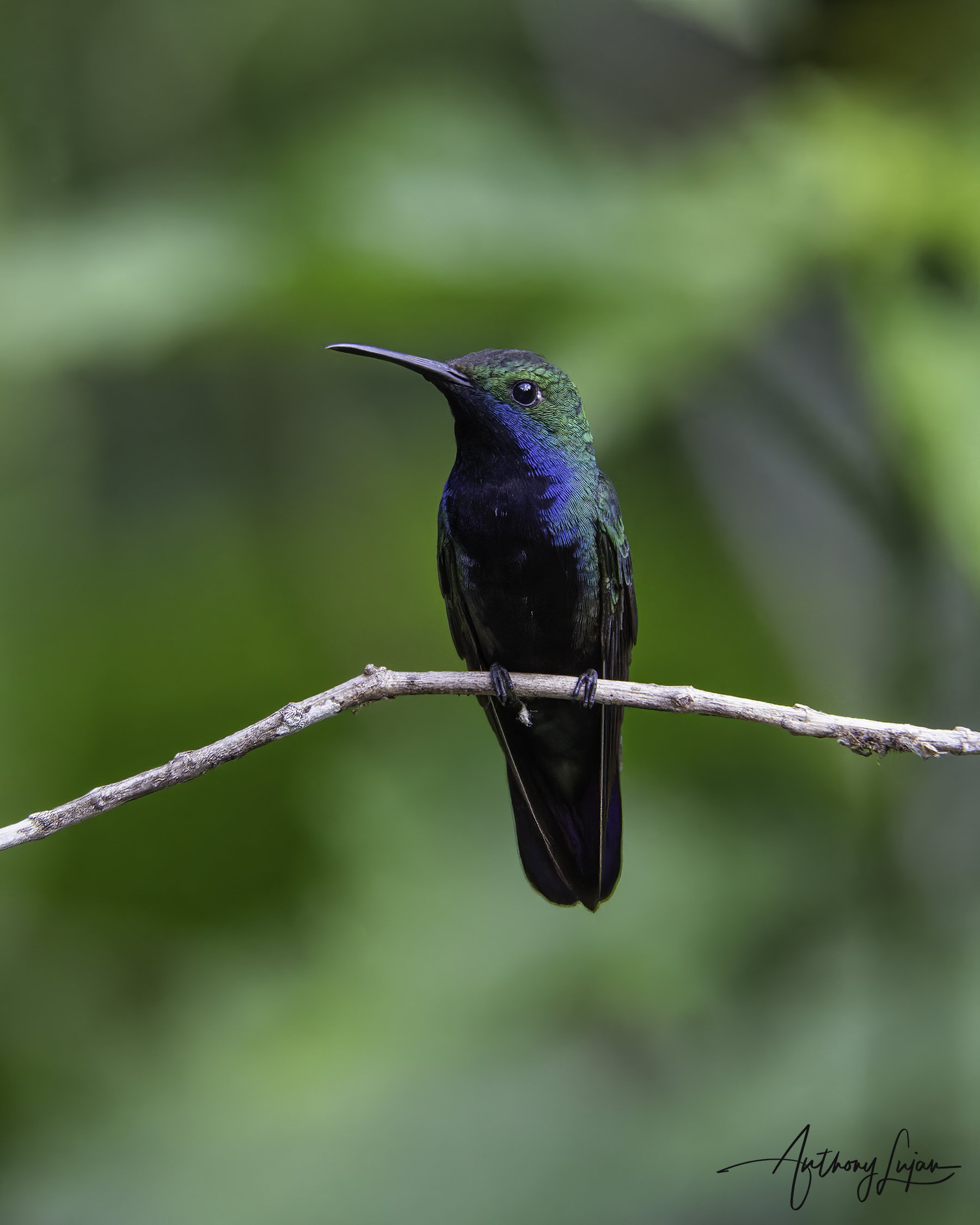
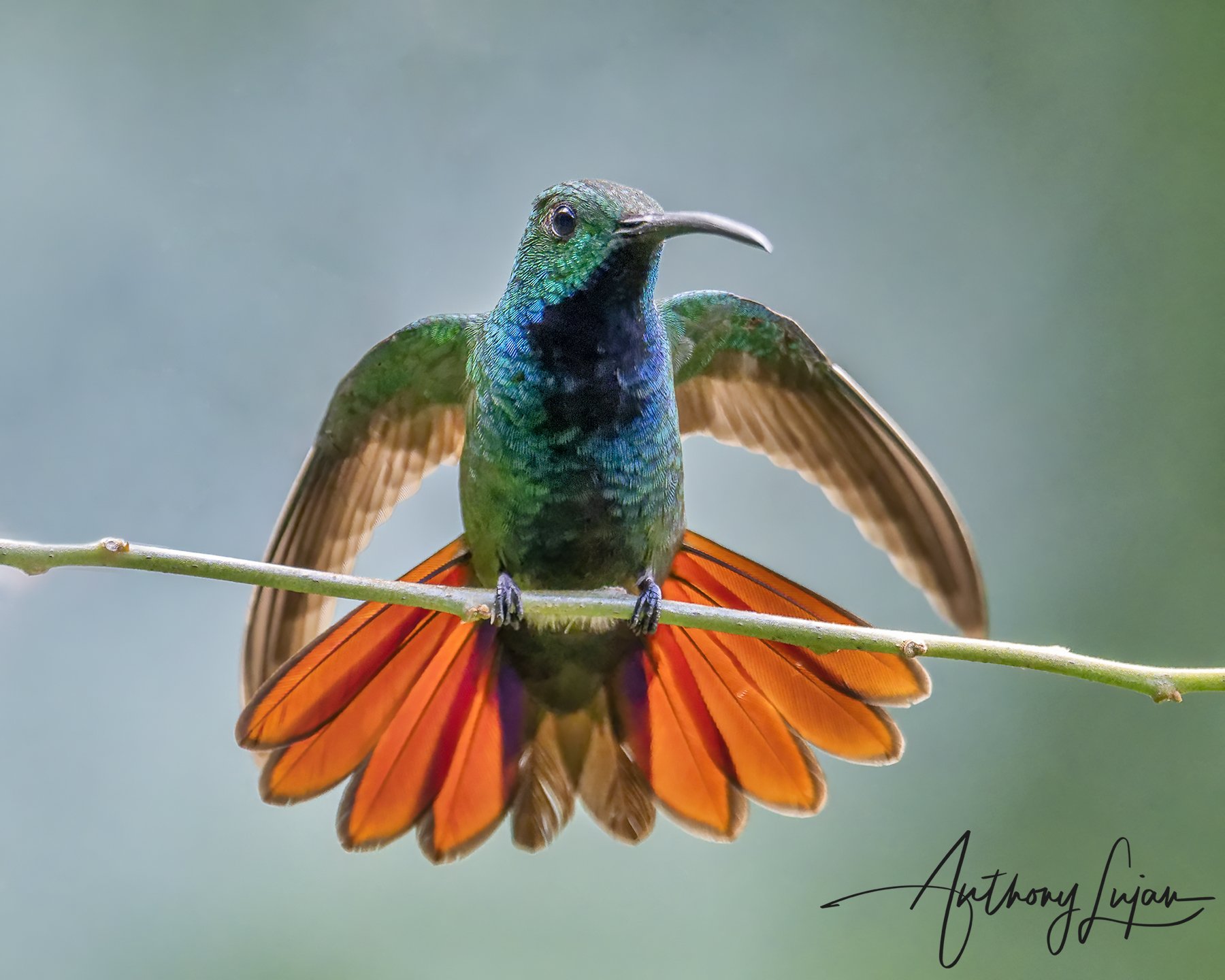
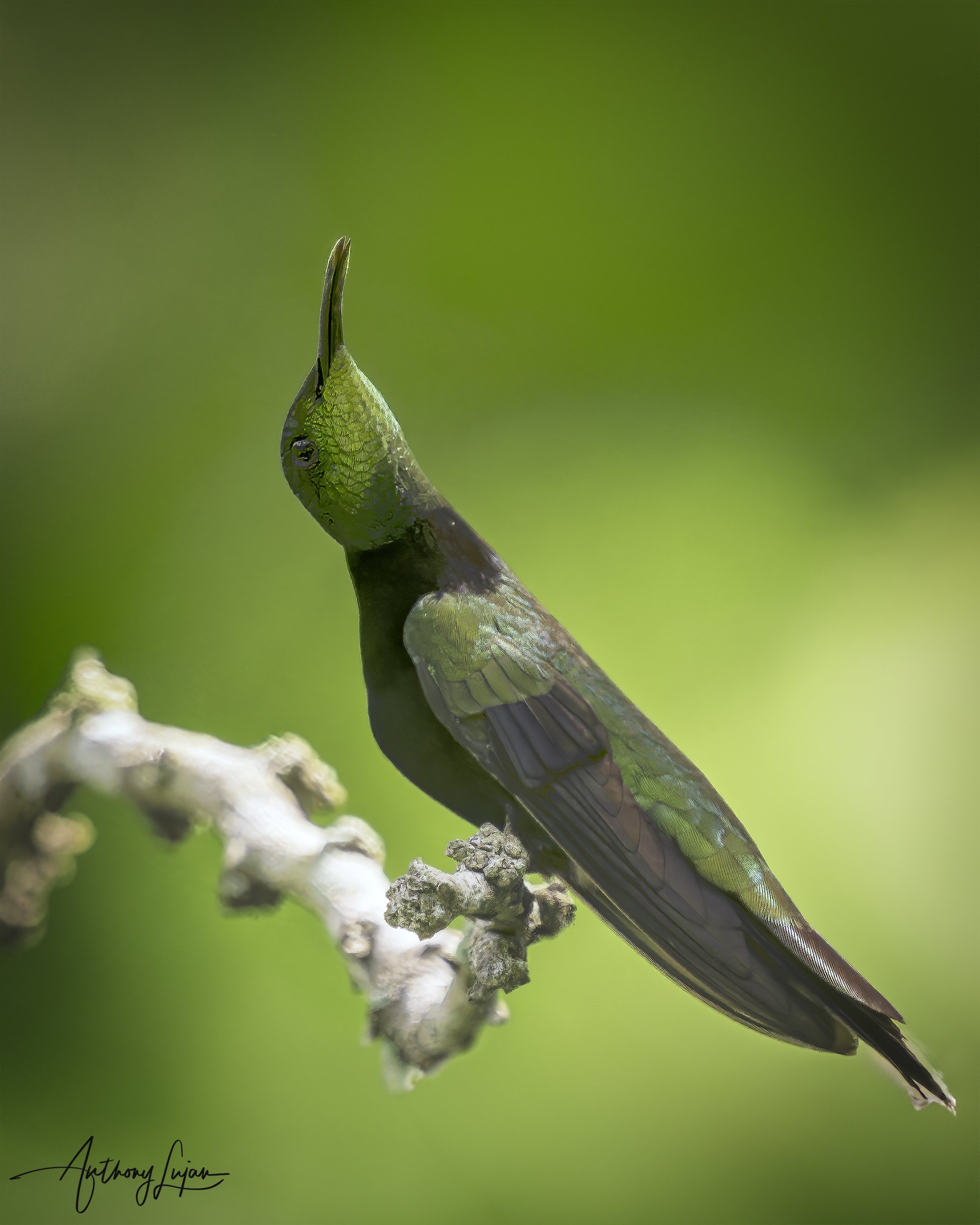
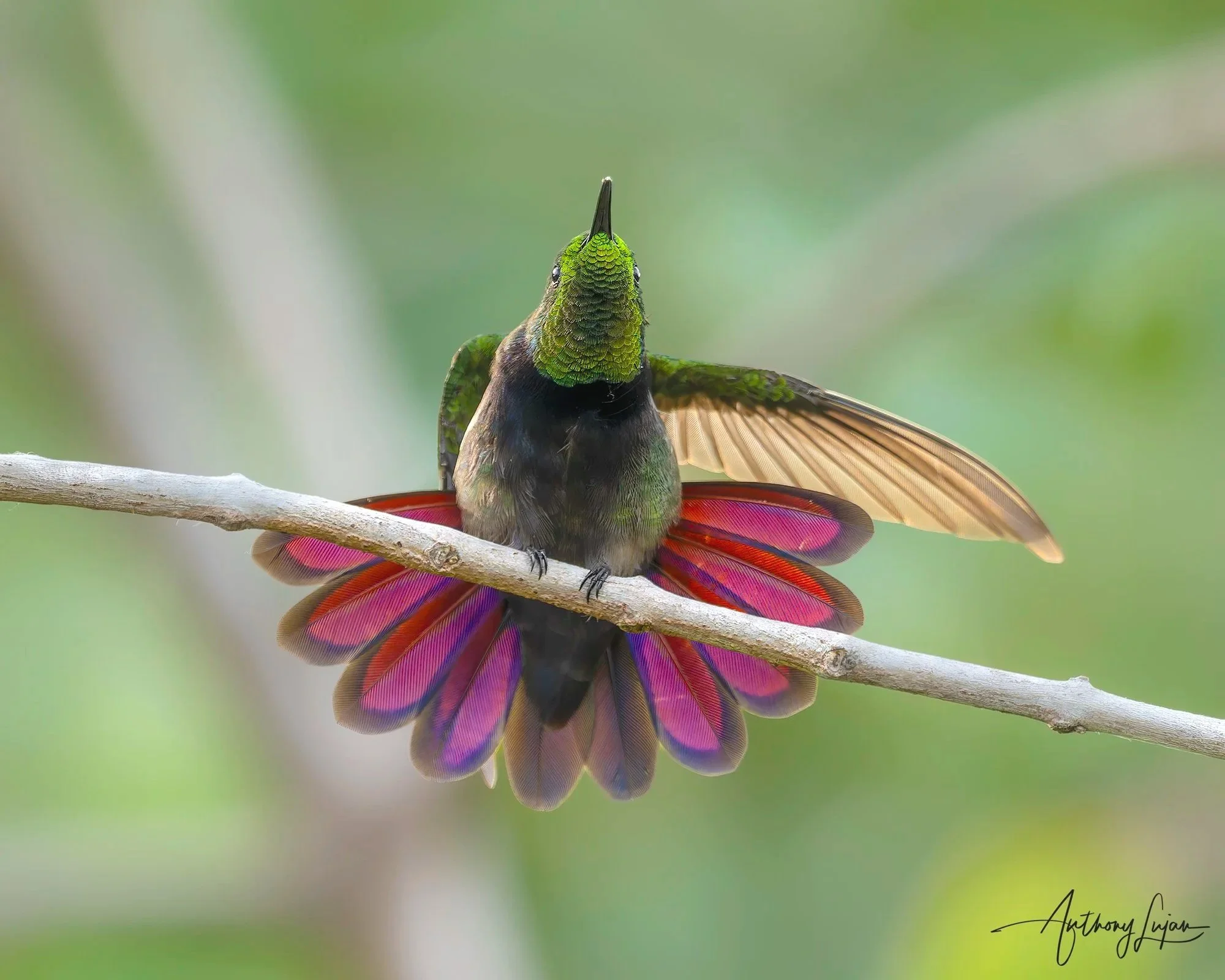
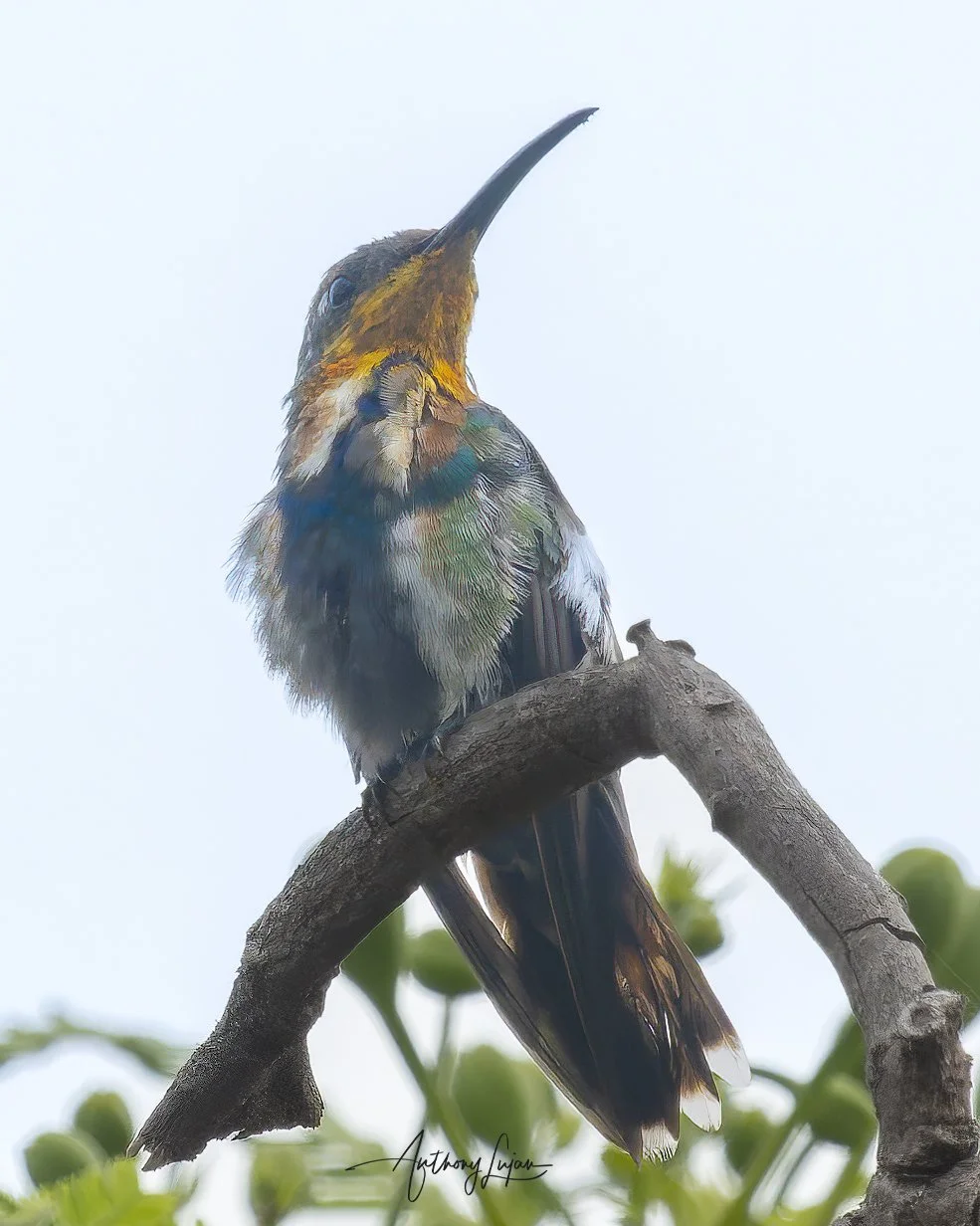
The Green Mango is a large, powerful hummingbird with glossy emerald-green upperparts, metallic blue-green underparts, a blue-black tail, and a long, slightly downcurved black bill. In suitable mountain habitat, it can be surprisingly conspicuous, especially when visiting large flowering trees or standing guard over a rich nectar source. Its size, dark bill, broad tail, and nearly uniform green-and-blue coloration separate it from Puerto Rico’s smaller hummingbirds.
Male Description
Males measure about 11–12 cm in length and weigh roughly 6–7 g. The crown, back, and wing coverts are glossy emerald green, while the underparts are metallic blue-green to deep greenish blue. The tail is rounded and metallic blue-black, often looking almost black in shade. The bill is long, slender, black, and distinctly downcurved. Males have no obvious gorget patch; instead, the green and blue sheen extends broadly over the head, throat, breast, and belly, shifting in intensity with the angle of light.
Female Description
Females are very similar to males in size and plumage, making the sexes difficult to distinguish in the field. Both show glossy green upperparts, blue-green underparts, a rounded blue-black tail, and a long curved bill. Adult females may show a small white spot behind the eye, but this feature can be subtle or difficult to see. Juveniles resemble adults but often have slightly duller plumage, softer feather edges, and less intense iridescence.
Habitat & Behavior
Green Mangos primarily inhabit humid montane forest, forest edge, ravines, and shade-coffee plantations in Puerto Rico’s central and western mountains. They favor areas with a rich supply of flowering trees, shrubs, bromeliads, and large herbs, especially at middle elevations. Although they may occur down to near sea level, they are scarce in coastal areas and are most reliably encountered in wooded upland habitats.
They feed on nectar from a wide variety of plants and are especially associated with long-tubed flowers, including heliconias and native bromeliads. Green Mangos act as important pollinators of these flowers because their long, downcurved bills can reach nectar in deep corollas. They also take insects and spiders, either gleaning them from foliage or capturing them during short aerial sallies. Individuals may follow traplines between scattered flowering plants, but males can become highly territorial around particularly productive flowering trees or patches with nectar-rich red tubular flowers.
Breeding
The breeding season extends broadly from October through May. The female builds a small cup-shaped nest of soft plant fibers, bound together with spiderweb and often decorated externally with lichen for camouflage. Nests are typically attached to a vertical branch, often high in a tree and commonly at least 8 m above the ground.
The clutch consists of two white eggs. The female alone incubates and raises the young, feeding nestlings regurgitated nectar and arthropods. Young birds leave the nest at approximately 20 days of age, though breeding timing varies with local flowering conditions and rainfall.
Movement
The Green Mango is an altitudinal migrant. It is generally resident on Puerto Rico but shifts up and down mountain slopes in response to flowering cycles and seasonal changes in nectar availability. These movements allow birds to track productive flowering plants between upland forest, foothill woodland, and lower-elevation habitats rather than undertaking long-distance migration beyond the island.
Population
The global population is estimated at 20,000–49,999 mature individuals and is considered stable. The Green Mango is locally common in suitable mountain habitats, especially in the central and western interior, but it has a limited global range, as it is restricted to Puerto Rico. Its dependence on forested mountain landscapes makes it vulnerable to localized habitat degradation and severe weather events, including hurricanes that can temporarily reduce flowering resources and damage forest structure.
Conservation
The Green Mango is assessed as Least Concern because it remains locally common in appropriate habitat and can use shade-coffee plantations and some other human-modified landscapes. However, as a Puerto Rican endemic with a restricted range, it remains vulnerable to forest loss, degradation of montane habitat, conversion of shade coffee to more intensive agriculture, and major hurricanes. Protecting mature mountain forest, maintaining native flowering plants in forest edges and shade plantations, and conserving connected elevation gradients are important for sustaining the species.
Checkout Anthony’s playlist of this species! Click the top right dropdown to see all the videos.
Related species in the Anthracothorax genus (8 species total):

Please note: The content provided in this article reflects Anthony’s personal experience and photographic approach. Results can vary depending on light, weather, location, equipment, subject behavior, and field conditions.