
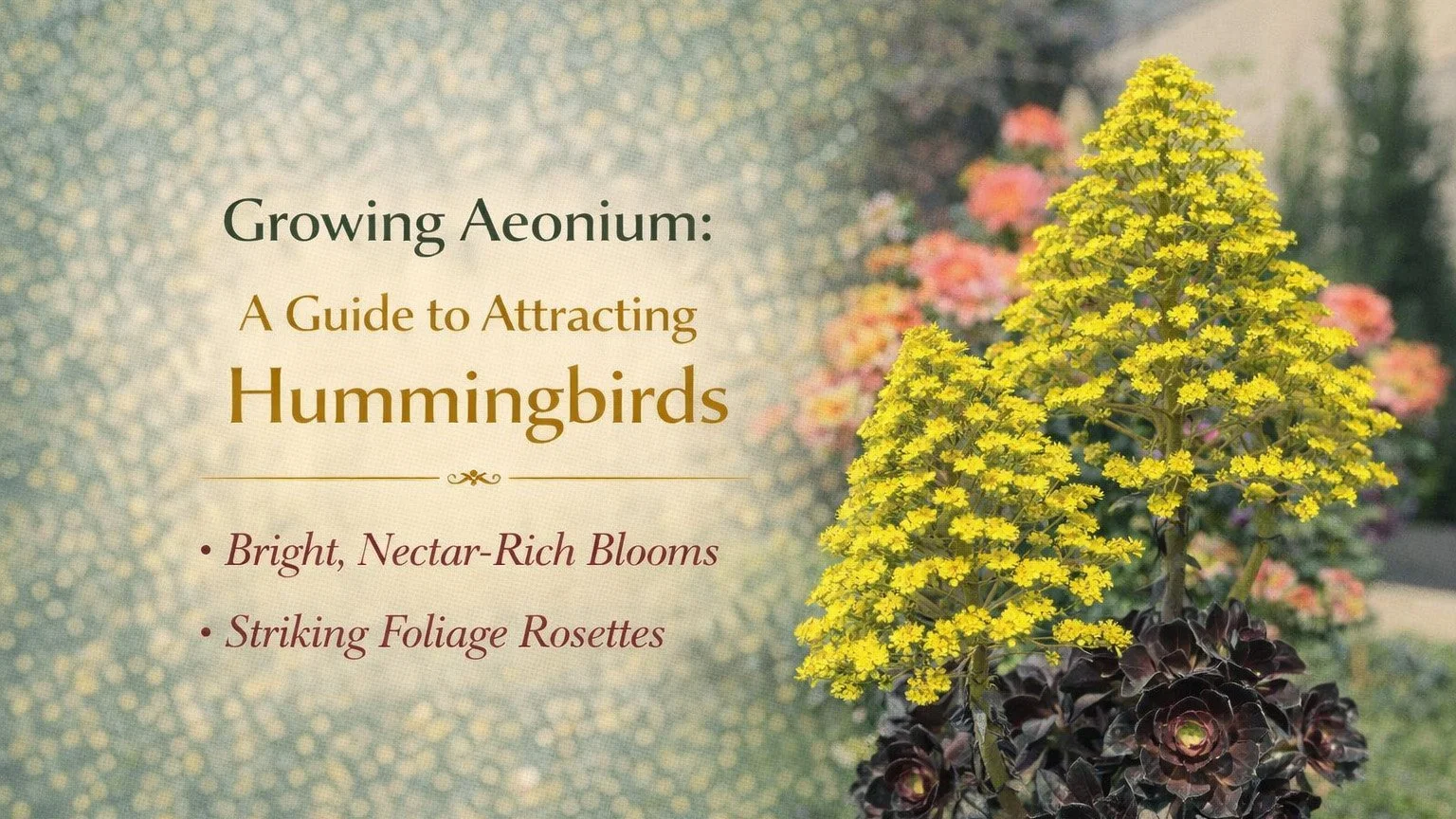
Growing Aeonium: A Guide to Attracting Hummingbirds
Introduction
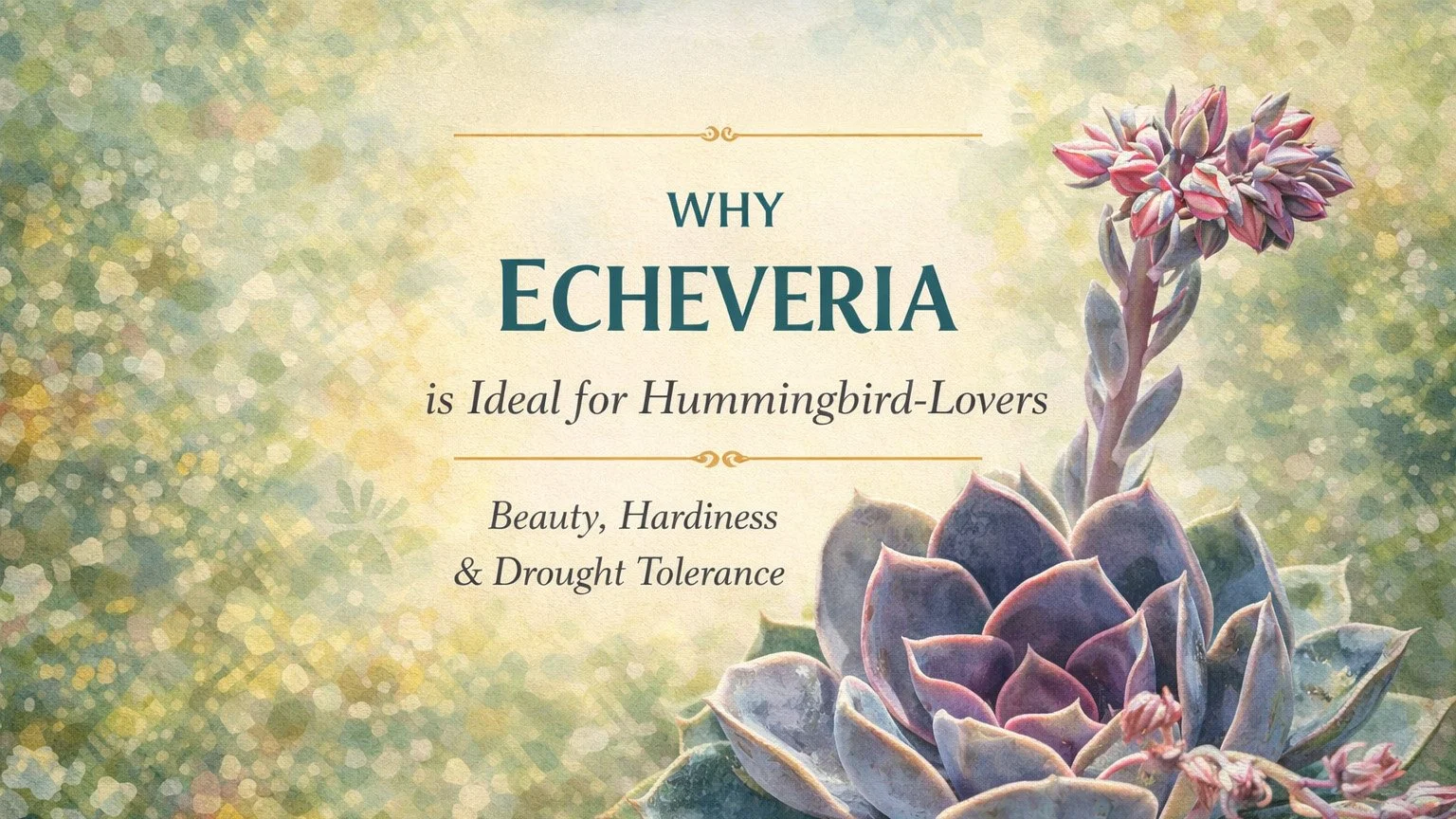
Aeonium is a distinctive succulent known for its rosette-shaped leaves and striking colors. This plant not only adds visual appeal to your garden but can also attract hummingbirds when it blooms.
Benefits for Hummingbirds
Nectar-Rich Blooms
Attractive Flowers: The flowers of Aeonium, when they bloom, produce nectar that can attract hummingbirds.
Seasonal Blooms: Typically blooms in late winter to early spring, providing an early nectar source.
Planting and Care Tips
Optimal Conditions
Sunlight: Prefers full sun to partial shade.
Soil: Requires well-draining soil, such as a cactus mix.
Watering: Water deeply but infrequently; allow soil to dry out between waterings.
Maintenance
Pruning: Remove dead leaves to maintain plant health.
Fertilizing: Use a balanced, slow-release fertilizer during the growing season.
Conclusion
Adding Aeonium to your garden not only enhances its aesthetic appeal but also supports local hummingbirds with its nectar-rich flowers. Its unique appearance and low-maintenance nature make it a valuable addition to any garden.
Frequently Asked Questions
Aeonium plants are popular succulents known for their rosette-shaped leaves and occasional flowering displays. Gardeners often wonder whether these unique plants can help attract hummingbirds.
-
Yes. When Aeonium plants bloom, their flowers may provide nectar for hummingbirds.
-
Aeonium is a genus of succulent plants commonly grown in ornamental gardens.
-
Most Aeonium varieties prefer bright light but may benefit from partial shade in very hot climates.
-
Yes. Aeonium plants are often grown in pots or succulent arrangements.
-
Many Aeonium species originate from the Canary Islands.
Please note: The content provided in this article is for educational purposes only and is intended as general information. Results can vary depending on climate, growing conditions, plant variety, and regional differences.