
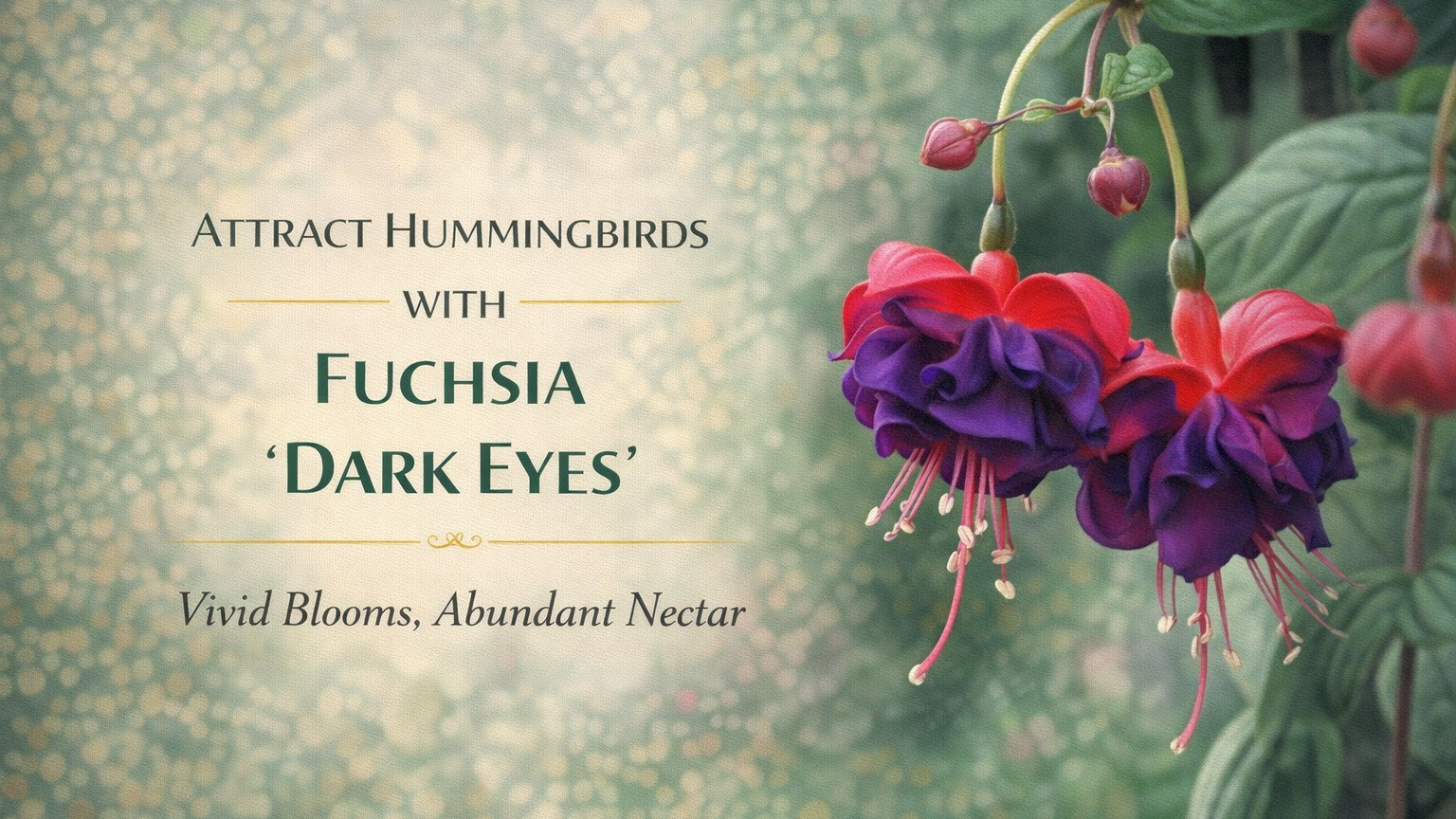
Fuchsia 'Dark Eyes' is a beautiful, trailing fuchsia variety that can turn shady patios, porches, and hanging baskets into hummingbird hotspots. Its vivid two toned flowers hang like little lanterns, offering nectar rich blooms that hummingbirds can easily access as they hover beneath or beside the plant.
If you are looking to bring hummingbirds closer to windows or outdoor seating areas, Fuchsia 'Dark Eyes' is an excellent choice for containers and hanging baskets in cooler or partially shaded spots.
Plant Details
Botanical Name:
Fuchsia 'Dark Eyes'
Common Name:
Fuchsia 'Dark Eyes', Trailing fuchsia
Plant Type:
Tender perennial often grown as an annual or container plant
Mature Size:
Trailing habit, typically 12 to 24 inches long, depending on growing conditions
Sun Exposure:
Partial shade to bright indirect light; prefers protection from hot afternoon sun
Soil Type:
Moist, well drained, rich potting mix
Bloom Time:
Late spring through fall with proper care
Flower Colors:
Bicolor blooms with red sepals and deep violet to purple corollas
Hardiness Zone:
Generally hardy in USDA Zones 9 to 11; commonly grown in containers and protected or replaced annually in colder regions
Native Area:
Garden cultivar derived from Fuchsia species native to Central and South America and New Zealand
Why Hummingbirds Love Fuchsia 'Dark Eyes'
Hanging, tubular blooms
The pendulous flowers of Fuchsia 'Dark Eyes' have tubular and flared parts that hummingbirds can easily feed from. The hanging blooms allow birds to hover and sip nectar from below, a natural feeding position for them.
Bright, contrasting colors
The red and deep purple violet combination creates strong visual contrast that stands out in shaded areas. This makes the flowers more noticeable to hummingbirds even where light levels are lower.
Extended flowering season
With regular care and deadheading, Fuchsia 'Dark Eyes' can bloom from late spring into fall. That long flowering season helps provide nectar during times when other plants may be between bloom cycles.
How to Grow Fuchsia 'Dark Eyes'
Optimal Conditions
Light
Fuchsia 'Dark Eyes' prefers partial shade or bright, indirect light. Morning sun with afternoon shade often works well. Avoid harsh, hot midday or afternoon sun, which can scorch leaves and stress the plant.Soil
Use a high quality, well drained potting mix rich in organic matter. Fuchsias like consistent moisture but do not want to sit in soggy soil.Watering
Keep the soil evenly moist, especially in hanging baskets and containers that dry out quickly. During hot weather, you may need to water once a day, but always check soil moisture first.
Planting Tips
Containers and hanging baskets
Fuchsia 'Dark Eyes' shines in hanging baskets and decorative containers where its blooms can cascade over the sides. Choose containers with good drainage and enough depth to support a healthy root system.Planting time
Plant after the danger of frost has passed and nighttime temperatures have warmed. In cooler climates, you can start plants indoors and move them outside gradually to harden them off.Fertilizing
Feed with a balanced, water soluble fertilizer at a diluted rate every few weeks during the growing season to support continuous blooming. Avoid over fertilizing, which can lead to lush foliage with fewer flowers.
Maintenance
Deadheading
Remove spent flowers and seed pods regularly to encourage new blooms. This also keeps the plant looking tidy.Pruning
Lightly trim back long, straggly stems to maintain a full, bushy shape. Pruning can also stimulate new growth and more flowering tips.Winter care
In mild climates, some fuchsias can overwinter outdoors in sheltered spots. In colder regions, Fuchsia 'Dark Eyes' is usually treated as an annual, or the plant can be brought indoors to a cool, bright location and overwintered with reduced watering.
How to Use Fuchsia 'Dark Eyes' in Your Hummingbird Garden
Hanging baskets near windows and seating areas
Place hanging baskets of Fuchsia 'Dark Eyes' near patios, porches, or windows where you like to sit and watch birds. The trailing blooms bring hummingbirds right into view at comfortable eye level.Shaded corners and covered porches
Use this variety in spots that are too shady or protected for many sun loving hummingbird plants. Fuchsias can brighten these areas and still provide nectar.Mixed container plantings
Combine Fuchsia 'Dark Eyes' with other shade tolerant, hummingbird friendly plants in large containers. The fuchsia can spill over the edges while upright companions provide additional color and structure.
Frequently Asked Questions
Gardeners often have questions when they first start using fuchsias to attract hummingbirds. Here are a few common ones.
-
Yes. Hummingbirds commonly visit fuchsias, especially varieties with accessible, tubular blooms like Fuchsia 'Dark Eyes'. Hanging baskets make it easy for birds to hover and feed from below.
-
In most climates, this variety prefers partial shade. Too much direct, hot sun can cause leaf scorch and stress. Morning sun with afternoon shade is usually ideal.
-
In colder climates, it will not survive freezing temperatures outdoors. Many gardeners treat it as an annual or bring containers indoors to a bright, cool location for overwintering.
-
It depends on your climate and container size, but in warm weather, hanging baskets may need daily watering. Always check the soil first and keep it evenly moist but not waterlogged.
-
Fuchsias are particularly useful in cooler summer climates or in shaded locations where other hummingbird plants may struggle. In very hot, dry regions, they may require more attentive watering and protection from extreme heat.



Please note: The content provided in this article is for educational purposes only and is based on general gardening knowledge and hummingbird friendly landscaping practices. Growing conditions can vary by region, and plant performance may differ depending on climate, soil, and care.