
Costa Rica Hummingbird Expedition | May 2025
32 Species | 10 New | Closing the Gap
Trip overview
Dates: May 8–16, 2025
Regions: Alajuela, Cartago, Heredia, Limón, Puntarenas, San José
Total hummingbird species observed: 32
New species photographed: 10
Focus: Filling in the remaining Costa Rica hummingbird species
It had been a while since I had visited Costa Rica, and the gaps in my hummingbird list were starting to stand out. There were still species I had not photographed at all, plus a few males I wanted to capture properly. This trip was about closing that gap. By the time I left, I had added 10 new species, leaving only two more Costa Rica hummingbird species to photograph and a short list of plumages still to chase.
Returning with a specific mission
Earlier Costa Rica expeditions were about discovery and momentum. This one was about intention. I was not coming back just to see what the country would offer. I arrived with a focused target list and a plan for which habitats, regions, and elevations I needed to cover.
Over eight days, I photographed 10 new hummingbird species:
#218 LC Canivet's Emerald (Cynanthus canivetii)
#219 EN Mangrove Hummingbird (Chrysuronia boucardi)
#220 LC Purple-crowned Fairy (Heliothryx barroti)
#221 LC Charming Hummingbird (Polyerata decora)
#222 LC Sapphire-throated Hummingbird (Chrysuronia coeruleogularis)
#223 LC White-bellied Mountain-gem (Lampornis hemileucus)
#224 LC Black-bellied Hummingbird (Eupherusa nigriventris)
#225 LC Bronzy Hermit (Glaucis aeneus)
#226 LC Blue-chested Hummingbird (Polyerata amabilis)
#227 LC Blue-vented Hummingbird (Saucerottia hoffmanni)
Four of these became the backbone of the trip: Mangrove Hummingbird, Black-bellied Hummingbird, Purple-crowned Fairy, and Bronzy Hermit.
Four hummingbirds that defined the expedition
Mangrove Hummingbird
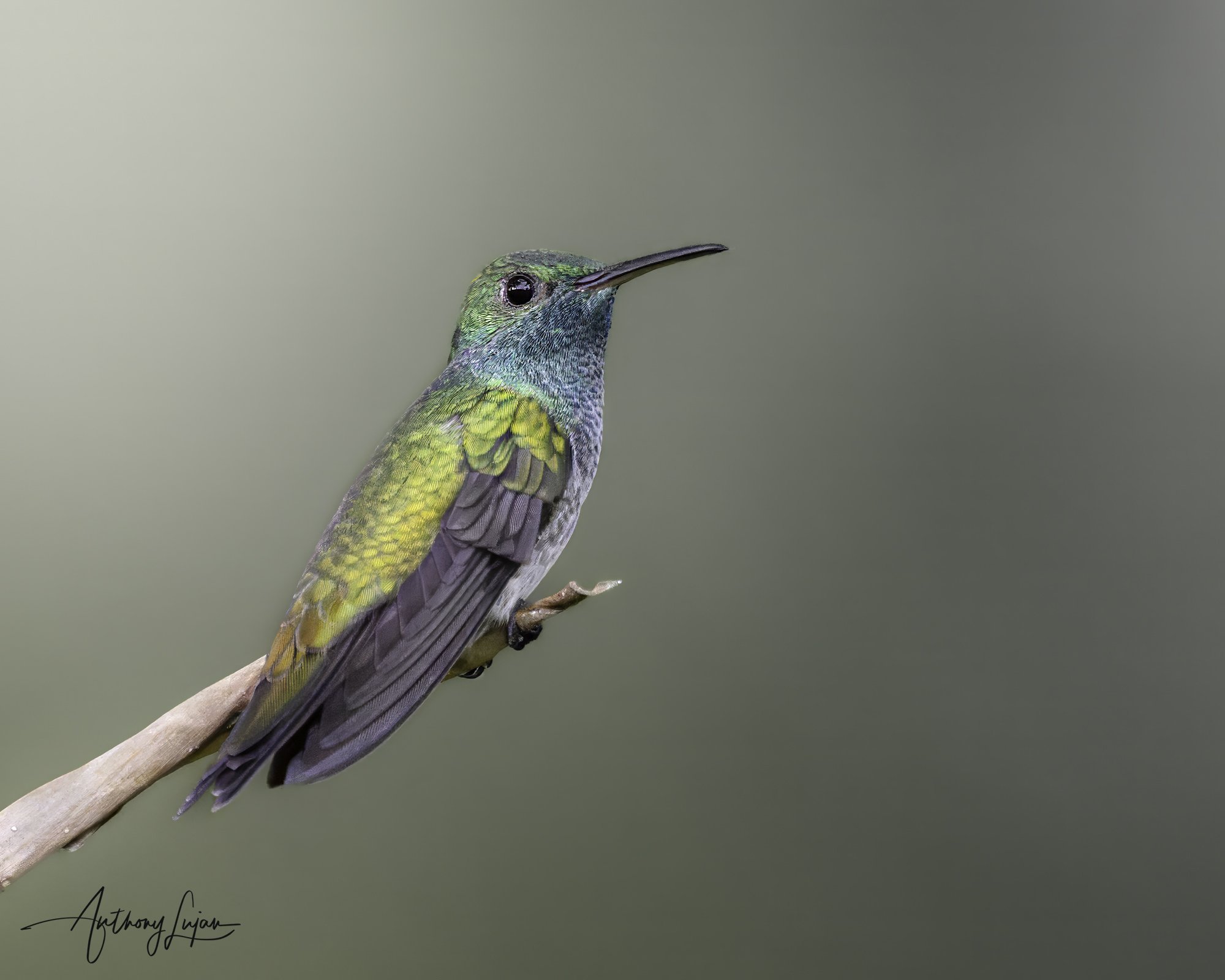
Narrow world, coastal edges
Mangrove Hummingbird was the clear centerpiece of this expedition. It is the kind of species you build a day around. It is tied closely to mangroves and coastal habitat, living in a narrow band where salt, humidity, and tangled roots define everything. When you step into that world, you feel how specific its reality is. Water and mud underfoot, dense branches overhead, and flowers threaded through a maze of roots and shoots.
Photographing Mangrove Hummingbird meant accepting the habitat on its own terms. The light can be harsh and reflective off the water. The angles are limited by trunks and branches. The bird moves in and out of tight spaces you cannot follow. When it finally settled into frame, it felt less like another species checked off and more like a conversation with a hummingbird that only exists because that thin strip of mangrove still does.
Black-bellied Hummingbird

Highland contrast
The Black-bellied Hummingbird is a compact, highland species with sharp contrast and clean patterning that immediately sets it apart from many familiar Costa Rican hummingbirds. Its world is cooler, greener, and steeper. Cloud forest and forest edges where flowers cluster along slopes, streams, and small openings.
Working with Black-bellied Hummingbirds reminded me how much the highlands demand from both birds and photographers. You are dealing with shifting clouds, filtered light, and sudden changes in weather, all while trying to track a fast hummingbird against dense vegetation. This species became a symbol of the mountainside of this trip. Small, intense, and deeply tied to the structure of high elevation forest.
Purple-crowned Fairy
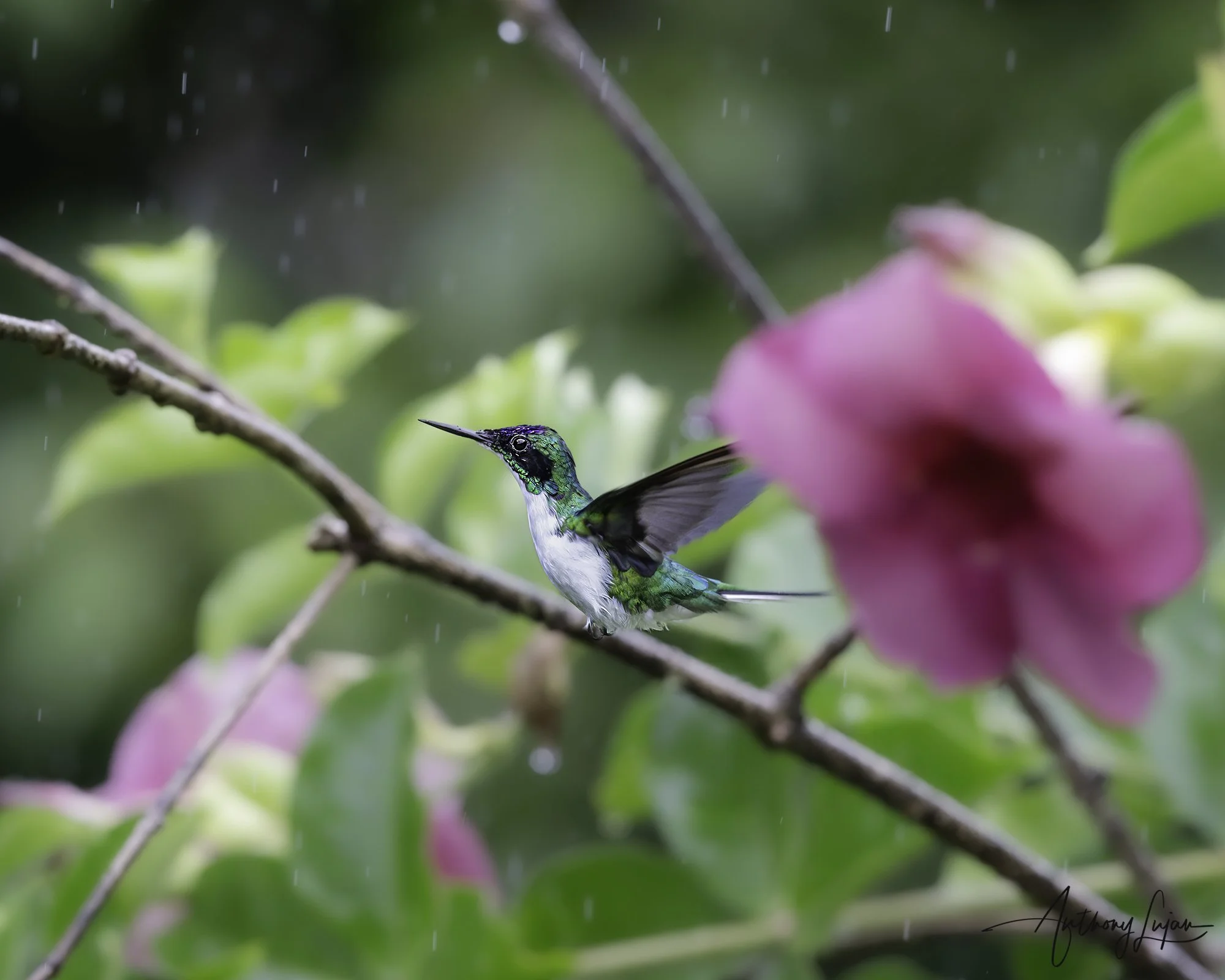
Grace in motion
Purple-crowned Fairy brought a different energy to the list. Many hummingbirds feel compact and direct. The fairy feels stretched out, with a long tail, smooth flight, and a more buoyant, gliding presence in the forest. When it moves through a space, it changes the rhythm of everything around it.
Photographing Purple-crowned Fairy meant adjusting to that rhythm. Instead of short, tight feeding bouts, I was watching longer arcs through the canopy and mid-story. I waited for pauses near flowering vines, small clearings, or perches with just enough light. This bird added elegance to the trip and showed how varied hummingbird flight and posture can be when you step away from purely feeder-based encounters.
Bronzy Hermit
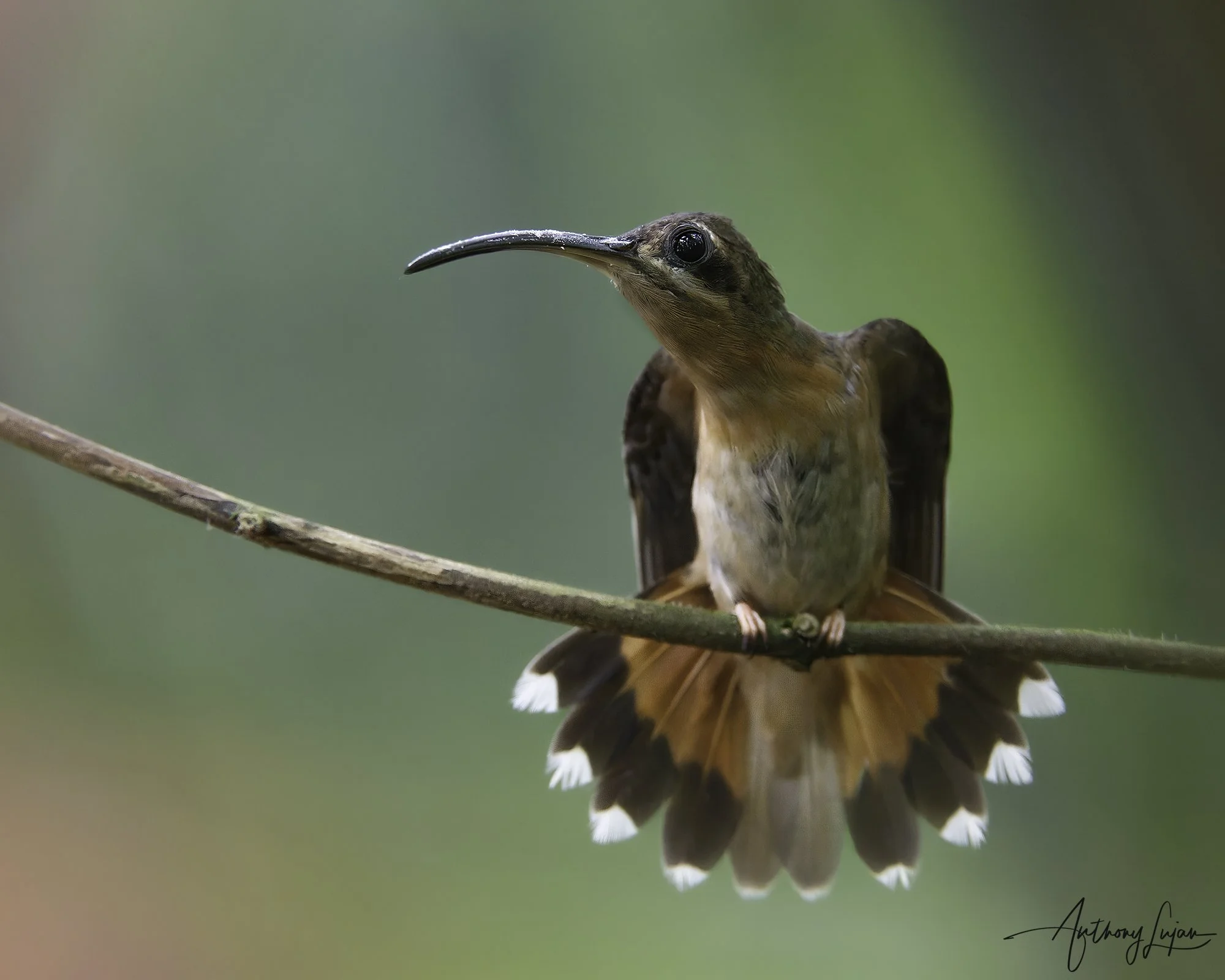
Edge and understory specialist
Bronzy Hermit is an understory and edge hummingbird that feels like part of the forest’s foundation. While some species announce themselves with bright color and contrast, hermits often blend into the background. Long bills, earthy tones, and flight paths that stay low and close to cover.
Spending time with Bronzy Hermits shifted my attention downward. Instead of scanning open air and bright flowers, I watched shadowed trails, hanging inflorescences, and the edges of dense vegetation. This species pushed me to think about how hummingbirds use darker, more enclosed spaces and reminded me that not every important encounter happens in perfect light.
Filling the rest of the list
The remaining species on this trip rounded out the story.
Canivet’s Emerald and Blue-vented Hummingbird helped clarify how emeralds and similar forms use more open, edge-dominated habitats.
Charming Hummingbird and Blue-chested Hummingbird added nuance to coastal and lowland communities, showing how subtle differences in range and habitat appear on the ground.
Sapphire-throated Hummingbird and White-bellied Mountain-gem filled lingering gaps between lowland and highland hummingbird communities.
Individually, each was simply a new hummingbird. Together, they made Costa Rica feel nearly complete.
The feeling of being almost done
By the end of this trip, the Costa Rica puzzle was nearly finished. Only two hummingbird species remained unphotographed for the country, and there were just a few males I still wanted better images of. That almost finished feeling is complicated. It is satisfying to see years of effort condensed into a near-complete set, but it also makes every missing piece feel heavier.
This expedition made one thing very clear. Finishing a list is not the real goal. The value is in what you learn while you try. In Costa Rica, closing the gap pushed me into habitats I had not prioritized before, refined how I plan around specialized species, and reminded me that even common hummingbirds can demand serious work when you target them intentionally.
If you want to explore the full list of species photographed during this trip, you can view the complete travel overview here: 2025 07 Costa Rica
Costa Rica hosts 53 hummingbird species, see the ones I’ve photographed.
Join me on future trips like this. You can find more details here: Visit Travel with Me!
Frequently asked questions
Every expedition brings up a few of the same questions about where these hummingbirds live and what it takes to find them. This quick FAQ adds context before you move on to the next trip.
-
Once you are near the end, each return trip becomes highly focused. You are no longer sampling broadly. You are designing days around specific habitats, species, and missing plumages.
-
It means almost every hummingbird occurring in Costa Rica is now photographed in my portfolio. The last few species usually require very specific conditions, access, or timing, which is why they are still missing.
-
Specialized hummingbirds often live in narrow habitat bands or behave in ways that do not overlap much with more generalist species. You have to go where they are and adapt to their world, not the other way around. The Mangrove Hummingbird is the only endangered hummingbird in Costa Rica and it’s endemic.
-
Once a country's list is nearly complete, future trips can concentrate more on visiting other nations that host even greater numbers of hummingbird species.
Please note: The content provided in this article reflects Anthony’s personal experience and photographic approach. Results can vary depending on light, weather, location, equipment, subject behavior, and field conditions.