
Brazil Hummingbird Expedition | November 2022

22 New | Atlantic Forest Endemics
Trip overview
Dates: November 17–18, 2022
Regions:
Minas Gerais: Itamonte
Rio de Janeiro: Itatiaia, Resende
São Paulo: Eldorado, Iporanga, Monte Alegre do Sul, Ribeirão Grande, Salesópolis
Total hummingbird species observed: 22
New species photographed: 22
Focus: Atlantic Forest endemics and regional specialists
When you think about where the hummingbirds are, Brazil is always near the top of the list. It is home to more than eighty hummingbird species and an impressive number of endemics. I knew I had to start here eventually. This first Brazil expedition was about learning the Atlantic Forest regions, seeing how the species turn over between sites, and photographing as many endemics as I could reach in the time I had.
Why Brazil was the next step
By the time I planned this trip, I had already worked in Costa Rica, Colombia, and Trinidad and Tobago. Brazil felt like the logical next step. Massive country, high hummingbird diversity, and entire groups of species that never occur further north. Instead of trying to sample all of Brazil at once, I focused on three states and specific subregions inside them, places where endemics and regional specialties overlap.
During this expedition I photographed 22 hummingbird species, all of them new to my list:
#93 LC Black Jacobin, Florisuga fusca
#94 LC Amethyst Woodstar, Calliphlox amethystina
#95 LC Brazilian Ruby, Heliodoxa rubricauda
#96 LC Glittering-throated Emerald, Chionomesa fimbriata
#97 LC Dusky-throated Hermit, Phaethornis squalidus
#98 LC Festive Coquette, Lophornis chalybeus
#99 LC Frilled Coquette, Lophornis magnificus
#100 LC Glittering-bellied Emerald, Chlorostilbon lucidus
#101 LC Green-crowned Plovercrest, Stephanoxis lalandi
#102 LC Planalto Hermit, Phaethornis pretrei
#103 LC Purple-crowned Plovercrest, Stephanoxis loddigesii
#104 LC Reddish Hermit, Phaethornis ruber
#105 LC Sapphire-spangled Emerald, Chionomesa lactea
#106 LC Saw-billed Hermit, Ramphodon naevius
#107 LC Scale-throated Hermit, Phaethornis eurynome
#108 LC Sombre Hummingbird, Eupetomena cirrochloris
#109 LC Stripe-breasted Starthroat, Heliomaster squamosus
#110 LC Swallow-tailed Hummingbird, Eupetomena macroura
#111 LC Versicolored Emerald, Chrysuronia versicolor
#112 LC Violet-capped Woodnymph, Thalurania glaucopis
#113 LC White-throated Hummingbird, Leucochloris albicollis
#114 LC White-chinned Sapphire, Chlorestes cyanus
Four of these became the anchors of the trip: Green-crowned Plovercrest, Festive Coquette, Amethyst Woodstar, and Stripe-breasted Starthroat.
Green-crowned Plovercrest

Endemic, Atlantic Forest character
Green-crowned Plovercrest is one of those birds that seems designed specifically for the Atlantic Forest. The male crest and patterning are striking even in low light, and seeing it in person makes the word “endemic” feel very literal. It is not just a Brazilian hummingbird on a map. It is a hummingbird that belongs to these specific ridges and forests.
Photographing Green-crowned Plovercrests meant working in cool, humid forest, often with a mix of natural habitat and carefully maintained garden or feeder setups. The species moves between shaded perches and flowering patches, and the crest only really shows if the bird is turned the right way. It felt like a conversation with a hummingbird that carries a piece of the Atlantic Forest’s identity all by itself.
Festive Coquette

Endemic, shifting conservation story
Festive Coquette was another key target, especially because of its changing conservation story. When I photographed it, it was listed as Near Threatened. Since then, it has been updated to Least Concern. The bird, of course, did not change in that time. What changed was our understanding of its status and range.
In the field, Festive Coquette feels both delicate and energetic. It is small and ornate, and it spends a lot of time working specific flowers with fast, focused visits. Photographing it required patience and careful observation. I had to learn where it wanted to be and wait for those brief windows when the bird, the light, and the crest finally lined up. Knowing that its status had improved only added to the experience. It was a reminder that conservation categories are snapshots and that they can move in both directions.
Amethyst Woodstar

A second chance, new country
Amethyst Woodstar had already slipped past me once. I did not photograph it in Trinidad and Tobago, even though it was possible there. Brazil gave me a second chance in a completely different setting. This time, I was ready for it.
Seeing Amethyst Woodstar in Brazil tied two stories together. On one side, it closed a loose end from an earlier trip. On the other, it showed how the same species can feel different in a new landscape, with new plants, new light, and new company in the hummingbird community. Working with it here felt like catching up with a bird I already knew on paper but had never really met, and finally being able to add it to the project in a place where it fits naturally into the broader scene.
Stripe-breasted Starthroat
Endemic, clean structure
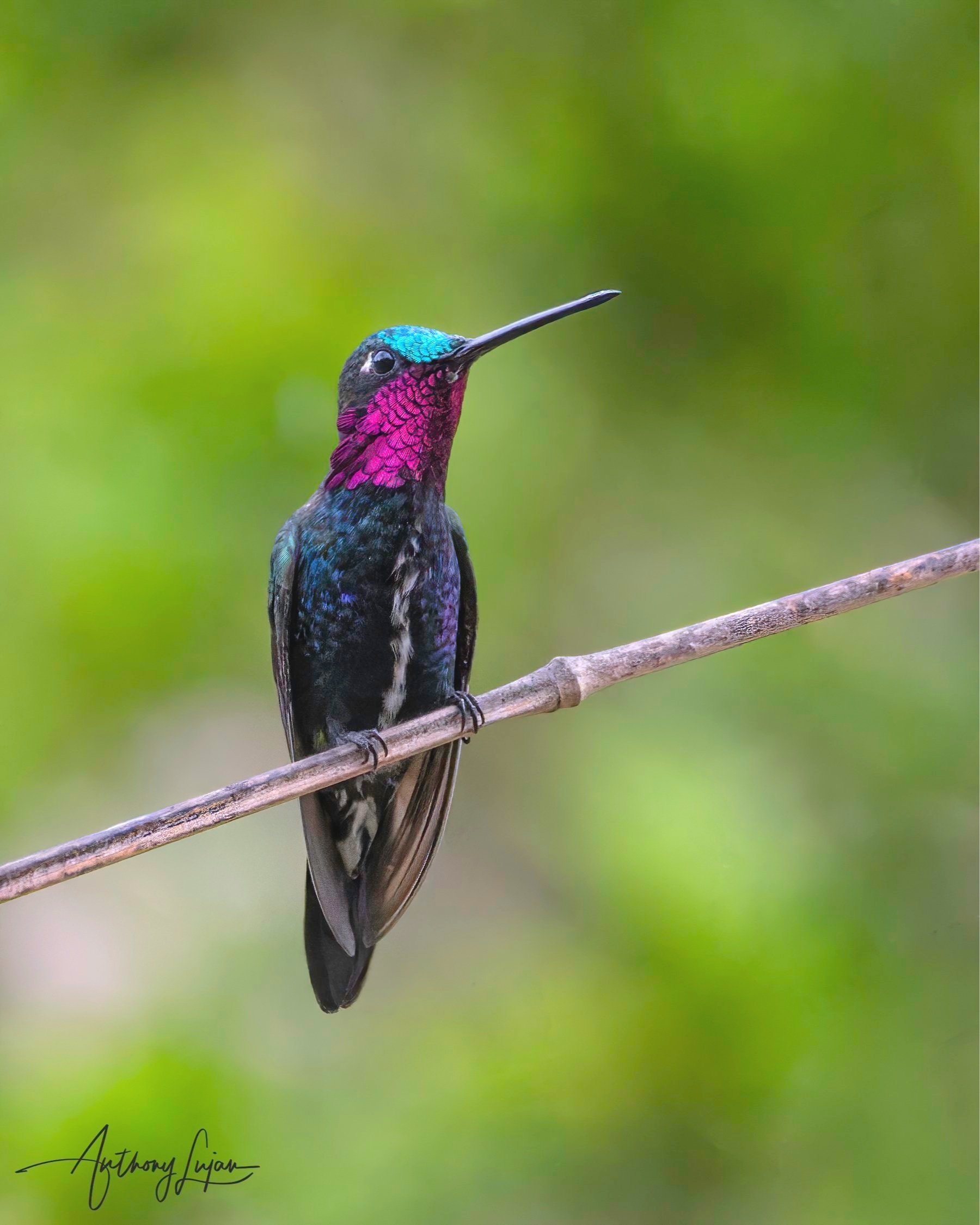
Stripe-breasted Starthroat is a strong, clean-looking hummingbird that wears its endemic status quietly. It has a bold structure, a long bill, and a patterned breast, giving it a very distinct look compared to many other species.
Most of my encounters involved higher perches and deliberate movements. This was not a hummingbird that hovered in place for long stretches. Instead, it moved with purpose, dropping to flowers and then returning to vantage points that provided good views of its territory. Photographing Stripe-breasted Starthroats meant looking for clear lines, open perches, and backgrounds that would not compete with the bird’s pattern.
Learning the Atlantic Forest
This expedition was as much about habitat as it was about species. Minas Gerais, Rio de Janeiro, and São Paulo each offered different pieces of the Atlantic Forest and surrounding landscapes. Elevation, forest type, and level of disturbance shifted from site to site, and the hummingbirds shifted with them.
Working through Itatiaia, Itamonte, and the São Paulo localities, I started to see patterns. Which species stayed close to intact forest, which ones were comfortable in more open or human-influenced areas, and which birds seemed to rely heavily on specific flowering plants or feeders? Brazil felt big, even within a limited regional focus, but the structure of the Atlantic Forest made the trip feel coherent rather than overwhelming.
Why this trip still matters
This Brazil expedition did not include any endangered hummingbirds. Every species I photographed here is considered Least Concern. That could make the trip seem less urgent on paper, but in practice it was critical for the larger project. These are the hummingbirds that define their regions. Endemics, regional specialties, and common species that make up the daily texture of the Atlantic Forest.
By the end of the trip, Brazil had shifted from a distant idea on my list to a real place in the project. I had met some of the country’s signature hummingbirds, understood a small part of how they are arranged across the landscape, and laid the groundwork for future expeditions that will go deeper and reach further.
If you want to explore the full list of species photographed during this trip, you can view the complete travel overview here: 2022 11 Brazil
Brazil hosts 87 hummingbird species; see the ones I’ve photographed.
Join me on future trips like this. You can find more details here: Visit Travel with Me!
Frequently asked questions
Every new country adds a layer of questions about planning, targets, and expectations. This quick FAQ adds context before you move on to the next Hummingbird Travel Story.
-
Because Minas Gerais, Rio de Janeiro, and São Paulo offer a dense mix of Atlantic Forest hummingbirds, including several endemics, in a relatively accessible area.
-
Least Concern does not mean unimportant. These hummingbirds define the character of their habitats and often include endemics that occur nowhere else, even if their populations are currently stable.
-
Both are endemic to Brazil and very characteristic of the Atlantic Forest. Photographing them was essential for any serious attempt to document the country’s hummingbirds.
-
Because it shows that conservation status is not fixed. Sometimes new data and better understanding change the picture, and it is important to recognize when a species is doing better than we once thought.


Please note: The content provided in this article reflects Anthony’s personal experience and photographic approach. Results can vary depending on light, weather, location, equipment, subject behavior, and field conditions.