
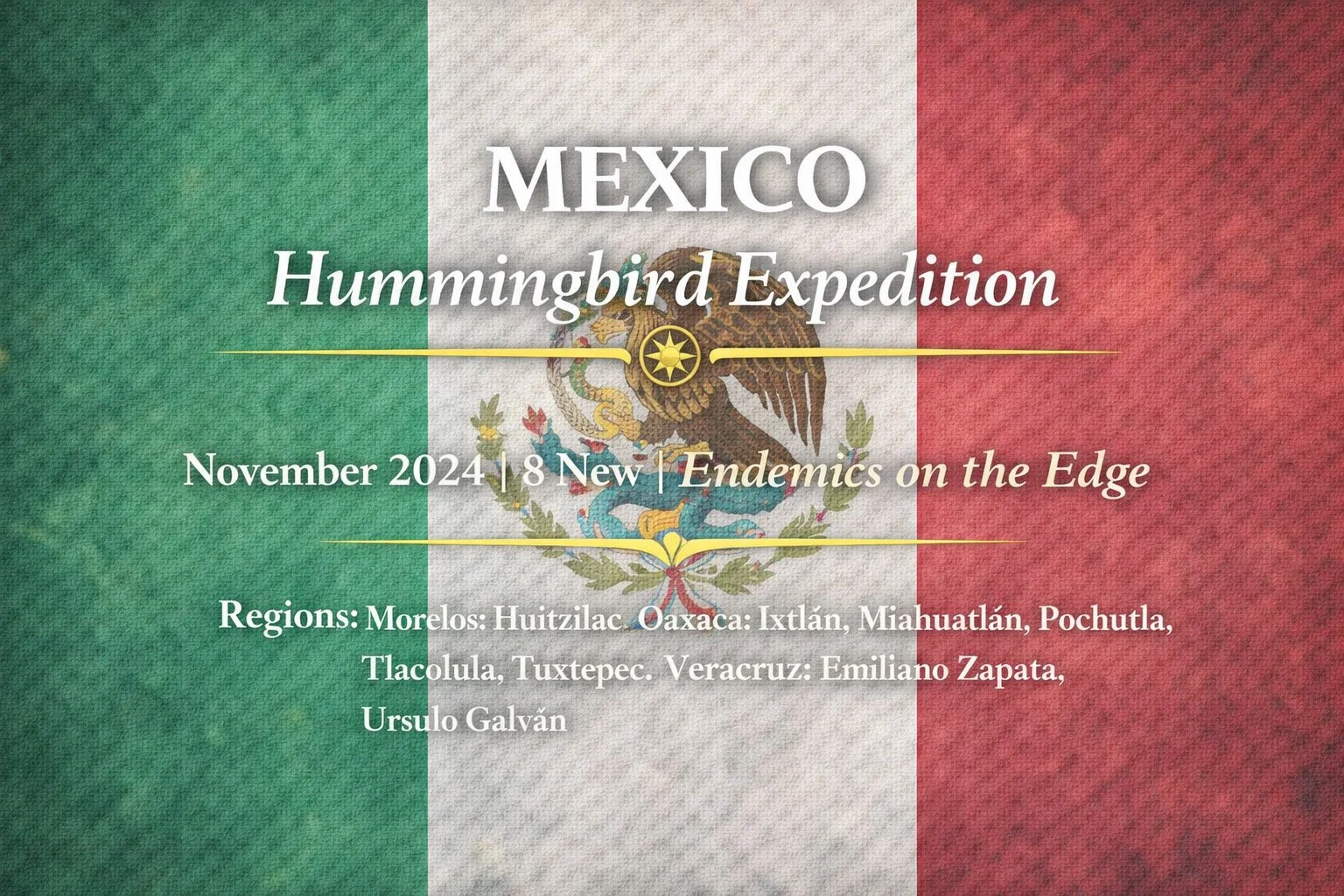
Mexico Hummingbird Expedition | November 2024
8 New Species | Endemics on the Edge
Trip overview
Dates: November 16–26, 2024
Regions:
Morelos: Huitzilac
Oaxaca: Ixtlán, Miahuatlán, Pochutla, Tlacolula, Tuxtepec
Veracruz: Emiliano Zapata, Ursulo Galván
Total hummingbird species observed: 22
New hummingbird species photographed: 8
Focus: Mexican endemics with Endangered and Near Threatened status
This was a return to Mexico with a very specific goal. The first Mexico expedition centered on Short-crested Coquette and a set of highland endemics. This second trip pushed further south and east, into Oaxaca, Veracruz, and the central highlands, to focus on endemics that sit on the edge of decline or quietly define their regions. Blue-capped Hummingbird, Mexican Sheartail, Beautiful Hummingbird, and Bumblebee Hummingbird were the core of the plan.
Why Morelos, Oaxaca, and Veracruz
Mexico holds 59 hummingbird species, and many of the most range-restricted and threatened are tied to particular belts of forest, scrub, and coastal habitat. Morelos and Oaxaca offered access to the interior highlands, cloud forests, pine-oak forests, and dry valleys where endemics like the Blue-capped Hummingbird and the Beautiful Hummingbird live. Veracruz added coastal and lowland scrub for Mexican Sheartail, along with routes that intersect Bumblebee Hummingbird’s highland range.
During this expedition, I photographed eight hummingbird species, all of them new to my list:
#198 EN Blue-capped Hummingbird, Eupherusa cyanophrys
#199 LC Plain-capped Starthroat, Heliomaster constantii
#200 LC Bumblebee Hummingbird, Selasphorus heloisa
#201 LC Beautiful Hummingbird, Calothorax pulcher
#202 LC Emerald-chinned Hummingbird, Abeillia abeillei
#203 LC White-bellied Emerald, Chlorestes candida
#204 NT Mexican Sheartail, Doricha eliza
#205 LC Wedge-tailed Sabrewing, Pampa curvipennis
Four of these hummingbirds shaped the heart of the trip: Blue-capped Hummingbird, Mexican Sheartail, Beautiful Hummingbird, and Bumblebee Hummingbird.
Blue-capped Hummingbird
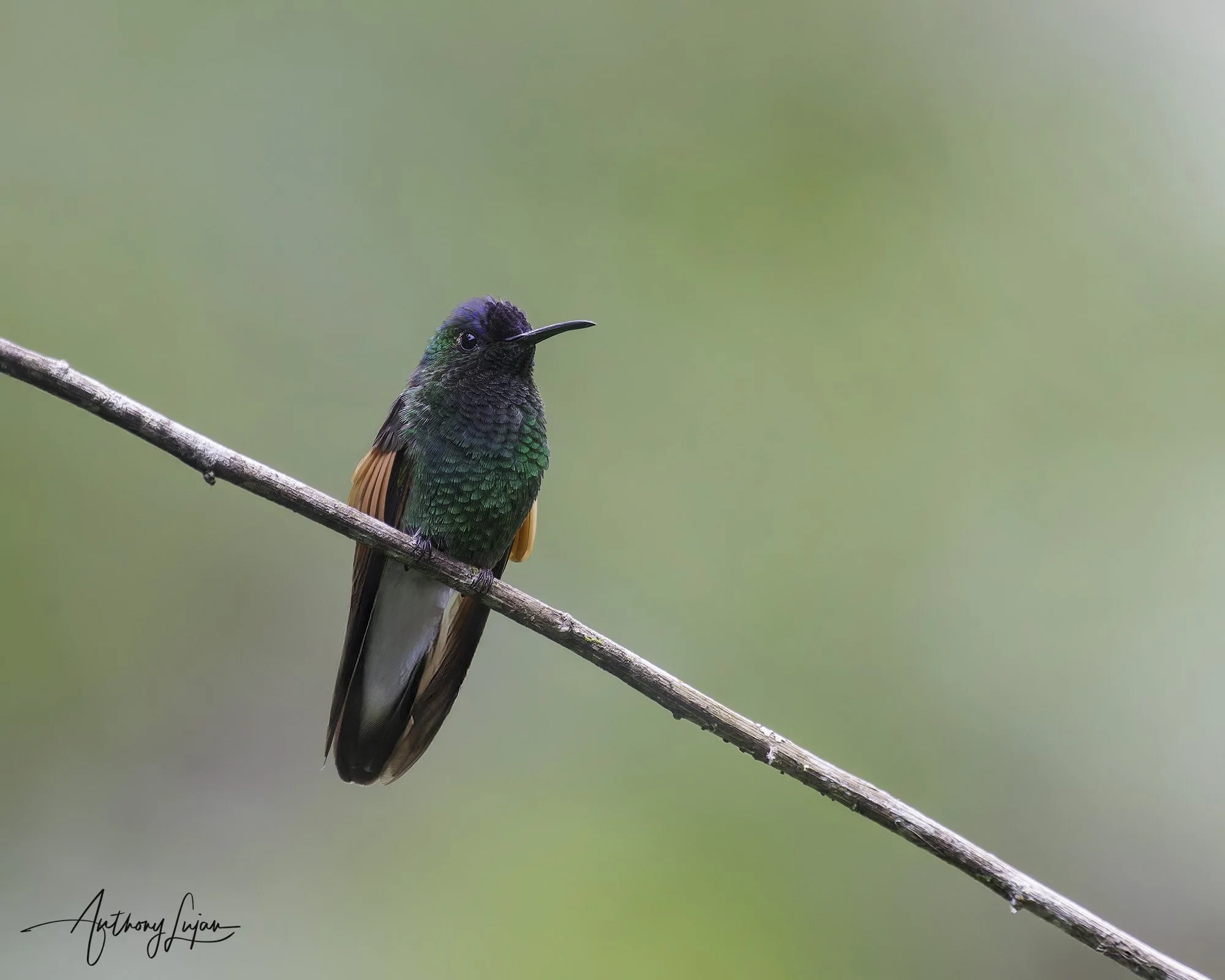
Endemic, Endangered, and tied to one mountain range
Blue-capped Hummingbird, or Oaxaca Hummingbird, is one of Mexico’s most range-restricted hummingbirds. It is endemic to a narrow section of the Sierra Madre del Sur in Oaxaca, where cloud forest, semi-deciduous forest, pine forest, and gallery forest meet along steep slopes and ridges. Its entire known range fits into a small part of one mountain system, and much of that forest has already been cleared or thinned.
On the ground, you can feel how fragile that situation is. Access roads cut through steep hillsides where intact forest alternates with pasture, small fields, and logging scars. The remaining forest is broken but still rich. Time with Blue-capped Hummingbirds meant working in that patchwork: edges where pines and broadleaf trees meet, ravines where moisture clings, and flowering trees that still draw birds in consistently. Photographing them required patience with shifting mountain light and close attention to angles, waiting for the blue cap and body pattern to separate cleanly from the background. Every good frame felt like it belonged to a hummingbird whose entire story is confined to one limited stage.
Mexican Sheartail (female only)
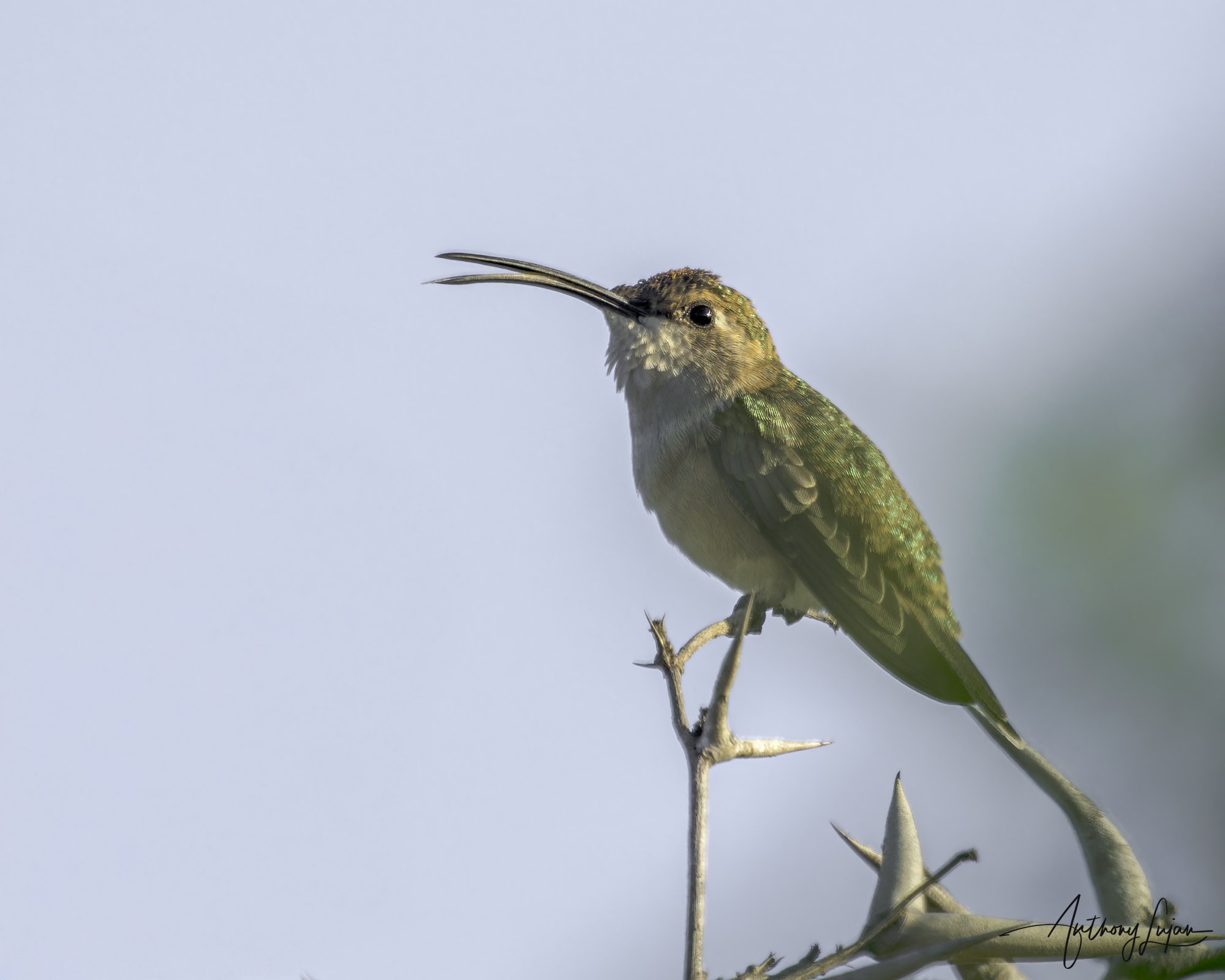
Endemic, Near Threatened, and living in fragmented coastal strips
Mexican Sheartail is split between two distant coastal regions within Mexico, with one population centered in Veracruz and another along the northern Yucatán coast. It lives in coastal scrub, mangroves, dry forest edges, rural gardens, and urban green spaces near sea level. Habitat loss and fragmentation from agriculture, development, and tourism have left the species working within strips and patches rather than a continuous habitat.
In Veracruz, that is clear the moment you arrive. Scrub and mangrove patches sit between sugarcane, pasture, and growing towns. Sheartails move through this mosaic, feeding at flowering shrubs and low trees, sometimes right on the edges of people’s yards and small roads. On this trip, my main target was a female, which meant relying more on structural and subtle plumage cues than on full male display. Photographing Mexican Sheartails meant slow work at eye level and below, planning around strong coastal light and wind, and accepting that many of the best moments would be brief and close to the ground.
Beautiful Hummingbird (female only)
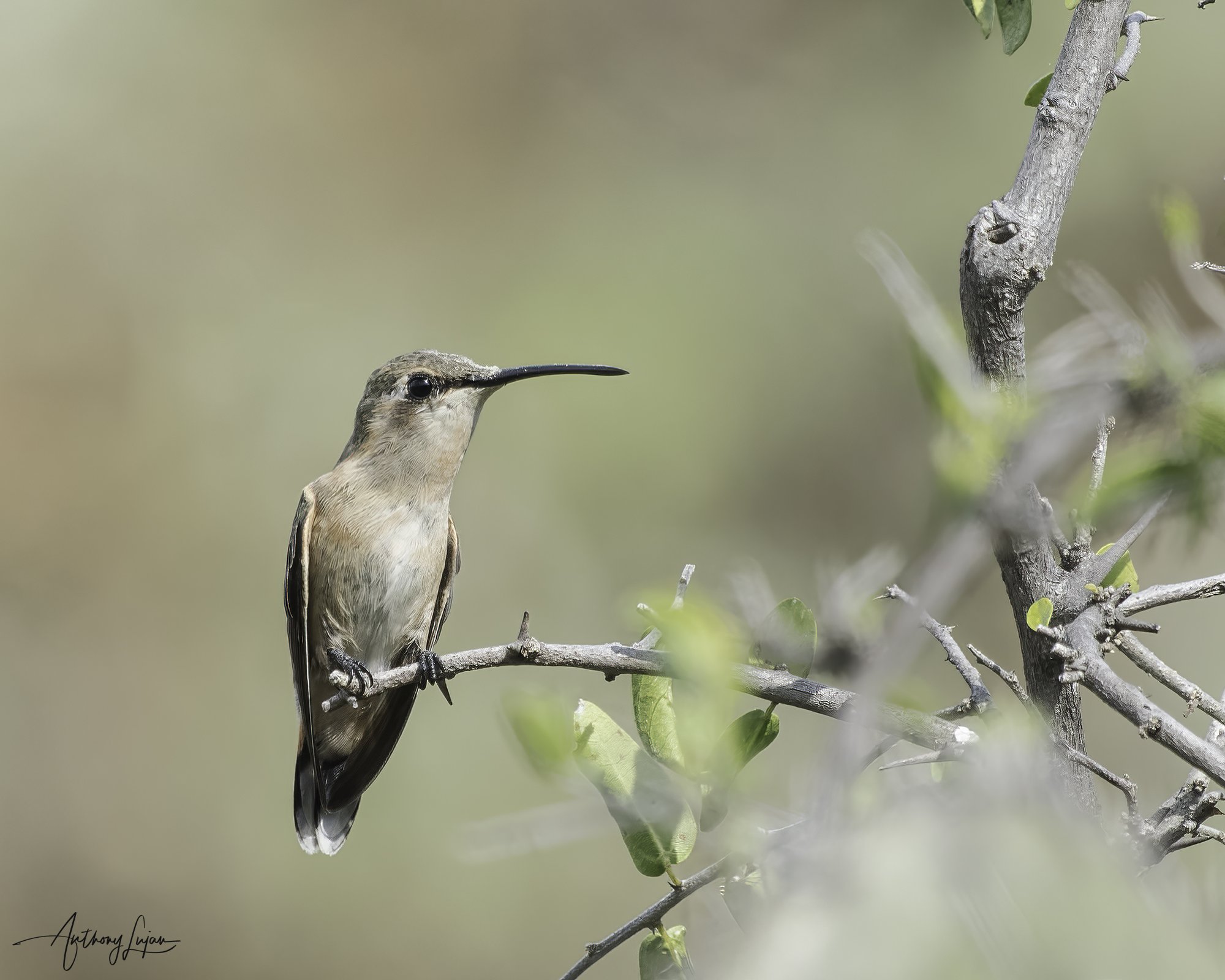
Endemic to interior valleys and dry scrub
Beautiful Hummingbird, also known as Beautiful Sheartail, is endemic to south-central Mexico, especially the interior valleys and dry slopes in states such as Oaxaca. It favors arid and semiarid scrub, semi-open areas with shrubs and sparse trees, and gallery forest along drains and washes. Thorny bushes, cactus, and rocky terrain define much of its world.
In the interior valleys of Oaxaca, that habitat came into focus quickly. Thorn scrub, rocky hillsides, scattered trees, and stands of columnar cacti painted a very different picture from the cloud forest sites on the same trip. My focus here was on a female Beautiful Hummingbird, which meant learning the bird’s shape, rhythm, and preferred flowers rather than waiting for a dramatic gorget flare. She moved confidently through dry shrubs and cactus blossoms, shifting effortlessly between exposed perches and sheltered feeding spots. Strong sun, heat shimmer, and high-contrast scenes made photography challenging, but they also made it possible to show this hummingbird in the stark, beautiful landscapes it calls home.
Bumblebee Hummingbird
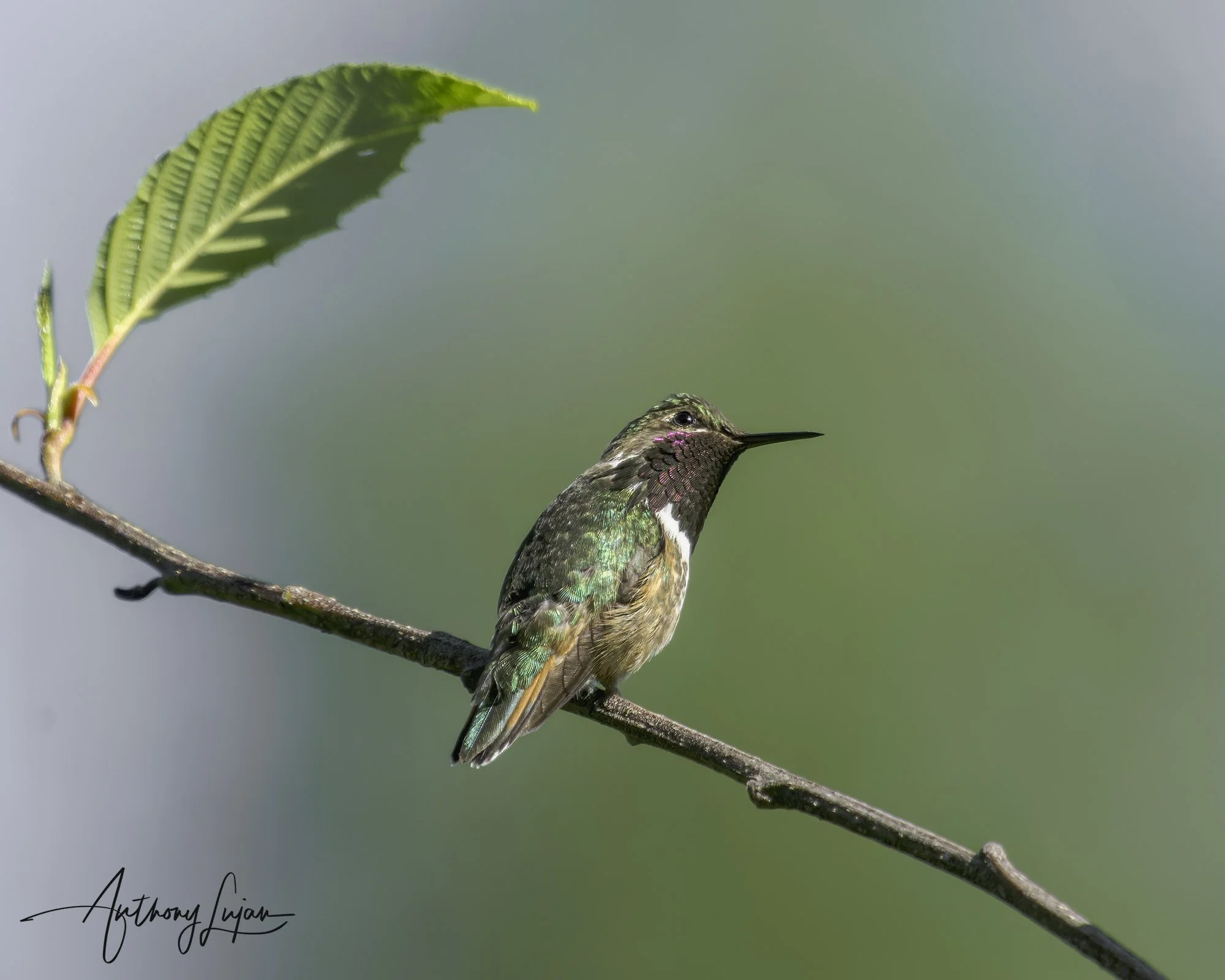
Tiny, endemic, and highland focused
Bumblebee Hummingbird is one of Mexico’s smallest hummingbirds and is found only within the country. It favors highland regions with forest edges, second growth, and shrubby slopes, often at elevations where the air cools down and vegetation thickens. Its size sits just above the absolute minimum of what most people might picture as a bird.
In the field, you do not find Bumblebee Hummingbirds by scanning the horizon. You find them by narrowing your attention to small flowering shrubs, hedges, and patches of forest edge at head height or lower. When they appear, they hold short, precise flights between individual blossoms and small perches, often hovering just a bit longer than larger hummingbirds and working through flowers in tight circuits. Photography here became a game of fine focus control and clean backgrounds. With a bird this small, even moderate clutter could overwhelm the subject. It forced a slower, more deliberate approach than many other parts of the trip.
The rest of the Mexican cast
The other four new hummingbirds helped fill out the regional story:
Plain-capped Starthroat provided a larger, structural presence in semi-open habitats, often using high, exposed perches and working taller flowering trees.
Emerald-chinned Hummingbird added a small, highland forest element, appearing along shaded trails and edges where flowers tucked into the understory.
White-bellied Emerald and Wedge-tailed Sabrewing represented lower and mid-elevation forest and edge communities, tying coastal and interior sites together.
Alongside returning species from earlier Mexico expeditions, these birds made the 22 observed hummingbirds feel like a coherent regional community rather than isolated targets.
What this expedition changed
Coming back to Mexico with a focus on Blue-capped Hummingbird, Mexican Sheartail, Beautiful Hummingbird, and Bumblebee Hummingbird reinforced how much is packed into relatively small slices of the country. An Endangered hummingbird confined to one mountain range. A Near Threatened coastal specialist is split into separate populations. Two interior and highland endemics that represent very different habitats, one in dry valleys and one in cooler, more forested slopes.
This trip nudged my Mexico work from single-species missions toward a broader look at how different forms of endemism and risk play out across forests, scrub, and coast. It also confirmed that Mexico is not a “once and done” hummingbird country. It is a place that rewards multiple visits, each built around a distinct set of species and the landscapes that shape them.
If you want to see the full list of species photographed during this trip, you can view the complete travel overview here: 2024 11 Mexico
Mexico hosts 59 hummingbird species; see the ones I’ve photographed.
Join me on future trips like this. You can find more details here: Visit Travel with Me!
Frequently asked questions
Every trip raises its own set of questions. This quick FAQ adds context before you move on to the next Hummingbird Travel Story.
-
Because Mexico still had several key endemics on my list, including an Endangered species, and this route let me focus tightly on those hummingbirds rather than broad coverage.
-
It is endemic to a single Mexican mountain range and listed as Endangered, with a very limited range and ongoing habitat loss. That combination makes it a clear target for focused field time and documentation.
-
Because both species are endemic, and documenting females helps tell a more complete story than only showing males in full display. It also reflects the reality of what birders and photographers often see in the field.
-
It is one of the smallest birds I have photographed, and like other “micro” hummingbirds, it demands slower observation, tighter compositions, and more attention to small-scale habitat structure.




Please note: The content provided in this article reflects Anthony’s personal experience and photographic approach. Results can vary depending on light, weather, location, equipment, subject behavior, and field conditions.