
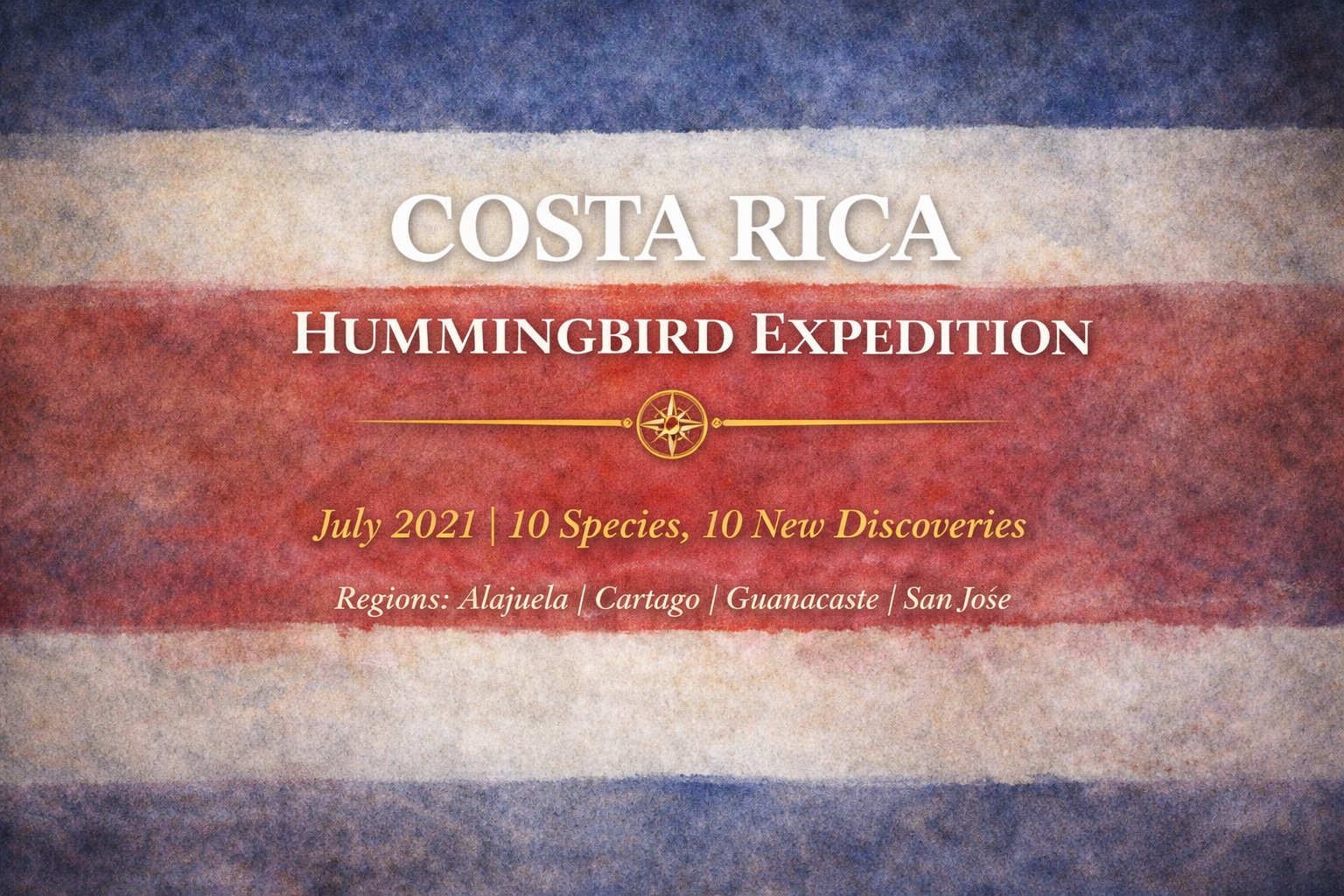
Costa Rica Hummingbird Expedition | November 2021
22 New Species | Second Chances
Trip overview
Dates: November 21–28, 2021
Regions: Alajuela, Cartago, Heredia, Limón, San José
Total hummingbird species observed: [add final count]
New species photographed: 22
Focus: Second chances and expanding the Costa Rica list
This trip was about second chances. After my first Costa Rica expedition lit the spark, I came back hungry for even more hummingbirds—and this time, there were no tropical storms, no landslides, and no major setbacks. With perfect conditions and a clearer sense of what I was doing, this week turned into one of the most productive hummingbird runs I’ve had in the country.
Second chances for more hummingbirds
On paper, this looked like a follow‑up to the July trip. In reality, it was a chance to see what would happen if I took the same country, added new regions, and removed the weather chaos from the equation. With Heredia and Limón in the mix and a clearer sense of how to work different elevation bands, this expedition felt less like an experiment and more like a deliberate step forward.
Over one week, I photographed 22 new hummingbird species. The order of my species counts is:
#15 LC Brown Violetear (Colibri delphinae)
#16 LC Black-crested Coquette (Lophornis helenae)
#17 LC Green Thorntail (Discosura conversii)
#18 LC Violet Sabrewing (Campylopterus hemileucurus)
#19 LC White-crested Coquette (Lophornis adorabilis)
#20 LC Snowy-bellied Hummingbird (Saucerottia edward)
#21 LC White-tailed Emerald (Microchera chionura)
#22 LC Magenta-throated Woodstar (Philodice bryantae)
#23 LC Stripe-throated Hermit (Phaethornis striigularis)
#24 LC Green-breasted Mango (Anthracothorax prevostii)
#25 LC Snowcap (Microchera albocoronata)
#26 LC Crowned Woodnymph (Thalurania colombica)
#27 LC White-necked Jacobin (Florisuga mellivora)
#28 LC Long-billed Hermit (Phaethornis longirostris)
#29 LC Stripe-tailed Hummingbird (Eupherusa eximia)
#30 LC Garden Emerald (Chlorostilbon assimilis)
#31 LC White-tipped Sicklebill (Eutoxeres aquila)
#32 LC Scaly-breasted Hummingbird (Phaeochroa cuvierii)
#33 LC Green Hermit (Phaethornis guy)
#34 LC Scintillant Hummingbird (Selasphorus scintilla)
#35 LC Lesser Violetear (Colibri cyanotus)
#36 LC Purple-throated Mountain-gem (Lampornis calolaemus)
The list grew fast, but four species in particular became the signature of this “second chance” trip.
Four standouts that defined the week
Snowcap
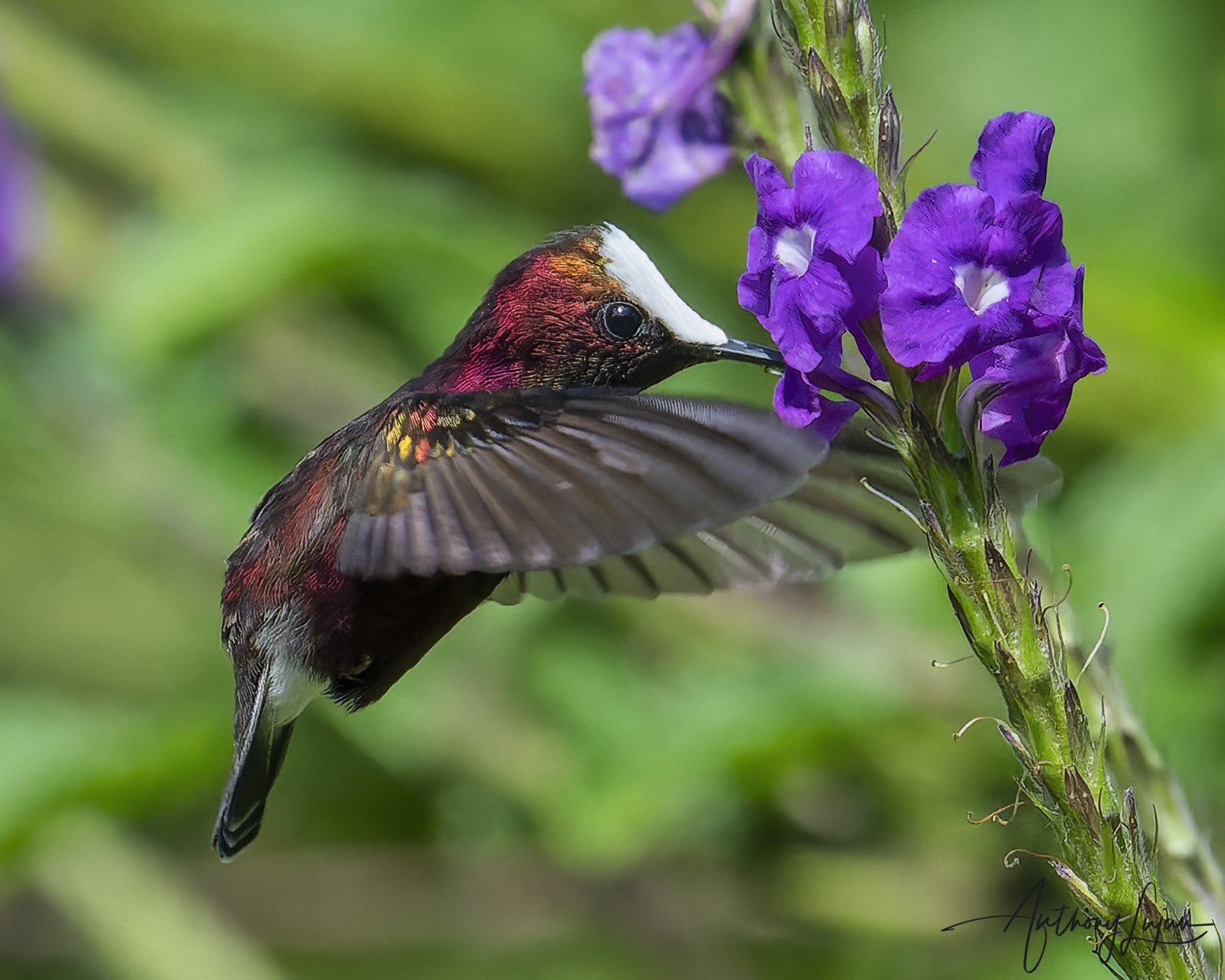
The Snowcap looks almost unreal the first time you see it: a tiny bird with a bright white cap set against deep plum and wine tones. It became one of those species that instantly changes the mood of a site. The moment someone said “Snowcap,” everything else moved to the background.
On this trip, working with Snowcaps meant paying attention to small, low flowers and subtle movements instead of big, obvious patrols. I already knew Costa Rica could deliver incredible hummingbirds; Snowcap was one of the birds that made me realize how strange and striking things can get when you start targeting the foothill specialists.
Black-crested Coquette
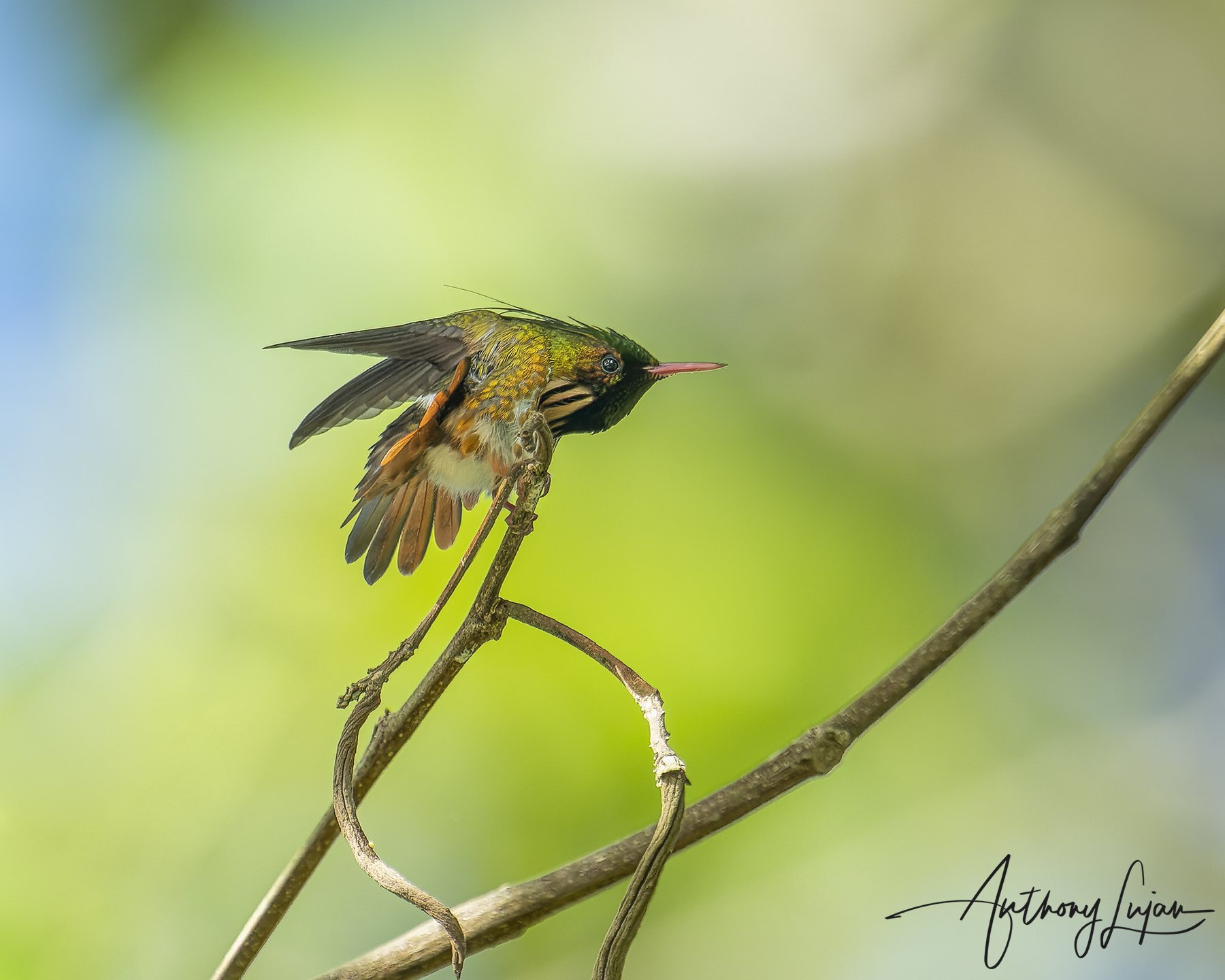
The Black-crested Coquette is all about fine detail wrapped inside constant motion. It’s small, ornate, and rarely still for long. It would zip in, hit a few flowers, and disappear before most people could process what they’d just seen.
Here, good weather meant I could stay with these patterns longer—no rushing away from storms, no abandoning a spot because the light collapsed. I could watch flower choice, routes, and timing, and build a mental map of how the coquettes were using a space. This species turned into a lesson in patience and prediction more than reflex.
Purple-throated Mountain-gem
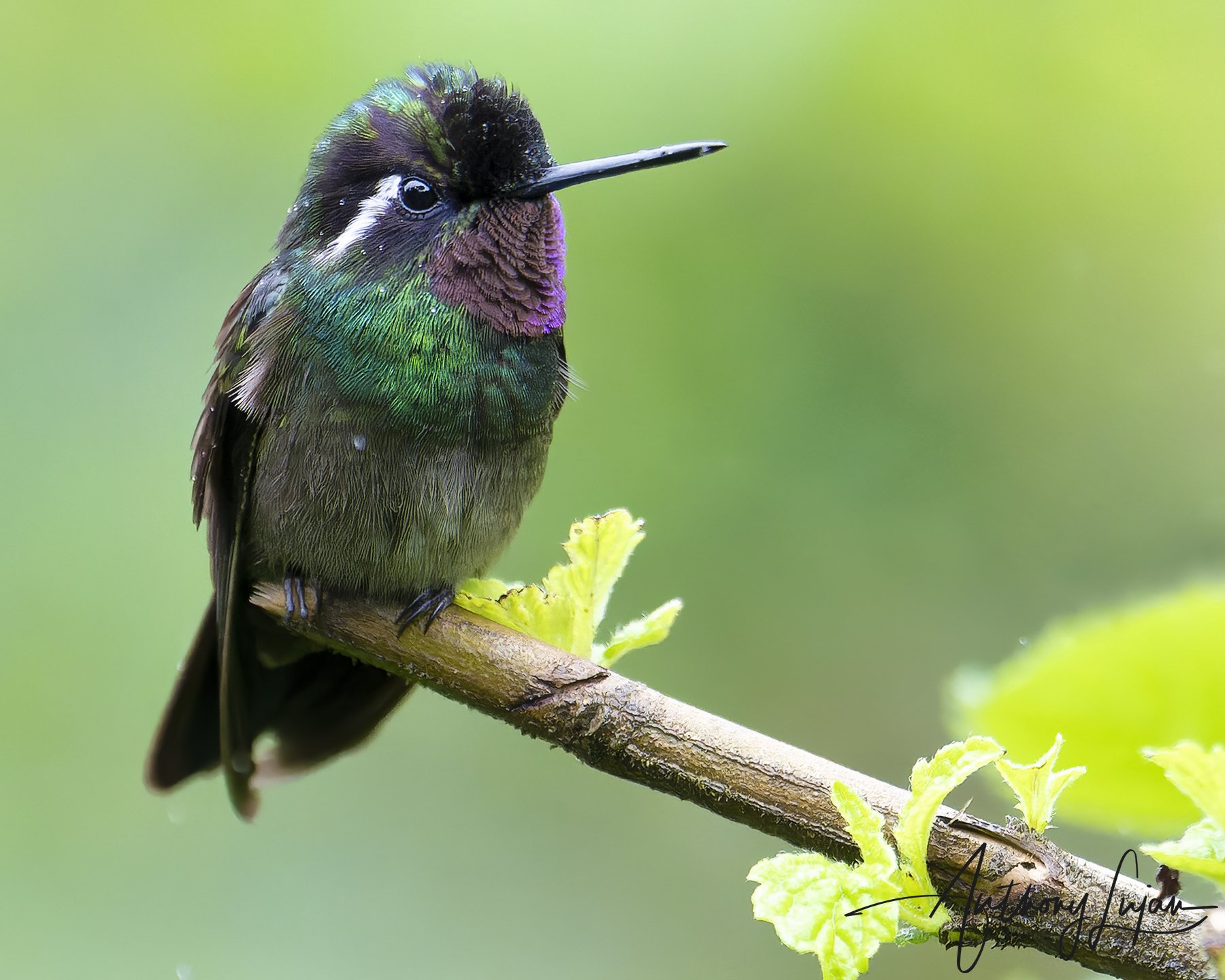
Purple-throated Mountain-gems feel like part of the highland structure: strong shapes, clear color blocks, and a presence that holds up even in busy mixed flocks. They shared some of the same spaces as other highland hummingbirds, but they rarely felt lost in the crowd.
On this expedition, I had the time and conditions to move beyond “proof of species” frames. Stable weather meant I could leave the obvious angles at feeders and edges, look for clean backgrounds, and wait out the moments when posture and light finally came together. This species became a benchmark for what it looked like to slow down and do more than just document.
White-tailed Emerald
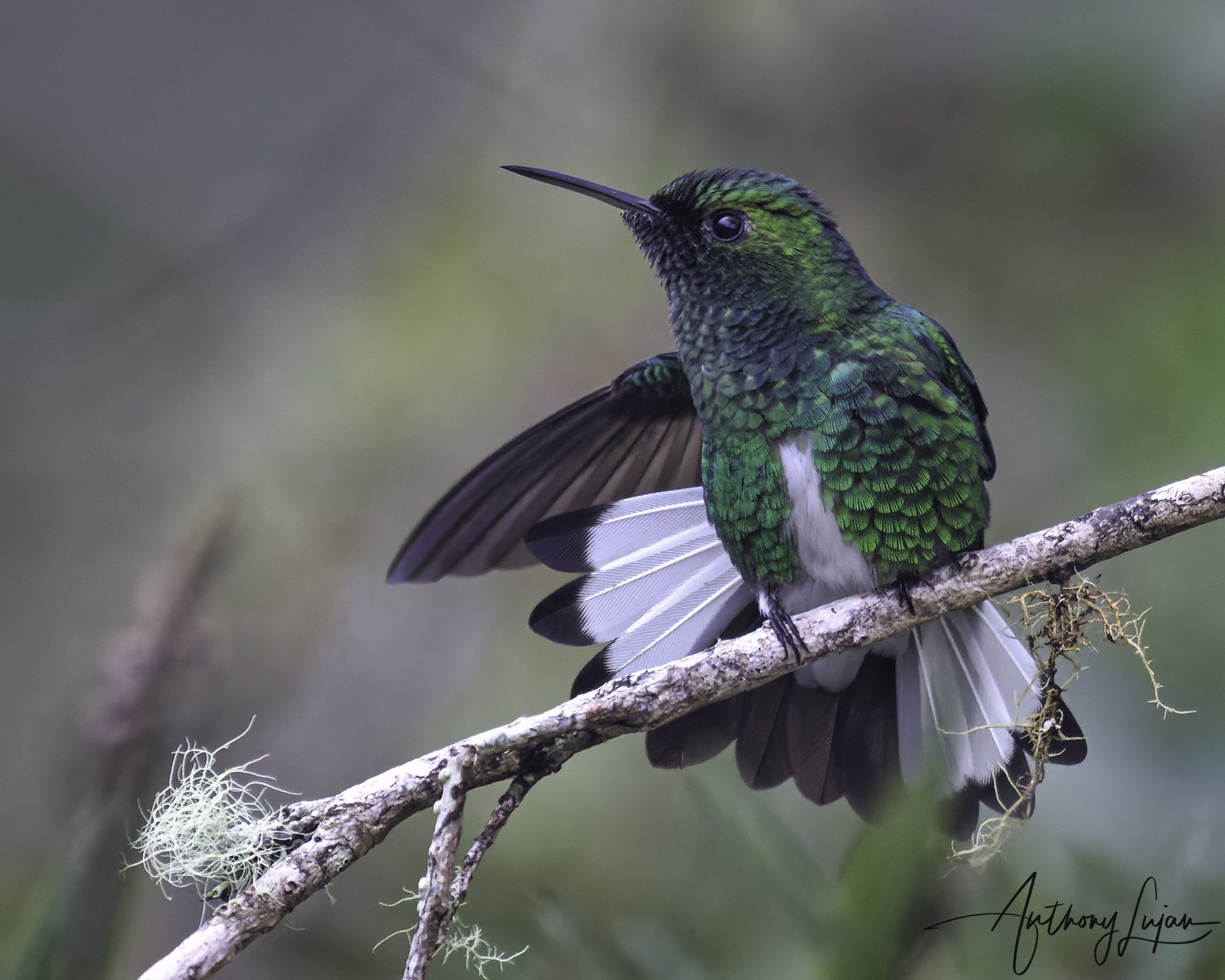
Among a lineup of ornate coquettes and bold violetears, the White-tailed Emerald stood out by being subtle. A small, clean hummingbird with a bright white tail, it rewarded close attention more than instant impact.
Because the conditions were so good on this trip, I could let sessions with White-tailed Emeralds run long. The more time I spent with them, the more I saw their patterns: favorite perches, repeat circuits, and the way that white tail flashed at specific angles. This bird was a reminder that “second chances” aren’t just about going back to a country—they’re about seeing what you missed in the quieter species the first time around.
What a perfect‑weather trip taught me
Without storms and landslides dictating the schedule, I could finally see what a hummingbird expedition in Costa Rica looks like when you’re only limited by daylight and energy. That meant:
Building days around sequences of habitats instead of weather windows.
Staying longer at sites when behavior was good instead of leaving for safety or access issues.
Taking risks on less familiar locations because backup plans weren’t weather‑dependent.
Focusing more on refining images than on simply getting a record shot.
This trip felt like an answer to a question I didn’t fully know I was asking in July: “What happens if everything goes right?” The result was a week that dramatically expanded my species list and sharpened my expectations for what a well‑planned hummingbird expedition should deliver.
Why this expedition still matters
In the bigger arc of my hummingbird work, this November journey sits between the origin story and the intense, conservation‑focused expeditions that came later. It’s the point where “I think I can do this” turned into “I want to see how far this can go.”
Most of the hummingbirds from this week are Least Concern on paper, but that doesn’t make them any less important to the story. They filled in huge gaps—plumeleteers, hermits, coquettes, woodstars, mountain‑gems, and tiny foothill specialists that changed how I read habitats and plan routes. By the time this trip ended, Costa Rica wasn’t just where it all started; it was the place that proved I was ready to take this project further and into tougher, more demanding expeditions elsewhere.
If you want to explore the full list of species photographed during this trip, you can view the complete travel overview here: 2021 11 Costa Rica
Costa Rica hosts 53 hummingbird species, see the ones I’ve photographed.
Join me on future trips like this. You can find more details here: Visit Travel with Me!
Frequently asked questions
Every expedition adds new species, but the questions people ask tend to be similar. This quick FAQ adds context before you dive into the next Hummingbird Travel Story.
-
The first trip showed how rich Costa Rica is for hummingbirds. Coming back with better planning, and without extreme weather, let me explore new regions and clades while the lessons from July were still fresh.
-
Common and locally common hummingbirds are essential for learning behavior, habitats, and field conditions. That experience becomes critical when you start targeting rare, endemic, or hard‑to‑reach species later.
-
July was about proving the concept during challenging conditions. November was about seeing what a hummingbird‑focused trip could really produce when weather, access, and planning all cooperated.
-
These four birds capture the range of what this trip offered, from tiny, high‑contrast foothill specialties to ornate coquettes and strong highland hummingbirds and together they anchor the story of how the week unfolded.
Please note: The content provided in this article reflects Anthony’s personal experience and photographic approach. Results can vary depending on light, weather, location, equipment, subject behavior, and field conditions.