
Guatemala Hummingbird Expedition | September 2024
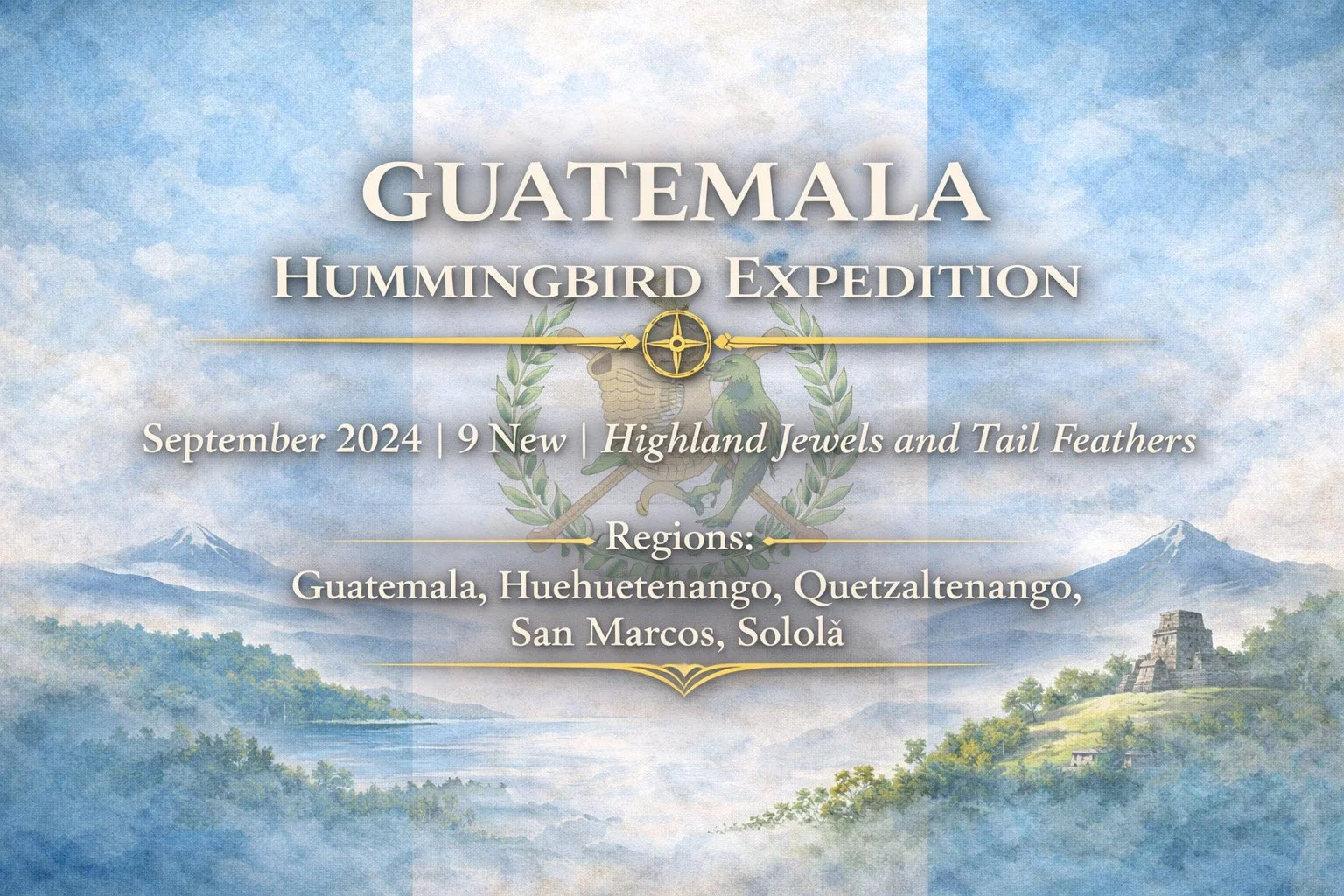
9 New | Highland Jewels and Tail Feathers
Trip overview
Dates: September 20–30, 2024
Regions: Guatemala, Huehuetenango, Quetzaltenango, San Marcos, Sololá
Total hummingbird species observed: [add final count]
New hummingbird species photographed: 9
Focus: Highland and regional specialties across Guatemala’s western mountains
This was my first true hummingbird run through the Guatemalan highlands. The goal was to work a slice of western Guatemala hard enough to see how the hummingbirds change with elevation and region, from pine oak zones and cloud forest to semi open highland edges and gardens. With a focus on small, high impact species and strong mountain gems, I built this trip around four birds and let everything else fall into place around them.
Why Guatemala’s western highlands
Guatemala sits right in the middle of the Central American highland corridor. The western departments of Huehuetenango, Quetzaltenango, San Marcos, and Sololá stack ridges, volcanoes, and valleys in a way that constantly shifts elevation, forest type, and light. That combination makes it a perfect place to look for mountain hummingbirds, tiny highland specialists, and birds with ranges that only lightly touch neighboring countries.
During this expedition, I photographed nine hummingbird species, all of them new to my list:
#189 LC Green-throated Mountain-gem, Lampornis viridipallens
#190 LC Azure-crowned Hummingbird, Saucerottia cyanocephala
#191 LC Rufous Sabrewing, Pampa rufa
#192 LC Mexican Violetear, Colibri thalassinus
#193 LC Sparkling-tailed Hummingbird, Tilmatura dupontii
#194 LC Garnet-throated Hummingbird, Lamprolaima rhami
#195 LC Wine-throated Hummingbird, Selasphorus ellioti
#196 LC Blue-tailed Hummingbird, Saucerottia cyanura
#197 LC Slender Sheartail, Doricha enicura
Four stood out as the anchors of the trip: Wine-throated Hummingbird, Green-throated Mountain-gem, Garnet-throated Hummingbird, and Sparkling-tailed Hummingbird.
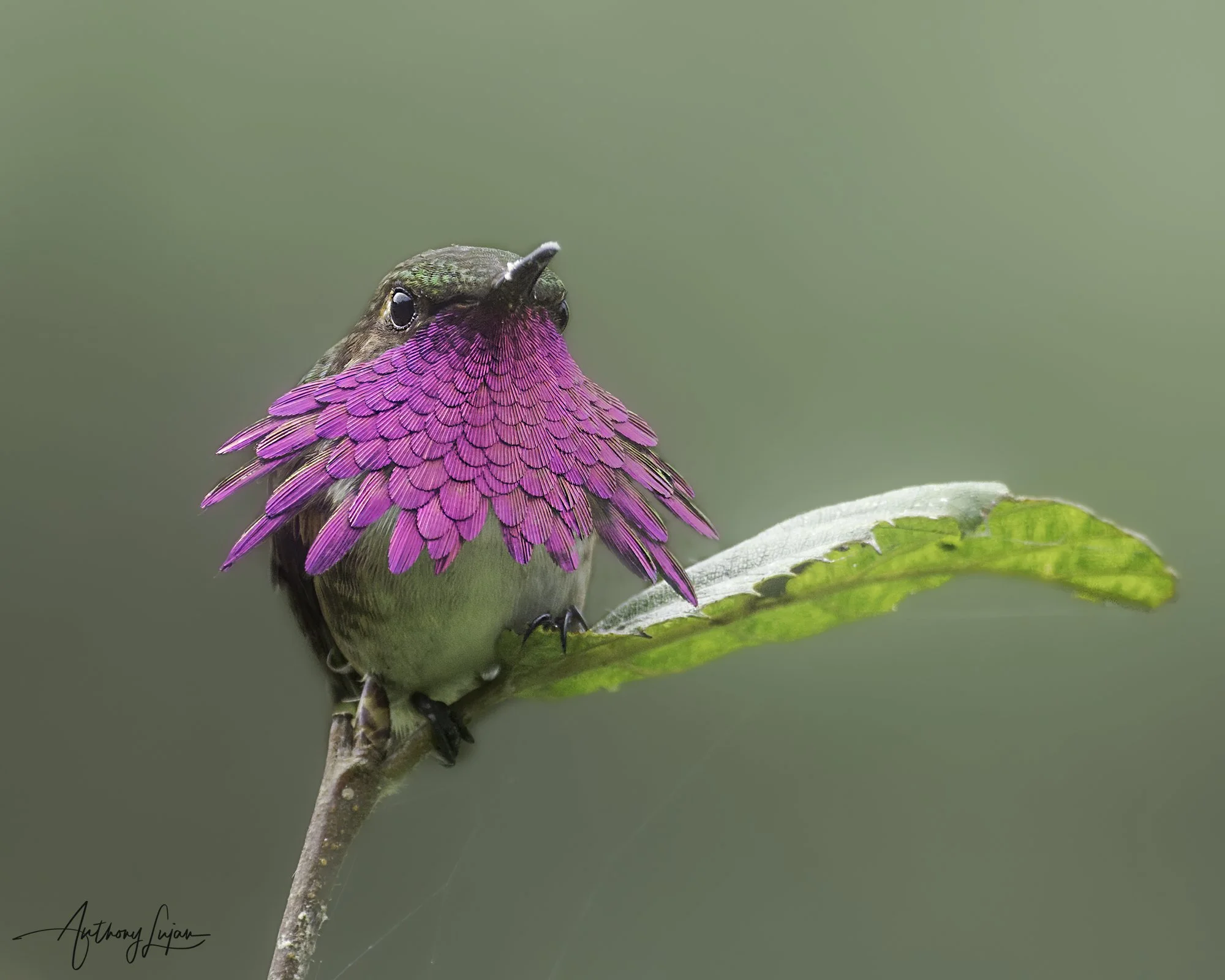
Wine-throated Hummingbird
Tiny highland specialist
Wine-throated Hummingbird is one of the tiniest birds in Guatemala, a bee sized hummingbird that lives in humid and semi humid highland forests and edges. In the field, it is easy to miss if you scan too broadly. Once you narrow your focus, you start to see how it threads its way through pine oak woodland, cloud forest edges, and shrubby openings at higher elevations.
Males carry the wine colored throat that gives the species its name, and when the light catches it just right, that small patch of color dominates the bird. Photographing Wine-throated Hummingbirds meant working in cool air and thin light, waiting at flowering shrubs and along narrow trails where birds were calling and displaying. It was one of those species where every clean frame feels like an accomplishment, simply because so much has to line up for such a small hummingbird to stand out in a big, complex landscape.
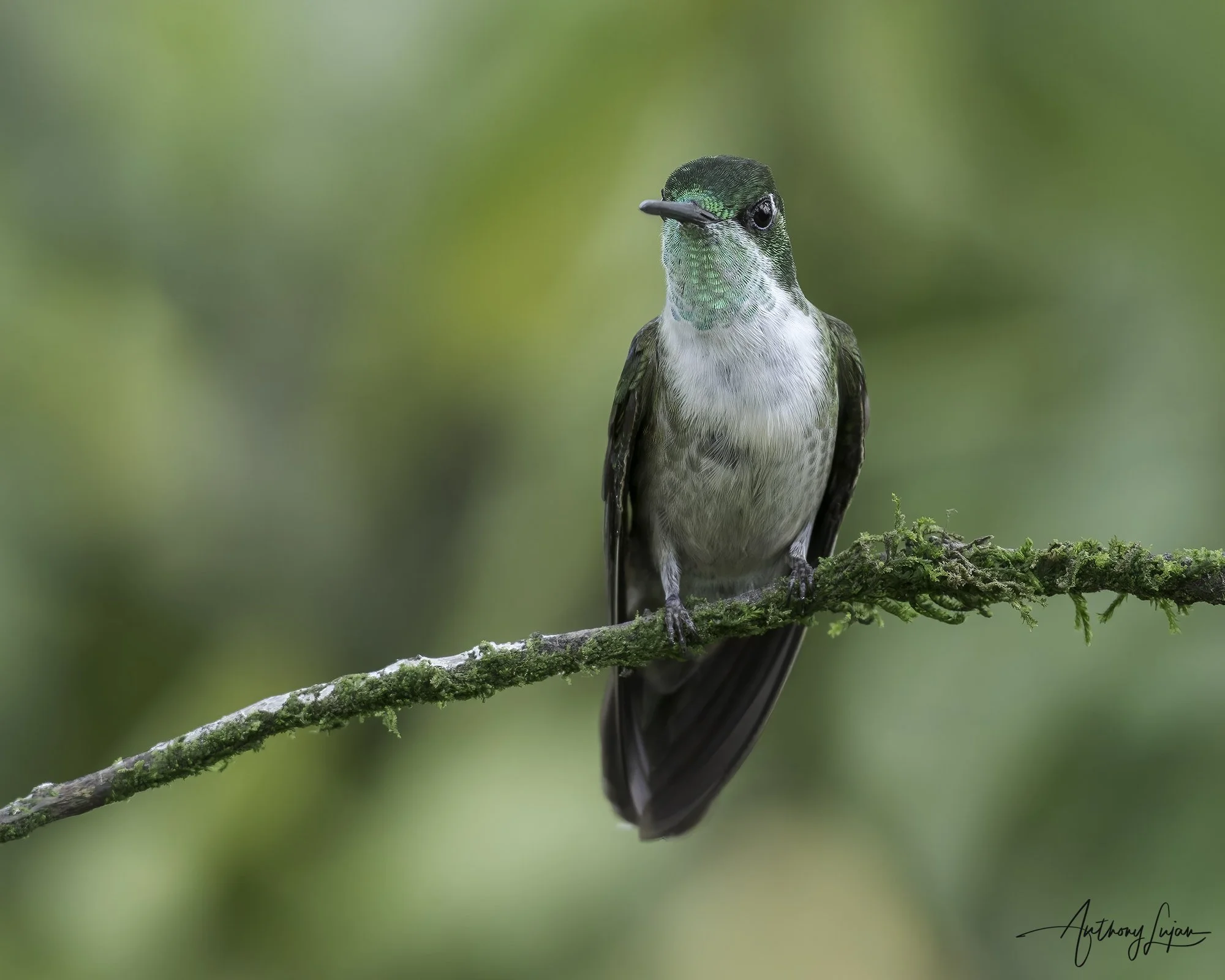
Green-throated Mountain-gem
Mountain structure in motion
Green-throated Mountain-gem is a classic highland hummingbird. It lives in mid and high elevation forests and edges, moving through cloud forest, pine oak, and transitional zones where the canopy breaks and flowering shrubs take advantage of light. In Guatemala, it feels like part of the backbone of the mountain hummingbird community.
The bird carries a solid, compact build and a presence that holds up well in mixed flocks. I found Green-throated Mountain-gems working flowering patches along forest roads, trails, and ravines, often returning to the same shrubs repeatedly. Photographing them was about learning those circuits and using them. Once a pattern revealed itself, I could position for cleaner backgrounds and stronger perches, letting the structure of the bird and the cool greens of the highland setting do most of the work.
Garnet-throated Hummingbird

High elevation fire
Garnet-throated Hummingbird is one of the most striking highland hummingbirds in Central America. It favors humid montane forest and cloud forest, especially along ridges, ravines, and mossy forest edges at higher elevations. In those places the air cools down, the ground often stays damp, and the forest carries a deep, saturated green.
When a male Garnet-throated Hummingbird turns into the light, the throat flashes like a gemstone, a concentrated burst of color against an otherwise muted background. The bird is larger and more deliberate than many of the tiny species on this list. It perches more prominently, holds small territories, and makes choices about where and when to show itself. Photographing this species was about patience and timing. Wait for the right perch, the right angle, and the right moment when the bird decides to flare that throat and make the whole scene feel brighter.
Sparkling-tailed Hummingbird

Tail first impressions
Sparkling-tailed Hummingbird looks light and almost weightless when it moves. It favors semi open habitats in foothills and highlands. Gardens, edges, shrubby slopes, and places where flowers are abundant but the forest is not fully closed. The tail, with its fine extensions and sparkling effect when light catches it, is what you notice first.
In Guatemala, this species added a playful feel to several sites. While some mountain hummingbirds project strength and solidity, Sparkling-tailed felt quick and almost delicate. It darted in and out of flowering patches, often at slightly lower heights than the larger, more imposing species. Photographing it meant thinking about movement and line. Framing the tail in ways that made sense, tracking short flights, and accepting that some of the best looks might happen mid air rather than on a well placed perch.
The rest of the highland cast
The remaining five species helped round out the story of Guatemala’s western highlands:
Azure-crowned Hummingbird and Blue-tailed Hummingbird added color and activity in semi open habitats, especially along forest edges and in human influenced areas.
Rufous Sabrewing brought a heavier, more powerful presence to some sites, a reminder that sabrewings carry their own rhythm through the forest.
Mexican Violetear showed how regional ranges overlap, a familiar face from further north that fits naturally into the Guatemalan highlands.
Slender Sheartail, with its fine tail and lighter build, echoed some of the same visual themes as Sparkling-tailed Hummingbird, but with its own behavior and space in the community.
Together, these hummingbirds made it clear that a relatively narrow slice of Guatemala can hold an enormous amount of variety in both form and behavior.
What this expedition changed
Guatemala’s highlands pulled together threads from several earlier trips. Elements of Mexico’s mountain gems, Costa Rica’s high elevation specialists, and the tiny “bee” hummingbirds I had worked with elsewhere all appeared here in a new combination. This expedition reinforced how continuous the Central American highlands are in some ways, and how sharply things can change over a relatively short distance in others.
Focusing on Wine-throated Hummingbird, Green-throated Mountain-gem, Garnet-throated Hummingbird, and Sparkling-tailed Hummingbird gave the trip a clear spine. Around that spine, the supporting species showed how elevation, forest type, and openness shape who shows up where. It was the kind of trip that does not just add new names to a list. It helps fill in what the Central American mountain hummingbird community really looks and feels like on the ground.
If you want to see the full list of species photographed during this trip, you can view the complete travel overview here: 2024 09 Guatemala
Guatemala hosts 37 hummingbird species; see the ones I’ve photographed.
Join me on future trips like this. You can find more details here: Visit Travel with Me!
Frequently asked questions
Every time I talk about Guatemala, people ask how it compares to better known hummingbird countries. This quick FAQ adds context before you move on to the next Hummingbird Travel Story.
-
Because the highlands of Huehuetenango, Quetzaltenango, San Marcos, and Sololá bring together cloud forest, pine oak, and semi open habitats in a compact area, which is ideal for highland hummingbirds.
-
They are local and tied to specific elevations and habitats. With the right planning and sites, you can see them well, but they are not “everywhere” species.
-
It feels like a bridge. Some species echo Mexico and Costa Rica, while others are more tightly focused on Guatemala and nearby countries. The mix is what makes it special.
-
Yes. This trip showed me how much more there is to explore in both the western and other highland regions. A follow up expedition could easily focus on different sites and still feel completely new.


Please note: The content provided in this article reflects Anthony’s personal experience and photographic approach. Results can vary depending on light, weather, location, equipment, subject behavior, and field conditions.