
Argentina Hummingbird Expedition | December 2024
4 New | High Country Comet
Trip overview
Dates: December 28–31, 2024
Regions: Jujuy (Capital, Santa Bárbara, Valle Grande)
Total hummingbird species observed: [add final count]
New hummingbird species photographed: 4
Focus: Highland specialties with an emphasis on Red-tailed Comet and Blue-capped Puffleg
This was a short, targeted run into northern Argentina. The goal was not to find the rarest or most threatened hummingbirds, but to connect with a few of the region’s most iconic species in their home landscapes. All four hummingbirds I photographed on this trip are considered Least Concern and many range into nearby countries. That freed me from conservation pressure and let me focus on what makes each species special in Jujuy’s mountains and valleys, especially the Red-tailed Comet and Blue-capped Puffleg.
Why Jujuy, and why these hummingbirds
Jujuy sits in Argentina’s northwest, where Andean influence shapes everything. Elevation changes quickly. Valleys, ridges, and cloud influenced slopes create a mosaic of habitats that feel different from any other part of the project. For a short trip, this region offered exactly what I needed: realistic access to a small group of high impact hummingbirds and enough variety in terrain to see how they use space.
During this expedition, I photographed four hummingbird species, all of them new to my list:
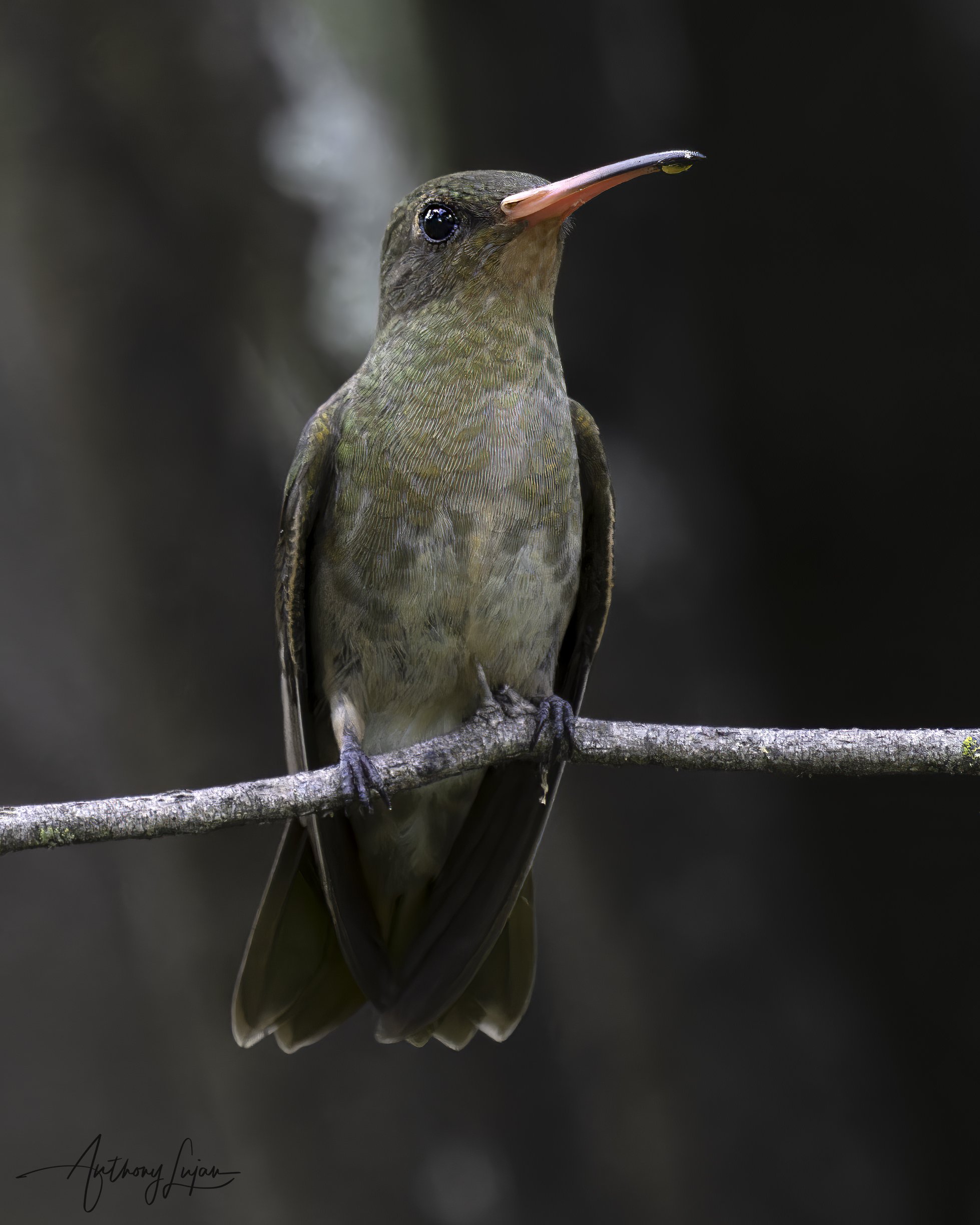
#212 LC Gilded Hummingbird, Hylocharis chrysura
#213 LC Blue-tufted Starthroat, Heliomaster furcifer
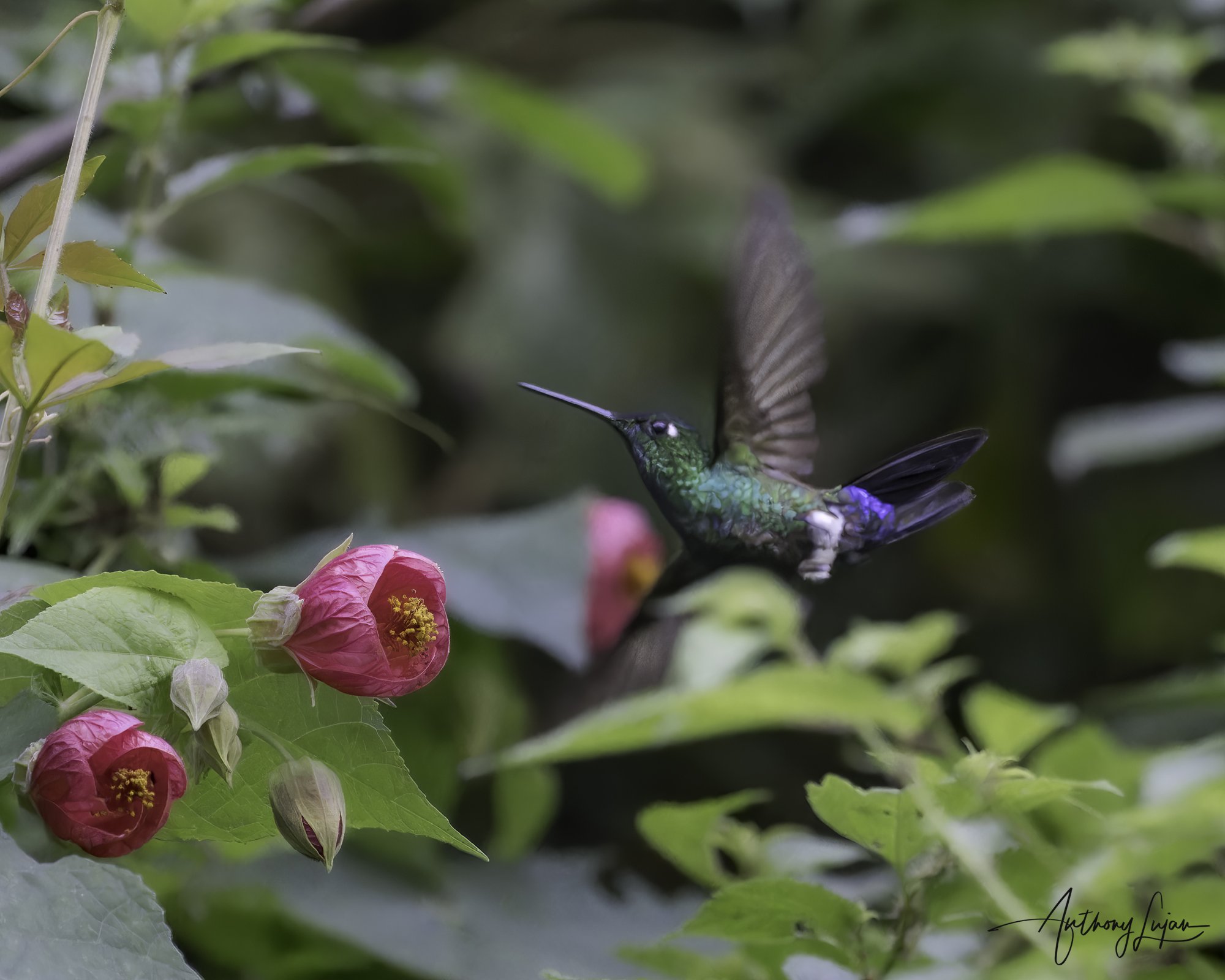
#214 LC Blue-capped Puffleg, Eriocnemis glaucopoides
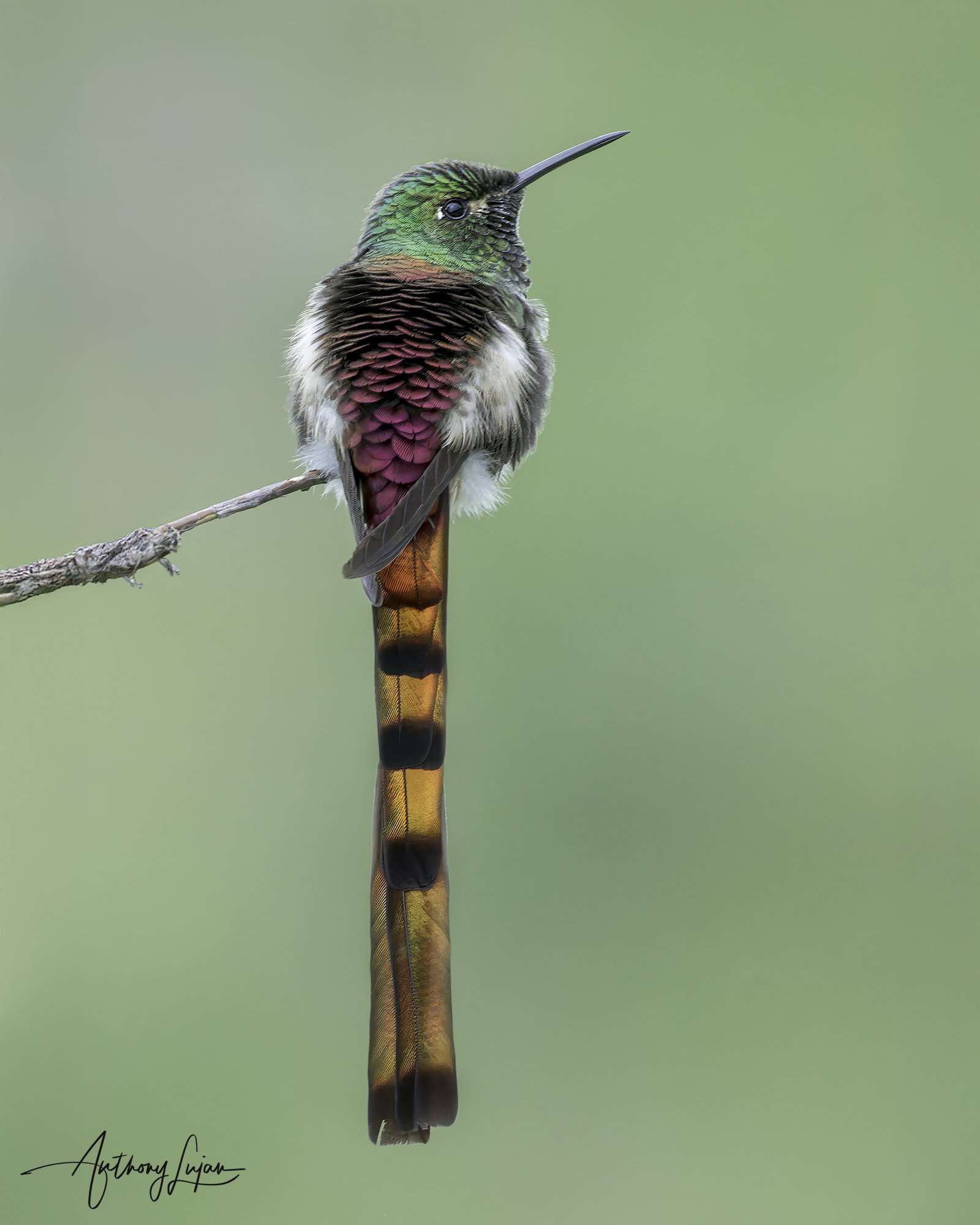
#215 LC Red-tailed Comet, Sappho sparganurus
The main focus was Red-tailed Comet and Blue-capped Puffleg, with Gilded Hummingbird and Blue-tufted Starthroat rounding out the picture.
Red-tailed Comet
Spectacular tail in a big landscape
Red-tailed Comet is one of the most visually dramatic hummingbirds in South America. The long, deeply forked tail, with its intense color and sweeping lines, turns almost every movement into a display. In Jujuy’s valleys and slopes, it felt perfectly matched to the setting. Broad skies, broken terrain, and flowering shrubs and trees that give the bird space to move.
Photographing Red-tailed Comets meant thinking in larger frames than usual. The tail is so long that tight crops can feel cramped or cut off. I looked for perches and feeding sites where I could step back and still hold good detail, letting the entire bird, tail included, sit comfortably in the frame. Even though this species is Least Concern and occurs in nearby countries, seeing it in Argentina’s high country made it feel like a flagship for the region. It is the kind of hummingbird that can carry an entire trip on its own.
Blue-capped Puffleg
Cool tones and highland air
Blue-capped Puffleg brought a different energy to the trip. Where the comet is long and showy, the puffleg is compact and quietly striking. The blue cap, contrasting body tones, and the signature feathered “leggings” on the legs all stand out when you get a clean look. It is a hummingbird that feels deeply tied to higher elevation, cooler, more humid forest and edge habitats.
In Jujuy, finding Blue-capped Pufflegs meant spending time in cloud influenced forest and along moist slopes and ravines, especially in places where flowers and forest structure came together. The birds moved through mid level perches and edges, often returning to the same patches of blooms. Photographing them was about balance. Close enough to show the details that make pufflegs unique, but wide enough to keep the sense of cool, highland air and dense vegetation that define their world.
Gilded Hummingbird and Blue-tufted Starthroat

Completing the Argentina set
Gilded Hummingbird and Blue-tufted Starthroat did not carry the same headline weight as Red-tailed Comet, but they were just as important to this short expedition. Both are Least Concern and occur beyond Argentina’s borders, yet each added a distinct note to the trip.
Gilded Hummingbird brought warmth and brightness to more open and semi open habitats, a reminder that not all Argentine hummingbirds are tied to cooler elevations. It worked flowering trees and shrubs with a lighter, more direct feel that contrasted nicely with the highland birds.
Blue-tufted Starthroat added structure and presence. With its strong build and clean lines, it felt like a cousin to other starthroats I had worked with elsewhere but set against new scenery. Together, these two species made the Jujuy hummingbird scene feel more complete, connecting the standout targets to a broader community.
A focused, end of year expedition
With only four target species and a narrow time window, this Argentina trip looked very different from my longer, conservation-heavy expeditions. There were no endangered hummingbirds on the list, and there was no urgent pressure to document birds that might be hard to find in the near future. That changed the tone of the work.
Instead of racing for coverage, I could slow down and think about how Red-tailed Comet and Blue-capped Puffleg fit into their respective habitats, and how to show those relationships in photographs. It was a reminder that not every important hummingbird trip needs to be defined by threat categories. Sometimes the value lies in simply spending time with beautiful, characteristic species in landscapes that match them perfectly.
If you want to see the full list of species photographed during this trip, you can view the complete travel overview here: 2024 12 Argentina
Argentina hosts 28 hummingbird species; see the ones I’ve photographed.
Join me on future trips like this. You can find more details here: Visit Travel with Me!
Frequently asked questions
Short, focused trips like this one to Argentina often raise different questions than big, multi region expeditions. This quick FAQ adds context before you move on to the next Hummingbird Travel Story.
-
Because Argentina’s northwest holds some of the most visually distinctive hummingbirds in South America, and seeing them in their home landscapes adds important context to the larger project.
-
Red-tailed Comet was the main visual draw, but Blue-capped Puffleg was just as important. Together they represent two very different expressions of highland hummingbirds in the same region.
-
It is more focused and less about coverage. With fewer species and less time, success depends on planning and on making the most of each good encounter instead of spreading effort across many sites.
-
Yes. There is more to explore in other provinces, along different elevation bands, and in transitional zones where Argentine hummingbirds overlap with those of neighboring countries.







Please note: The content provided in this article reflects Anthony’s personal experience and photographic approach. Results can vary depending on light, weather, location, equipment, subject behavior, and field conditions.